
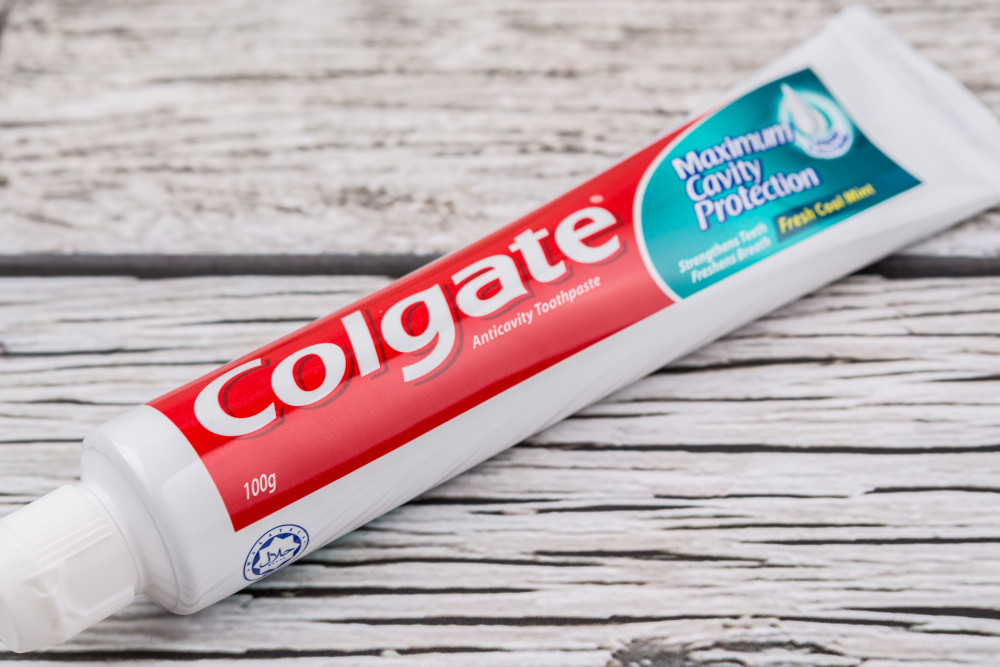
Colgate-Palmolive is known worldwide for toothpaste, soap, and household products. Yet another major part of its business is Hill’s Pet Nutrition, which produces foods formulated for the health needs of dogs and cats.
Hill’s began independently of Colgate, long before it became part of the company. Its origins can be traced to a blind man named Morris Frank, a veterinarian named Mark Morris, and a German shepherd called Buddy.
Morris Frank and his guide dogs
Morris Frank lost his sight as a teenager. In 1927, he learned that dogs were being trained in Europe to guide people who were blind and contacted Dorothy Harrison Eustis, an American dog trainer living in Switzerland.
Eustis invited Frank to Switzerland, where he learned to work with a female German shepherd originally named Kiss. Frank renamed her Buddy.
In June 1928, Frank returned to New York and demonstrated Buddy’s abilities before reporters by navigating busy city streets. Afterward, he sent Eustis a one-word telegram: “Success.”
Frank and Eustis went on to establish The Seeing Eye, which was incorporated in Nashville in 1929 and later moved to New Jersey. Frank traveled throughout the United States to demonstrate how guide dogs could give blind people greater independence.
He also campaigned for the right of people with guide dogs to enter hotels, restaurants, stores, and other public places.
The original Buddy died in 1938. Frank later gave the same name to each of his subsequent guide dogs.
In 1939, one of those dogs developed kidney disease.
A special diet for Buddy
Buddy’s illness was serious. At the time, veterinarians had few treatment options for a dog with failing kidneys, and commercially available dog foods were not formulated for animals with specific medical conditions.
Frank sought help from Dr. Mark Morris Sr., a New Jersey veterinarian who believed nutrition could play an important role in managing disease.
Morris concluded that Buddy’s ordinary food was placing too much strain on the dog’s kidneys. He began developing a special formula that would provide necessary nutrition while reducing that burden.
Morris and his wife, Louise, prepared the food in their kitchen, cooking and blending the ingredients themselves. Buddy’s health improved after beginning the new diet, encouraging Morris to continue studying the use of specially formulated foods for sick animals.
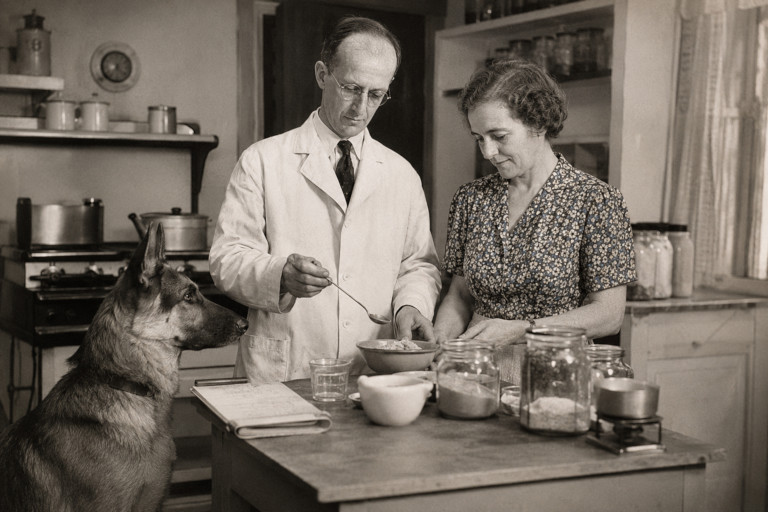
The experiment became an early example of veterinary clinical nutrition — the use of diet as part of managing a medical condition.
From a kitchen stove to commercial production
As other veterinarians learned about Morris’s work, demand for the special food grew beyond what he and his wife could produce in their kitchen.
In 1948, Morris entered into an agreement with Burton Hill of the Hill Packing Company in Topeka, Kansas. Hill’s company had the facilities needed to manufacture and can the formula on a larger scale.
The food became known as Canine k/d, with the letters standing for “kidney diet.” It was the first commercially produced dog food developed by a veterinarian to help manage a specific disease.
Morris and Hill continued developing specialized foods for other medical conditions. Their collaboration eventually grew into Hill’s Pet Nutrition, with products sold under the Prescription Diet and Science Diet names.
The company combined Morris’s veterinary research with Hill’s manufacturing and distribution capabilities. What began as an effort to help one guide dog became the foundation of a new approach to feeding companion animals.
Colgate acquires Hill’s
Colgate-Palmolive acquired Hill’s Pet Nutrition in 1976, nearly four decades after Morris first prepared a special diet for Buddy.
The acquisition brought Colgate into a field built on veterinary research, specialized nutrition, and products recommended by animal health professionals.
Hill’s developed formulas for dogs and cats with kidney disease, digestive problems, urinary conditions, weight issues, food sensitivities, and other health concerns. Its Science Diet line also offered foods intended for different life stages and everyday nutritional needs.
The business grew into one of Colgate-Palmolive’s most important divisions, giving the company a presence in veterinary clinics and pet stores as well as supermarkets and pharmacies.
More than two centuries of change
Colgate’s history began in 1806, when William Colgate began making starch, soap, and candles in New York. The company later moved into perfumed soaps, toothpaste, scientific oral care, international distribution, and pet nutrition.
Each major stage required it to move beyond the products that had previously defined the business.
The introduction of toothpaste took Colgate beyond traditional soapmaking. The rise of Crest forced it to invest more deeply in science and to develop products addressing a wider range of oral health concerns. The acquisition of Hill’s brought it into a business that had begun with an entirely different mission.
More than 220 years after William Colgate opened his workshop, toothpaste remains the product most closely associated with the family name. Yet the company’s survival has depended on its ability to change as science, technology, and consumer needs evolved.
A business that began with soap and candles ultimately became the global leader in toothpaste — and the owner of a pet nutrition company whose history began with an effort to help a sick guide dog.
See Part 1 here
See Part 2 here
Translated by Eva
Follow us on X, Facebook, or Pinterest
