
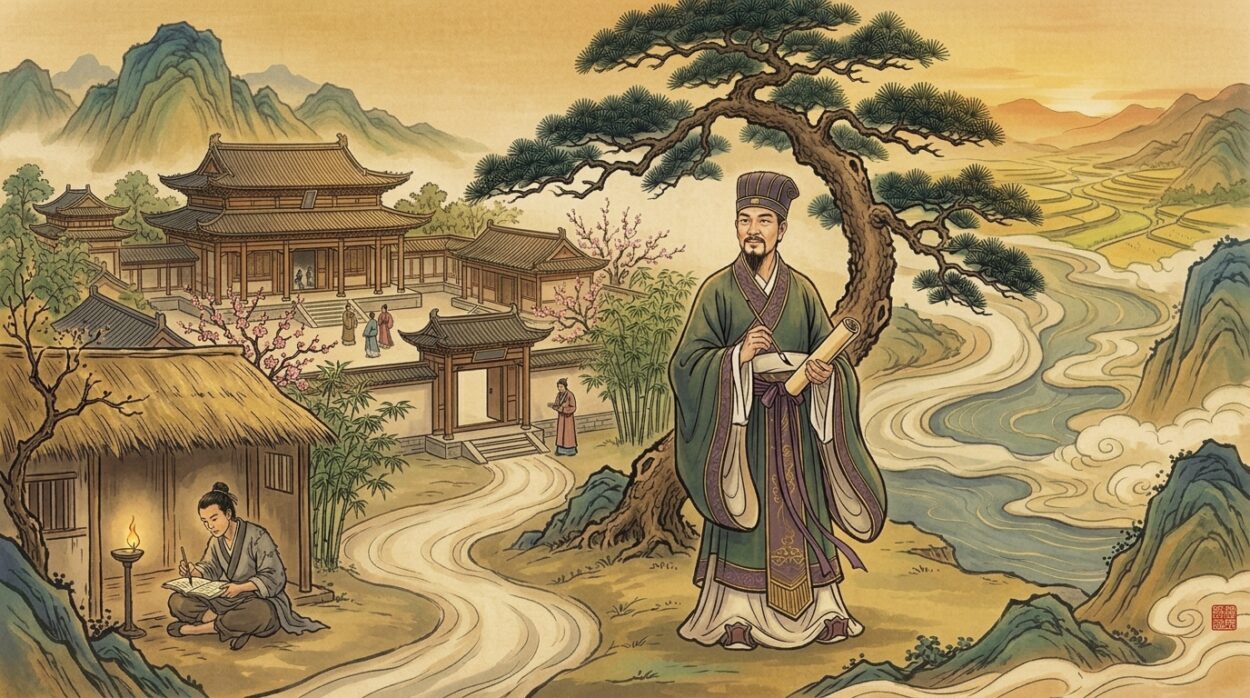
Accumulating wealth within a single generation is possible, but preserving it across centuries is considerably more difficult. History abounds with wealthy families whose fortunes evaporated within a few generations, yet rare lineages manage to maintain their prosperity and traditions for centuries. What allows a family to thrive over many generations rather than just one? The narrative of the Fan family in China provides a remarkable illustration of lasting success. Its legacy dates back to Fan Zhongyan, who rose from poverty to become one of the most respected figures of the Northern Song Dynasty, though the foundation of his family’s enduring prosperity began long before he attained wealth or status.
Fan Zhongyan turned early hardship into lasting compassion
Fan Zhongyan was born early in the Northern Song Dynasty, lost his father at a young age, and grew up in poverty after his mother remarried. As a young man, he endured severe hardships while studying diligently at a temple, surviving on little more than plain porridge and pickled vegetables. Having experienced poverty firsthand, Fan deeply understood the struggles of families with limited means — from securing food and clothing to funding weddings, funerals, and education. He recognized that without mutual support, a vulnerable family clan could easily be swept away by societal changes.
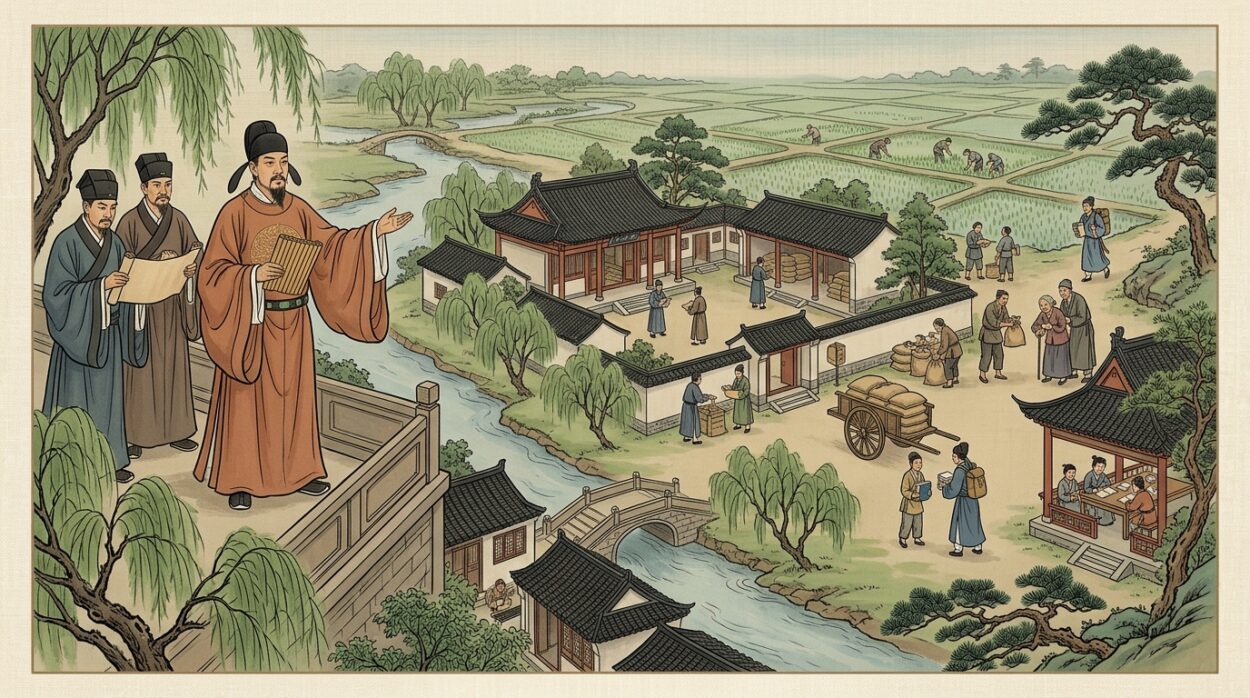
As the Song Dynasty economy developed, the scholar-official class emphasized clan organizations and moral education. Fan put this concept into practice by purchasing farmland for charitable use in Suzhou to establish the Fan Clan Charity Estate, thereby transforming personal wealth into a family trust. The estate’s income assisted poor clan members with basic living costs, life events, and preparation for imperial examinations, all overseen by designated managers who enforced consistent rules to turn compassion into a lasting family principle.
Generosity guided his choices even after attaining power
Even after rising to a high-ranking government position second only to the emperor, Fan lived as modestly as he had during his youth as an impoverished scholar. His elevated status never made him forget his origins; instead, his early hardship deepened his sense of responsibility toward those still struggling. On one occasion, when purchasing a house in Suzhou, Fan was informed by a feng shui master that the property possessed auspicious energy that would produce high-ranking officials among future residents. Fan reflected that rather than reserving this honor for his own descendants, it would benefit society far more to turn the residence into a school for ordinary children in Suzhou. He donated the property, fulfilling his lifelong aspiration to use his resources for the public good. The more Fan earned, the more he assisted those in need, eventually supporting over 300 families. In traditional Chinese thought, using one person’s income to sustain hundreds of families was seen not merely as generosity but as evidence that wealth was being transformed into virtue.
A commitment to virtue brought long-term family blessings
Before long, Fan’s four sons grew into talented, virtuous adults who attained prominent positions, including prime minister, senior court official, and vice minister. His great-grandsons were similarly accomplished, allowing the family’s prosperity to continue through successive generations, with descendants still flourishing in Suzhou more than 800 years later. Because Fan placed the needs of others before his own, traditional belief held that the merit of his selflessness was immeasurable, bringing blessings that far exceeded what he had given away. He sowed seeds of goodness without expecting a return, leaving behind an inheritance of virtue rather than mere property. The underlying lesson is simple: sharing one’s blessings prevents them from being consumed and allows them to become inexhaustible. Even into the early years of the Republic of China, Fan’s descendants upheld these traditions by valuing education, integrity, self-discipline, and kindness. Through changing times, remarkably few descendants became arrogant with wealth or abandoned their principles in hardship, establishing a rare historical legacy in which moral values were preserved above material status.
True inheritance consists of values rather than material wealth
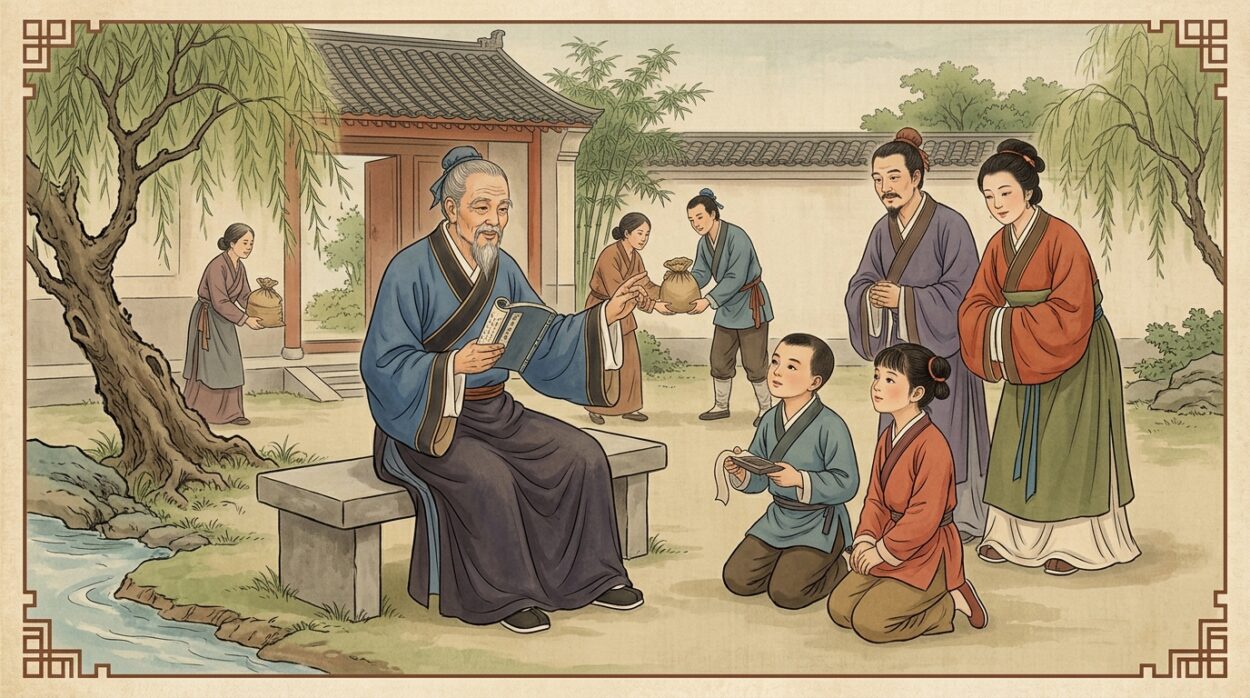
For those seeking to secure a better future for their descendants, Fan’s example demonstrates that the greatest inheritance is not wealth itself, but the values that teach children how to use it. Family values shape how each generation views wealth, education, responsibility, and social obligations, becoming a lasting legacy when actively lived. If wealth is viewed primarily as a tool for personal pleasure or status, it easily creates division; however, when viewed as a resource carrying obligations toward family and society, it becomes a force for good. Fan did not leave his moral ideals as mere words, but created a practical charitable estate to ensure his principles were practiced after his death. The estate supported education and assisted those in need, giving successive generations a tangible way to carry forward his established responsibilities and providing a family tradition with the structural means to sustain itself.
Unchecked wealth creates conflict and destroys family unity
There is a well-known Chinese saying that wealth does not last beyond three generations, primarily because wealthy individuals often lose sight of their responsibilities toward others, develop a sense of entitlement, and lose humility. Today, family wealth sometimes fails to survive even a single generation. While the moral teachings of ancient China’s sages endured for centuries because they cultivated intangible qualities, material wealth remains vulnerable to consumption, division, or loss. Without moral guidance, children absorb selfish messages prioritizing personal interest above all else. Many parents dedicate themselves to raising children only to wonder why they turn out differently from what was hoped, failing to realize that material ease alone cannot provide a solid foundation. Removing all hardship deprives children of opportunities to learn endurance, restraint, and cooperation, turning money into a source of conflict rather than a blessing.
Character determines whether money becomes a blessing or burden
The ancient Chinese written character for money, “錢”, contains the radical for gold alongside two representations of “戈”, which are ancient edged weapons. This structure carries an inherent warning that an abundance of money increases the potential for conflict, whether between nations or between siblings fighting over inheritance. Without traditional moral teachings, siblings frequently become embroiled in bitter property disputes, damaging family loyalty, compassion, and shared responsibility. Children watching these disputes learn the harmful lesson that brothers can become enemies for financial gain. People who fail to think beyond the present moment act out of temporary anger, pride, or self-interest, making short-sighted decisions that bring lasting regrets money can never repair.
True prosperity fades when moral foundations are lost
The most sobering lesson of this narrative is that a family need not lose its physical assets to lose its fortune. A family can maintain substantial bank accounts and career success while losing trust, affection, and mutual support, leaving its members to view one another strictly through the lens of self-interest. In traditional Chinese thought, prosperity is inextricably linked to virtue and how a person treats others. When generosity turns to greed, humility to arrogance, and responsibility to self-interest, the goodness that sustained the family vanishes alongside its blessings. Fortunes are often lost not through poor financial decisions, but through the decay of character, compassion, and virtue.
Passing down virtue ensures lasting success for future generations
Ultimately, this historical example raises an essential question about what we choose to pass on to future generations. Are we merely transferring accumulated material wealth, or are we actively teaching our descendants the core values that made those blessings possible in the first place? Material property inevitably diminishes over time when it is not guided by a strong ethical foundation. By prioritizing integrity, education, responsibility, and service to others, families can establish a legacy that endures social and economic shifts. Fan Zhongyan proved that true security comes from cultivating virtue within the household, ensuring that subsequent generations remain grounded, compassionate, and capable of using their resources to benefit the wider world.
Translated by Joseph Wu and reviewed by Tatiana Denning
Follow us on X, Facebook, or Pinterest
