

Making a bowl of millet porridge seems like one of the simplest culinary tasks imaginable, requiring nothing more than tossing a handful of small golden grains into a pot of boiling water. Yet anyone who has attempted it knows that the results can vary drastically from one kitchen to another. Some versions turn out thin, watery, and disappointing, leaving you feeling unsatisfied and hungry again shortly after eating. A truly nourishing millet porridge features a thick, golden-hued broth and a texture as smooth as silk, gently warming the stomach and soothing the soul with every single bite. Transforming basic grains into a velvety, health-restoring dish takes a blend of traditional culinary wisdom and simple kitchen technique.
In traditional Chinese medicine, millet is hailed as the undisputed king of stomach-nourishing foods. It has a mild, neutral nature that directly benefits the spleen, stomach, and kidney meridians, considered foundational systems for overall vitality. For individuals living with a delicate spleen or digestive system who are prone to frequent indigestion, bloating, or loose stools, millet porridge acts like a gentle, warm embrace that coats and soothes the delicate mucosal lining. Unlike harsher raw foods or overly processed grains, well-cooked millet presents virtually no barrier to digestion, allowing the body to absorb its nutrients with minimal metabolic effort.
However, this ancient grain’s restorative health benefits extend far beyond basic digestive support. Millet is exceptionally rich in tryptophan, an essential amino acid that is a precursor for the brain’s synthesis of serotonin and melatonin. Serotonin helps stabilize mood and promote feelings of well-being, while melatonin directly regulates sleep-wake cycles and signals to the body that it is time to rest. Simply put, having a warm bowl of millet porridge at your evening meal can help relax tense nerves and naturally help you rediscover deep, restorative sleep.
When your spleen and stomach function properly, your body efficiently converts the food you eat into vital energy and healthy blood. Combined with adequate nightly rest, this internal balance reflects outward in your physical appearance. Your complexion naturally takes on a healthy, radiant, and rosy glow from within, proving that genuine beauty is simply the natural byproduct of balanced internal wellness.
Many home cooks find millet porridge surprisingly difficult to master, often producing a watery mixture in which the heavy grains settle to the bottom while a thin layer of liquid floats on top. Achieving that coveted thick, creamy consistency requires attention to specific foundational culinary techniques.
Proper preparation for a thick, creamy consistency
Never pour raw millet directly from the storage jar into a boiling pot. After thoroughly rinsing the grains in cool water to remove surface dust or debris, soak them in warm water for 30 minutes to a full hour. Soaking softens the grain’s tough outer hull, letting water penetrate deep into the core before heating begins. This prep step helps the millet break down more gently and release its starches into the liquid faster during cooking.
Rather than filling your pot with cold tap water, start your porridge base with warm or hot water. Introducing soaked grains into hot water shortens the total heating time and prevents settled seeds from forming stubborn clumps at the bottom of the pot. Bring the pot to a vigorous boil over high heat, and then immediately reduce the flame to a gentle, steady simmer. A low, gentle simmer keeps the liquid gently rolling without boiling dry or scorching the delicate grains.
Avoid the common mistake of stirring constantly throughout the entire cooking time. Aggressive agitation breaks the tiny millet grains apart prematurely, resulting in a gritty texture rather than a smooth porridge. Instead, keep the pot partially covered and let it simmer quietly. Once the mixture naturally begins to thicken near the end of cooking, use a wooden spoon to stir gently in a single clockwise direction for two or three minutes to encourage starch release.
Turn off the heat, but do not open the lid or serve the porridge immediately. Allow the pot to sit completely undisturbed on the warm burner for at least 10 minutes, using the trapped residual steam to finish cooking. This crucial resting period allows the rich starches to fully expand and settle, creating a delicate, golden film on the surface known as “porridge oil,” which is prized in traditional cooking for its concentration of pure nutrients.
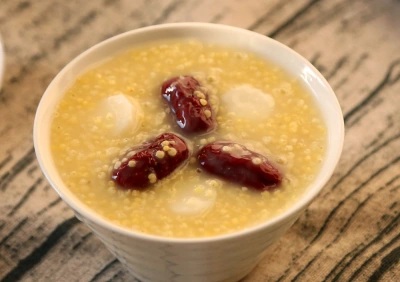
Combining millet with longan pulp and red dates
While plain millet porridge offers fantastic health benefits on its own, strategic ingredient pairings can amplify its healing potential to suit your specific physical needs. If you have been suffering from elevated stress levels, mental fatigue, or persistent insomnia, combining millet with dried longan pulp and pitted red dates provides exceptional calm. Longan and red dates are celebrated for their ability to nourish the blood, soothe anxious thoughts, and quiet an overactive mind. Enjoy a small portion of this naturally sweet variation two hours before bed for the perfect dose of natural tryptophan and soothing warmth.
Adding fresh ginger and dried tangerine peel
For people who often have cold hands and feet in autumn and winter, or who feel sharp stomach discomfort after drinking chilled beverages, adding fresh ginger and dried tangerine peel can work wonders. Ginger acts as an internal warming agent that dispels coldness and alleviates nausea, while aged dried tangerine peel helps regulate digestive energy and prevents abdominal bloating. Consuming this aromatic porridge leaves the core feeling thoroughly comfortable and gradually restores vigor to sluggish digestive organs.
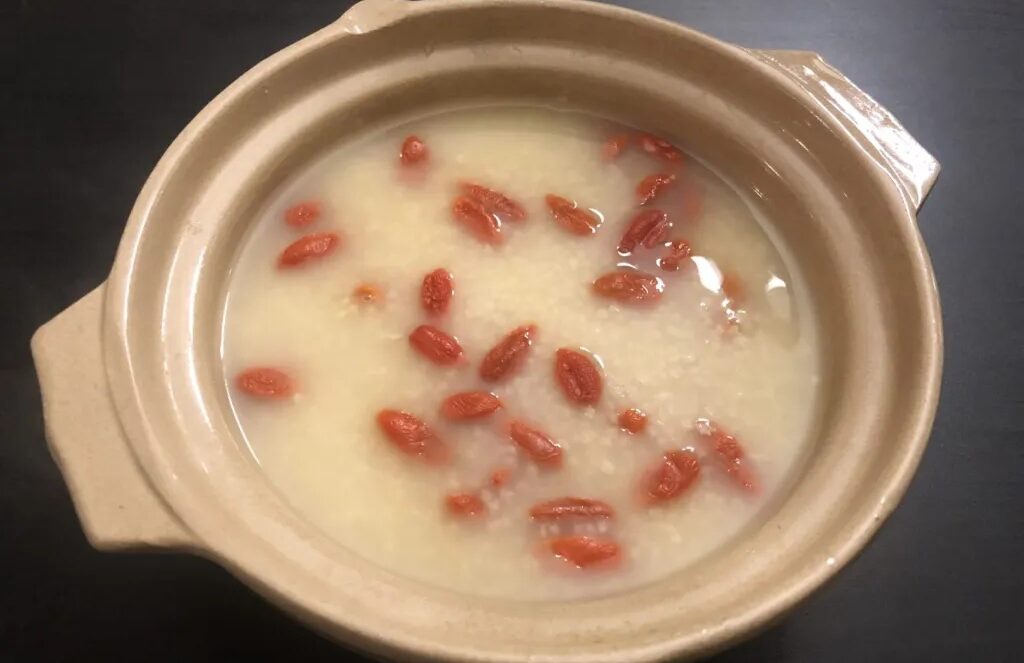
Incorporating goji berries and gorgon fruit
If your skin looks chronically pale, dull, or tired from stress and poor nutrient absorption, pairing millet with goji berries and gorgon fruit creates an exceptional beauty tonic. Gorgon fruit, also known as Qianshi, works to bind the digestive tract, strengthen the spleen, and eliminate fatigue. Meanwhile, vibrant goji berries deliver powerful antioxidants that nourish the liver and kidney functions. By healing the gut first, your body can transport nutrients to the skin again, restoring natural radiance.
A note of caution
Although millet porridge is widely celebrated for its therapeutic properties, it is not a cure-all for every condition. If you are currently suffering from acute internal inflammation, a high fever, or excess damp-phlegm in the body — often indicated by a thick, greasy coating on the tongue — you should consume thick starches in moderation. In these circumstances, lightening the mixture by blending in chopped Chinese yam helps keep the porridge light and easy to digest.
Also, remember to use restraint with adding sugars. The subtle sweetness of a health-boosting bowl of porridge should come naturally from whole ingredients like red dates, longan, or goji berries, not from processed white sugar, which can cause rapid blood glucose spikes and internal inflammation. Enjoying this humble, ancient dish in its pure form allows you to reconnect with time-tested culinary wisdom while offering your body deeply restorative, daily nourishment.
Translated by Patty Zhang and reviewed by Laura Cozzolino
Follow us on X, Facebook, or Pinterest
