

Ignacy Jan Paderewski was one of the world’s greatest pianists in the late 19th and early 20th centuries. In 1919, he also served as Poland’s prime minister. Yet beyond his achievements in music and politics, a widely told story about an act of kindness has become part of his enduring legacy. According to the account, people remember a generous gesture toward two young students decades later, when Poland desperately needed help.
One of Poland’s greatest pianists
Ignacy Paderewski was born in a small village in Podolia, a region that is now part of Ukraine. From an early age, he loved music. He later enrolled at the Warsaw Conservatory, where he eventually became a teacher.
At the age of 25, Ignacy Paderewski gave his first solo concert. His piano playing was known for its rich tone and expressive phrasing. He once compared music to the human heart, whose rhythm changes with emotion. He believed that Frédéric Chopin played from the heart, and like Chopin, Ignacy Paderewski performed from the depths of his soul.
He later toured Europe and beyond. His passionate, dramatic performances captivated audiences, generating excitement reminiscent of the musical sensations surrounding Franz Liszt and Niccolò Paganini in earlier decades. He came to be regarded as one of Poland’s greatest pianists since Chopin.
An unexpected act of generosity
According to a popular account, Ignacy Paderewski was touring the United States when two Stanford University students sought to arrange a performance by the celebrated pianist. They approached his manager and agreed on a concert fee of US$2,000.
The students set about raising the money, but despite their efforts, they collected only $1,600. On the eve of the performance, they met with Ignacy Paderewski and explained their predicament. They even prepared a promissory note for the remaining $400, promising to raise the money and repay him as soon as possible.
As the story goes, Ignacy Paderewski listened to their explanation, tore up the note, and returned the money. Seeing how much they loved music, he told the students he would perform as scheduled and not ask them for a single cent.

The two students were deeply moved. They approached the famous pianist, fearing they could not fulfill their agreement, only to discover he valued their enthusiasm for music more than the money they owed him.
The students could hardly imagine how they would remember their encounter with the great pianist years later.
A kindness remembered years later
In 1919, Poland was struggling to rebuild after the devastation of World War I. The country had only recently regained its independence, and its people faced severe shortages of food and other necessities. Ignacy Paderewski, who had become prime minister, sought assistance from abroad.
The United States responded with a major humanitarian relief effort led by Herbert Hoover, who would later become America’s 31st president. As head of the American Relief Administration, Hoover helped organize shipments of thousands of tons of food and other supplies to Poland and other war-ravaged European countries.
The assistance was especially important for Poland’s hungry children. By August 1919, American relief efforts fed more than 500,000 children in Poland each day.
That same month, Hoover visited Warsaw and met with Ignacy Paderewski. The Polish leader thanked him for the assistance his country had received.
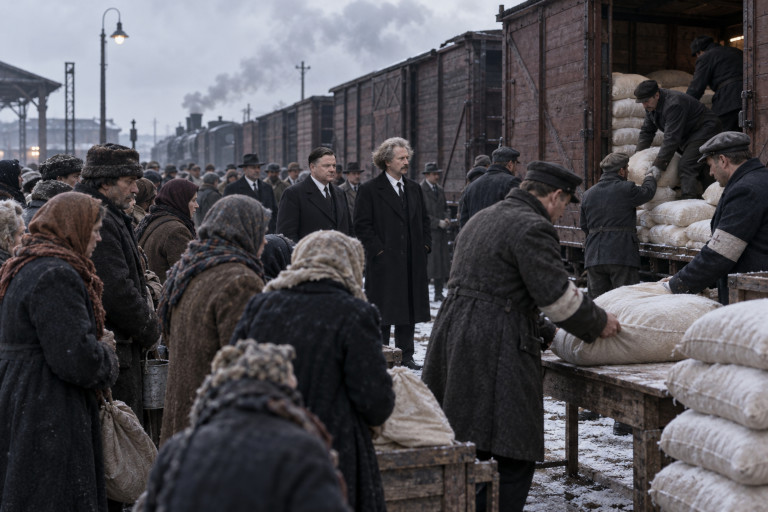
In the traditional telling, Hoover responded by reminding Ignacy Paderewski of an encounter from years earlier. He explained that he had been one of the young men who approached the pianist while struggling to pay for a concert. Although Ignacy Paderewski might have forgotten the incident, Hoover never forgot the generosity he showed him.
The young student who once needed a helping hand grew into a man capable of helping an entire nation.
The precise details of the concert story remain uncertain, and no evidence suggests the earlier encounter drove America’s relief efforts. Yet the story has endured as a reminder of something deeply meaningful: An act of kindness may seem small to the person offering it, but its effect on the person receiving it can last a lifetime.
Years may pass, circumstances may change, and the opportunity to return a kindness may come in an entirely unexpected form. We may not remember it, but the generosity we show others is not always forgotten.
Editor’s note: The story of Ignacy Paderewski’s generosity toward Herbert Hoover as a student has circulated in several versions, and its precise details have not been historically verified. The Herbert Hoover Presidential Library and Museum notes discrepancies in the accounts, including the date and circumstances of the proposed concert. However, Hoover and Paderewski did know each other, and Hoover’s leadership of American food relief efforts in Poland in 1919 is well documented. The anecdote is presented here as a traditional account illustrating the lasting significance of kindness, rather than as a fully verified historical event.
Translated by Cecilia
Follow us on X, Facebook, or Pinterest
