
I watched two political pundits sparring a few nights ago on a news program. One was animated, his voice rising with every rebuttal, and he threw his hands or rolled his eyes when the other spoke. It was passionate, but it felt like a well-dressed, grown-up tantrum. On the other hand, the other speaker sat back, composed and calm, with a slight smile. He wasn’t louder, but his tone was unshaken, and his words were measured.
The calm pundit wasn’t necessarily right with his analysis. Still, something about his unfazed approach made him seem more credible, more in control. It inspired confidence. You probably know someone who isn’t easily rattled by personal attacks, looming deadlines, or relationship drama. While everything unfolds, they remain steady, navigating difficult conversations or chaotic situations with an enviable, quiet confidence. You can’t help but admire how easily they get through life with composure, even when things seem to fall apart.
But does staying calm under pressure offer any real benefits, or is it just a personal quirk we all wish we had? Research shows that staying calm offers more than just looking cool. It impacts your decision-making, relationships, physical health, and even how people interact with you.
The good news is that self-control isn’t reserved for some people, and there are trainable ways to cultivate this zen-like response, even when your first instinct is to spiral. Before we explore ways to stay calm under pressure, let’s consider the benefits of maintaining composure and why it can preserve your mental and physical health.

Too much, too fast, too often
In modern society, your days are packed from the moment you wake up to the second you sleep. You are juggling deadlines, responsibilities, and a constant barrage of information. Every minute, your phone buzzes with new notifications, and social media algorithms are now designed to pull you into an endless pit of bad news, divisive posts, and unfair comparisons.
Unfortunately, experts believe the human stress response wasn’t designed for this never-ending pressure. In the past, our fight-or-flight responses were reserved for real threats like escaping from wild animals or invaders. Even today, you can see it among remote Indonesian and Amazonian tribes, where lives revolve around basic needs, close-knit connections, and an intuitive connection with nature.
Of course, these “uncivilized tribes” face problems, but their stress responses are a reaction to actual events as opposed to imagined catastrophes. Also, the social media and AI revolution has been too fast for our minds to catch up. Now, most of us have a simmering, low-grade anxiety that never really shuts off.
The benefits of staying calm
Improves concentration
It happens to the best of us. You’ve spent hours trying to complete some work, but new notifications, unfinished tasks, or other thoughts distract you. The worst part is that the closer the deadline looms, the more distracted you become, and your stress increases.
In this stressed state, your brain releases cortisol, the “stress hormone” that can affect cognitive functions like memory and concentration. However, the opposite happens when you stay calm because you free up your mental bandwidth. The prefrontal cortex — the part of your brain responsible for decision-making — can focus, prioritize, and work more efficiently.
Boosts creativity
When you are relaxed, your mind becomes more open and adaptable. Stress is meant to help you overcome dangerous situations, and it does so by narrowing your thinking and focusing on the immediate threat. However, if the present situation isn’t life-threatening, you can activate your brain’s default mode network (DMN).
DMN is a group of brain regions most active during passive moments when your brain isn’t focused on external tasks. When your brain is internally focused, you boost associative thinking, mind-wandering, and memory; this is when you develop the most creative ideas. For example, have you ever wondered why most lightbulb moments come when you shower? That’s one of the few moments you will likely be alone with your thoughts.
Supports a healthy nervous system
Stress is an inevitable part of life, and your body is built to withstand it. However, chronic stress can overwhelm your body. When in a “fight-or-flight” situation, your body reacts by increasing your heart rate, adrenal activity, respiration, sweating, and feeling of dry mouth. Now imagine the strain in your body when you misidentify “normal” situations and are stressed throughout your day. It may lead to increased anxiety, insomnia, and digestive problems.
On the other hand, staying calm activates the parasympathetic nervous system, also known as the “read and digest” state. In this state, you counter stress and experience a slower heart rate, lower blood pressure, and a relaxed aura.
Reduced risk of heart disease
Besides your nervous system, chronic stress also wreaks havoc on your cardiovascular system. It can raise cholesterol levels, increase blood pressure, and promote inflammation. Also, increased cortisol levels may cause your blood vessels to constrict, increasing the risk of blood clots or a stroke. Expressions like “worried to death” aren’t an exaggeration, but a physiological reality.
According to a study conducted by Harvard Medical School, people who can manage stressful situations better usually have lower rates of cardiovascular diseases.
Slows your aging process
Studies from the University of California found a link between stress and psychological aging. Prolonged stress can shorten the length of telomeres — the protective caps at the end of chromosomes. As they shorten, it becomes harder for cells to divide, so researchers believe this increases the risk of cancer, heart disease, and Alzheimer’s.
Fortunately, mindfulness practices have been associated with longer telomere length. By reducing stress, you may protect your body at the cellular level, keeping you younger for longer.
Improves sleep quality
It’s no secret that you’ll have sleepless nights when stressed. The excess cortisol your body releases makes it harder to relax and sleep. It becomes a never-ending cycle where anxiety causes sleep issues, and insomnia makes anxiety symptoms worse.
Conversely, when calm, your body can quickly relax and drift to sleep. People who improve their stress management abilities have better sleep quality, deeper sleep cycles, and are more rejuvenated.
Enhances emotional resilience
Calmness brings a sense of comfort and self-belief. In this state, tackling an issue with a level head is easy. Most things in life don’t go as planned, and how you handle stressful moments and difficult situations determines your ability to bounce back. Self-control and self-assuredness foster emotional resilience, which, in turn, boosts self-esteem. It’s a chicken-and-egg situation where both factors rely on each other.
With better emotional resilience and intelligence, you can face future adversity with control instead of cowering with frustration. Like in our earlier story, people will view you as more authoritative and trustworthy when you can handle high-pressure situations with equanimity. It increases your credibility because it shows you’ve mastered your emotions, and people can rely on you.
Improves relationships
If people around you feel they can rely on you, it changes how they interact with you. When stressed, most people react by snapping at others, escalating conflicts, or letting their frustrations affect their overall mood. Naturally, people gravitate toward a person who responds thoughtfully and avoids unnecessary drama in such situations.
So staying calm makes you a better negotiator and partner. It also fosters trust and creates a safe environment among your friends, family, and colleagues.

How to maintain calmness under pressure
Immediate tips to reduce stress and master self-control:
Deep breathing exercises
Deep breathing techniques are an immediate tool for reducing stress anytime, anywhere. Are you stressed about an upcoming presentation or frustrated by an ongoing disagreement? Taking deep breaths in and out works like magic.
These exercises work by directly influencing your autonomic nervous system. Your body then shifts from the “fight-or-flight” mode to the “read and digest state response,” promoting relaxation. One of the most common deep breathing techniques is the 4-7-8 exercise, where you breathe in for 4 seconds, hold it for 7 seconds, and then exhale for 8 seconds. Repeat it several times until you feel calmer.
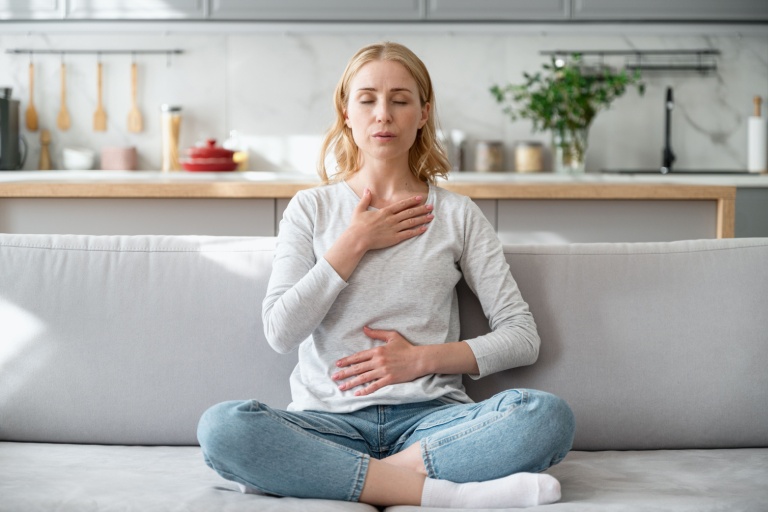
Alternatively, you can try belly breathing, allowing the stomach to rise and fall with each breath while your chest remains still. You can also use visualization mantras and deep breathing while picturing your happy place, person, or moment.
Mindfulness
You’ve probably heard about staying in the moment without judgment as a remedy for many modern pressures. Mindfulness is easier said than done, but when you get better at it, it’s one of the most effective tools for emotional regulation. You can hone this skill by paying attention to sensory experiences such as the taste or texture of food, the smell wafting through the air, the feeling of the ground beneath your feet, and more. Noticing these sensations can interrupt your stress response, making you less reactive and calmer.
Engaging your senses in the present moment reduces the stress of the past and anxieties of the future. Always remember the STOP technique allows you a mindful pause in stressful times (Stop, Take a few deep breaths, Observe your experience, and Proceed with intention)
Progressive muscle relaxation
Progressive muscle relaxation (PMR) involves tensing and releasing different muscle groups. If you are anxious before a presentation, try to find a quiet place to sit or lie down without being disturbed. Experts suggest starting with a few deep breaths before beginning PMR.
Start by tensing a specific muscle group as firmly as possible. Hold the tension for five seconds, then focus on releasing the tension for 10 to 20 seconds. Repeat this process for every muscle group, from your feet to your face.
PMR exercises’ most common muscle groups include the lower legs, thighs, buttocks, abdomen, chest, back, hands, neck, and face. Regular practice can help induce relaxation more easily at the first sign of stress.
Long-term tips for developing a calm demeanor
Physical exercise
Exercise is excellent for reducing stress and anxiety. When you work out, you release endorphins, or feel-good hormones that improve mood and relieve pain. It can also reduce the adverse physical effects of prolonged stress by lowering blood pressure and heart rate.
You don’t have to do intense workouts to reap these benefits. Something simple, such as a 10-minute brisk walk, can be a good start. Alternatively, you can do other meditative activities like yoga, tai chi, dancing, or swimming. Even the simple act of floating on water can improve mindfulness.
Sufficient and restorative sleep
To maintain calmness in the long run, you must have restorative sleep. Sufficient sleep allows your brain to consolidate memories, process emotions, and regulate brain chemicals needed for emotional stability. That’s why healthy sleep improves your overall well-being.
On the other hand, poor sleep can lead to increased short temper, irritability, and vulnerability to stress. Worse still, chronic insomnia has been linked with mood disorders like depression and anxiety. By allowing your body proper sleep, you will let your body and mind rejuvenate and reduce the risk of spiraling in stressful times.
A balanced and nutritious diet
Like sleep, a healthy diet is essential for long-term calmness and emotional stability. It influences mood, cognitive function, and overall physical health. Experts recommend a diet with nutrients such as Omega-3 fatty acids, magnesium, B vitamins, and zinc, which reduce inflammation and regulate stress hormones.
In addition to a balanced diet, you should drink enough water throughout the day to maintain optimal hydration. Remember to add probiotics to your diet to maintain a healthy gut microbiome, which has been shown to impact mood and mental health.
Spending time in nature
There’s nothing quite as relaxing as spending time in nature. The gentle murmur of streams, the rustling of leaves, or the smell of fresh earth have some way of grounding us. Nature always reminds us there’s more to life than deadlines, traffic, or constant digital noise.
Spending time outdoors can improve mood, reduce anxiety and anger, improve physical health, and leave you more relaxed. For example, in Japan, they have forest bathing, locally known as shinrin-yoku, where you immerse yourself in a forest setting and fully experience the smells, sounds, and sights around you. Forest bathing is meant to restore mental clarity and calm.
Similarly, in Scandinavian countries, friluftsliv (open-air living) emphasizes the mental health benefits of the outdoors, even in colder months.
Social support
A strong support system is crucial for managing stress and maintaining calmness. Friends, family, or trusted colleagues can offer a listening ear during tough times, which gives you the emotional strength to overcome barriers.
When experiencing reliable social connections, your body releases oxytocin — a hormone that promotes trust, safety, and calm. So connect with your loved ones because you don’t have to go at it alone.

Conclusion: Integrating calmness for personal well-being
Maintaining your composure may seem like swimming against the current in a world that rarely stays calm. However, it’s important to realize most of your stress comes not from life-or-death situations, but from the relentless pace of contemporary life. Your innate stress response wasn’t meant for round-the-clock triggers, so one of the best things you can do for your mind and body is to invite calmness.
Remember, to avoid this reactionary way of living, you must identify your triggers. What tends to set you off? Is it the looming deadlines, specific conversations, or overstimulation? Identifying this will help you have a chance to pause and apply the techniques of maintaining calm. Above all, calmness isn’t about suppressing your feelings and pretending everything is fine. It’s about creating a buffer between stimulus and response — a space where clarity lives.
The more you practice a calm presence, the more natural it becomes to meet life’s pressures with grace instead of panic.
Follow us on X, Facebook, or Pinterest
