
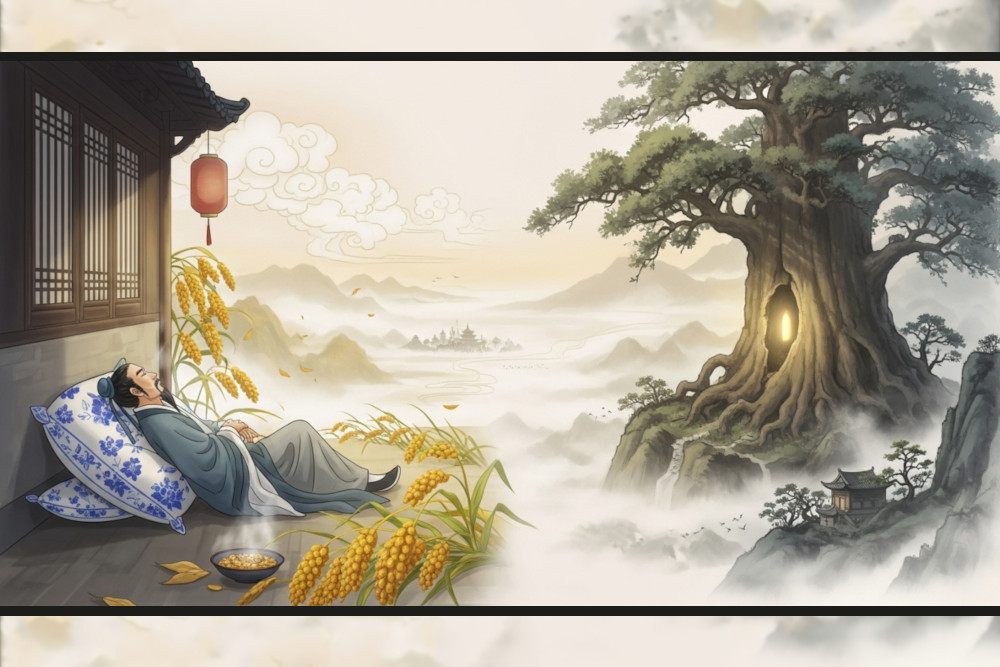
Ancient Chinese literature is filled with dream tales that reflect on the meaning of life, power, and illusion. Among the most famous are two stories from the Tang Dynasty that explore the fleeting nature of worldly success through vivid, dreamlike journeys.
A dream of millet: The world inside a pillow
During the Kaiyuan era of the Tang Dynasty, a poor scholar named Lu Sheng was traveling through the city of Handan when he stopped to rest at an inn. There, he met a Taoist priest with an air of immortality. The two struck up a conversation, and Lu Sheng confided his deepest wish — to pass the imperial examination, become a high-ranking official, and enjoy a life of wealth and prestige.
The Taoist listened with a knowing smile. He handed Lu Sheng a blue-and-white porcelain pillow and said: “Sleep on this pillow, and all the riches and honors you dream of will be yours.”
Lu Sheng, already drowsy, took the pillow and lay down. Meanwhile, the innkeeper had just placed millet on the fire to cook — it would take a while before the meal was ready.
And then he began to dream.
He dreamed of returning home and marrying a beautiful, wealthy woman from the prominent Cui family. With her support, he quickly rose in status. He passed the imperial examination, was appointed to a high official post, accumulated great wealth, and was surrounded by luxury and admiration.
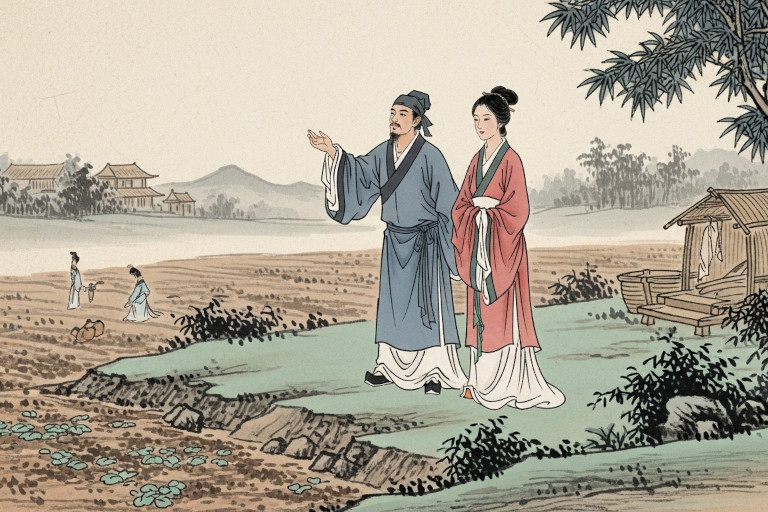
His path wasn’t without setbacks. Twice he was falsely accused and demoted — once narrowly escaping execution — but each time, he managed to rise again. During his second fall from grace, he told his wife: “We have five acres of good farmland in Shandong. That’s enough for a peaceful life. Why should I chase after power and wealth, only to end up framed and nearly put to death?” Thanks to the intervention of a powerful ally, his sentence was reduced to exile.
Years later, the emperor recalled him to the capital and appointed him Duke of Yan. His reputation and authority exceeded even his earlier days. In old age, he lived in comfort and died peacefully — his life seemingly complete.
Then Lu Sheng stirred and woke.
The Taoist was still sitting beside him. The millet hadn’t even finished cooking. Everything he had just experienced — decades of honor, disgrace, power, and peace — had been nothing but a dream.
This is the origin of the Chinese idiom “a dream of millet” (黄粱一梦) — a phrase that reminds us how fleeting life’s glories can be, as insubstantial as a dream before a meal is done.
A dream of Nanke: The kingdom inside the pagoda tree
Another dream tale from the Tang Dynasty tells of a man named Chunyu Fen, who had once served as a military officer. After causing trouble while drunk, he was dismissed from his post. He didn’t seem to mind — each day, he would sit beneath a large pagoda tree outside his home, drinking and joking with friends, content in his carefree lifestyle.
One evening, after another round of heavy drinking, he collapsed. His friends carried him home. As soon as he lay down, he dreamed that a messenger arrived and said: “The Kingdom of Huai’an invites you to become its prince consort!”
To Chunyu Fen’s amazement, the entrance to the kingdom was a tiny hole in the trunk of the pagoda tree. Inside was a vast, radiant world unlike anything he had known — like a celestial realm. The princess he was to marry was so beautiful that she seemed almost divine.
After their marriage, the king appointed him governor of Nanke Prefecture. Chunyu Fen ruled wisely and flourished. He and the princess had seven children — five sons and two daughters — each of whom achieved great things. The sons became court officials, and the daughters married into noble families. His life was filled with splendor and happiness.
But disaster soon followed. Foreign enemies invaded the kingdom. Chunyu Fen led the army to war, but was defeated. The princess fell ill and died. Rumors spread that the kingdom’s misfortunes had been brought on by Chunyu Fen — the “outsider.” The king, saddened and helpless, said: “Return to your homeland. I will summon you back in three years.”
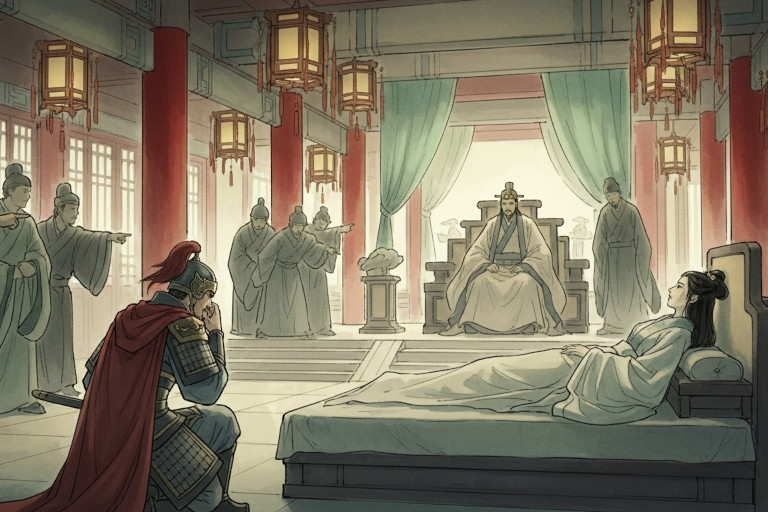
Confused, Chunyu Fen replied: “But this is my home.”
The king smiled and said: “Your true home is in the human world.”
Just then, a gust of wind blew — and Chunyu Fen awoke.
The sun was setting against the western wall. He had only been asleep a short while, but in the dream, an entire lifetime had passed.
He rushed to the pagoda tree and began to dig. To his astonishment, he unearthed a square hole about three meters wide. Inside was a miniature city made of mounded earth, crawling with ants.
The Kingdom of Huai’an had been an ant colony.
That night, a storm swept through the area. When he returned the next day, the ants were gone. The disaster foretold in the dream had come to pass.
Shaken to the core, Chunyu Fen gave up drinking and abandoned his indulgent ways. Three years later, he passed away. Perhaps, in death, his soul returned to that other world — to the kingdom in the tree, to the family he loved in a dream. The king’s promise of “three years” had been fulfilled after all.
In the blink of a dream, a lifetime fades
The dream journeys of Lu Sheng and Chunyu Fen remind us of the fragile boundary between illusion and reality. A lifetime of glory or sorrow may pass like a breath. In the end, it all comes down to a single thought, a single dream.
Have you ever had a dream so vivid that you questioned whether you had visited another world?
Translated by Cecilia
Follow us on X, Facebook, or Pinterest
