
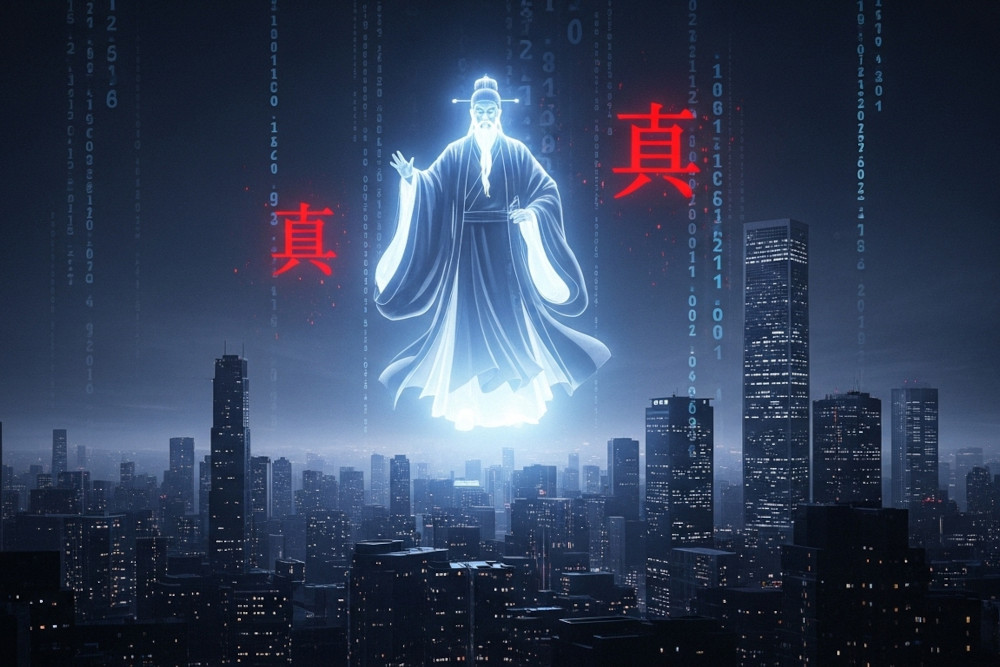
In a world where censorship is constant and power hides in plain sight, a new form of journalism has emerged among the Chinese diaspora — one that blends spiritual mediumship, ghostly transmissions, and serious political critique. These stories may claim to speak from the other side, but their targets are very real: princelings with blood on their hands, unresolved deaths, and the ongoing horror of forced organ harvesting.
This genre, rooted in mysticism, has become a powerful way to say what cannot be spoken aloud — especially when all other forms of dissent are smothered.
When the dead speak louder than the living
In October 2025, the overseas Chinese media outlet Secret China (看中国) published a story claiming to channel the soul of the late actor Yu Menglong. According to the transmission, Yu’s soul — now residing in an astral realm — revealed that a group of “a dozen or so” elites and their descendants had committed more than twenty murders and would soon face cosmic retribution. The article invoked the “City God” (城隍爷) and the King of Hell (阎王爷), asserting that even the most privileged cannot escape judgment. A petition linked at the end of the article claimed to have over 600,000 signatures.
At first glance, this may seem like fringe spiritualism. But in a landscape where domestic criticism is forbidden, spiritual accusation becomes a powerful proxy. It speaks for what cannot be spoken — and its very implausibility shields it from immediate censorship or retaliation.
The red aristocracy: Real wealth, hidden networks
What gives these mystical stories weight is their resonance with well-documented patterns of elite privilege.
Reports from the International Consortium of Investigative Journalists revealed that close relatives of China’s top leaders hold offshore companies in global tax havens — part of a broader network involving nearly 22,000 clients linked to mainland China and Hong Kong. According to the Center for Public Integrity, the “Greater China” files made up the largest share of the 2.5 million leaked records. Chinese authorities moved quickly to block access to this data on the mainland.

In April 2016, The Washington Post reported that these offshore holdings included the brother-in-law of Xi Jinping and the daughter-in-law of top official Liu Yunshan.
In this context, mystical claims about a secret cabal of 13-14 elites committing atrocities do not seem so outlandish. While the spiritual narratives name no names, the public already suspects that impunity shields the powerful — and these stories offer a symbolic reckoning.
When tigers fall: The limits of immunity
Although these elites appear untouchable, some do fall.
Zhou Yongkang, a former Politburo Standing Committee member and domestic security czar, was convicted of bribery, abuse of power, and leaking state secrets. Bo Xilai, another rising political star, was brought down for corruption, exposing the deep entanglement of family wealth and political influence.
Such cases reveal that even princelings can be punished — but only after internal party dynamics shift. In the spiritual story, when Yu’s soul warns “no escape, your evil deeds will be exposed under the bright sun,” it echoes the CCP’s own logic of fall and purge. Spiritual media fill the space left by absent legal transparency and the disappearance of whistleblowers.
The dark frontier: Organ harvesting and the horror few dare name
Perhaps the most disturbing intersection between mystical claims and documented reality lies in the realm of forced organ harvesting.
In 2006, Canadian lawyer David Matas and former MP David Kilgour published a landmark report alleging that organs were being harvested from living prisoners of conscience in China, especially Falun Gong practitioners. The report claimed that many had been executed so their organs could be sold at high prices.
Since then, further scrutiny has come from independent institutions. A 2019 briefing from the UK Parliament noted that a tribunal concluded “beyond a reasonable doubt” that forced organ harvesting had taken place. The European Parliament also flagged short transplant wait times and the opaque nature of China’s system.
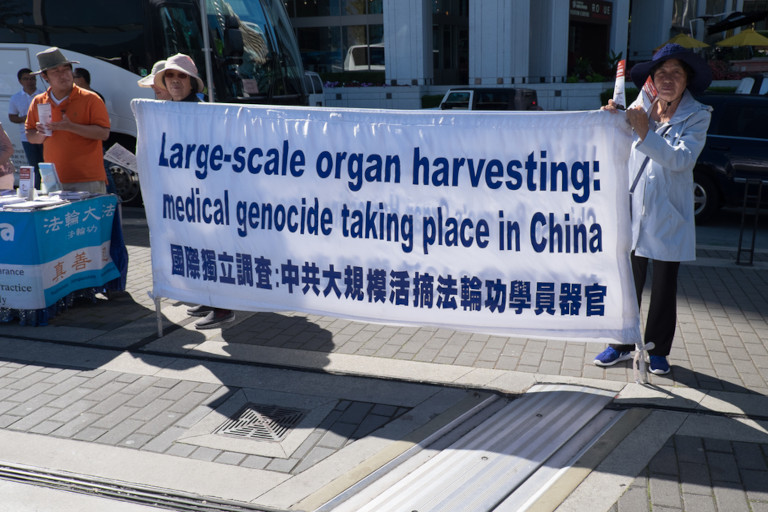
In the spiritual narrative, Yu Menglong’s soul accuses elites of turning victims into “specimens” and seeking dark arts to extend their lives. While unverifiable, the metaphors are chillingly close to existing allegations: hidden deaths, secretive hospitals, and transplant timelines that defy medical norms.
As the Center for Public Integrity documented, Chinese authorities routinely block foreign reporting on these subjects. In this vacuum, spiritual media becomes the only platform daring to speak aloud the worst fears.
The role of spiritual whistleblowers
Spiritual journalism operates in three powerful ways:
- Whistleblowing via mediumship: The dead speak; the living transcribe. The Secret China article uses the persona of Yu Menglong’s soul to expose elite crimes.
- Cosmic court as metaphor: The City God and King of Hell become moral substitutes for an absent legal system.
- Eschatological urgency: The narrative threatens that corruption will be exposed “within one to two years,” placing pressure on readers and hinting at a coming reckoning.
These elements blend mysticism with protest, offering symbolic justice when legal accountability is out of reach.
Separating fact from fiction
To evaluate the genre, one must distinguish what is spiritually suggestive from what is verifiably true.
Factual overlaps:
- ICIJ and others confirm the existence of offshore wealth networks among Chinese elites.
- Independent reports on forced organ harvesting have been published on platforms like ResearchGate.
- The fall of top leaders such as Zhou Yongkang and Bo Xilai illustrates that privilege has its limits.
Unverified or mythical elements:
- The existence of a tight cabal of exactly 13 or 14 elites performing occult rituals.
- The claim that certain celebrity deaths were linked to this group.
- Specific details of blood rituals, immortality spells, and supernatural beliefs.
As a framing line for your article, you could say: “While no human-rights organization has verified the names listed in these spiritual transmissions, the narrative reflects real-world patterns of scandal, silence, and suspicion — and that makes it impossible to ignore.”

Why it matters
This spiritual-political genre reveals a deeper truth about Chinese media and dissent:
- When conventional journalism is blocked, other truth-telling forms arise — symbolic, mythic, spiritual.
- The astral court becomes a surrogate for public accountability.
- The mysticism acts as both shield and amplifier: protecting the writer and intensifying the emotional impact.
The ghosts do not point to the supernatural — they point to systemic impunity.
Conclusion: Translating myth into investigation
When the ghost of Yu Menglong warns that retribution is coming, the message isn’t about the afterlife — it’s about this life. The real question is: why must the dead speak for the living?
The next task of journalism is to investigate what these transmissions only hint at. Who are the power networks behind the princelings? What bureaucracies enable secretive transplants? Do elites see themselves as untouchable — or even immortal?
In a world where the living are silenced, the whispers of ghosts become the call to action. And it is our responsibility to translate them — into evidence, accountability, and change.
Follow us on X, Facebook, or Pinterest
