
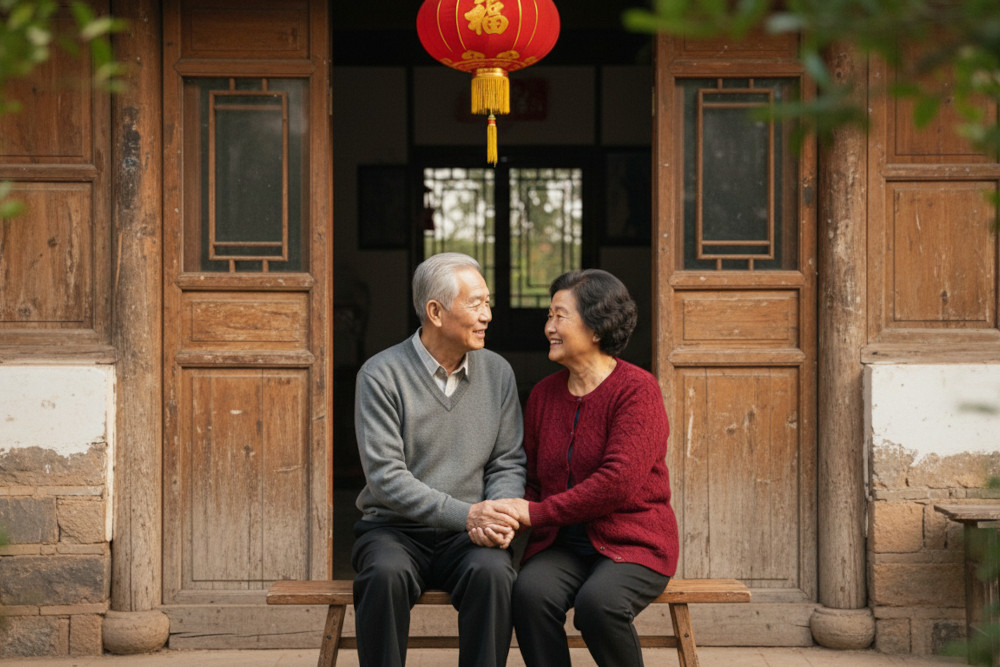
Now in the twilight of her years, Grandma is 76 — a traditional woman of quiet strength, gentle, patient, uncomplaining. She spent her life turning duty into devotion, and the ordinary into something sacred.
In her younger days, when Grandpa worked away from home, it was she who held the house together — raising four children, tending the fields, cooking, sewing, and making sure every need was met. The quilted cotton jackets and trousers she made for her children were the finest among their peers.
She also cared for my grandfather with great devotion. To this day, she has spoiled him so thoroughly that he can barely cook a thing himself. As he jokes, the only dish he can make is fried peanuts in three flavors: “raw, cooked, and burnt.”
During meals, if he said: “A little vinegar,” Grandma would quietly rise to fetch it. If he said: “Some garlic,” she would peel and mash the cloves without complaint. If he remarked: “It’s a bit bland,” she would add a pinch of salt. “Bring another bowl,” he’d say — and she would go and get one.
To us younger ones, his pickiness sometimes seemed exasperating. Yet Grandma never showed resentment — only calm, humble devotion, quietly supporting the man who worked so hard to provide for their family. Since the day she married him, she has always cared for him this way.
A model of devotion and grace
Ten years ago, Grandma underwent major surgery for esophageal cancer. According to Grandpa, the surgeon cut her open from chest to back, even removing a rib. Through it all, she never shed a tear, never uttered a word of complaint, and bore her pain with the same calm courage that had defined her life.
Afterward, eating became difficult, her health weakened, and her body shrank to barely sixty pounds. Yet her love remained enormous. She never used her illness as an excuse for idleness. Only during her brief recovery did we take care of her; once she could move again, she resumed cooking for everyone, unwilling to trouble others.
During that time, we also had to take care of Grandpa, but nothing compared to Grandma’s meticulous care.
Even now, this frail figure still finds joy in making dumplings and steamed buns for Grandpa and the grandchildren. Seeing everyone eat happily is her greatest reward; hearing “It’s delicious” brings her the purest contentment.
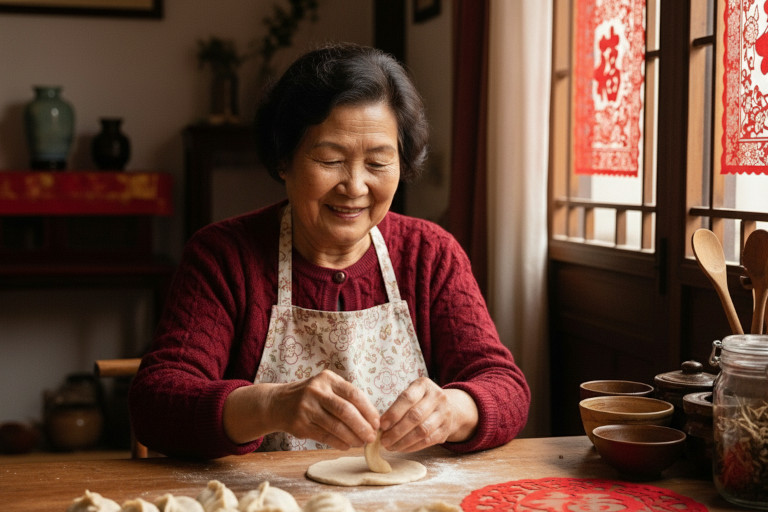
Her days are quiet and steady. She rises, cares for her family, tends to her health, and rests when needed. Simple tasks fill her hours, yet each one is done with devotion and care, the rhythm of her life as gentle and enduring as her love.
When people hear about my Grandma, single men often say: “That’s the kind of wife I want.” But how does one find such happiness?
A marriage carved in kindness
They were not partners who chose each other — theirs was a traditionally arranged marriage. Grandma was three years older than Grandpa, uneducated, and unable to read or write. Later, Grandpa rose to become a county magistrate, yet he never looked down on her humble background.
At a time when many abandoned their spouses under the new political slogans of “liberation” and “freedom to choose one’s spouse,” he chose instead to cherish his wife all the more deeply.
He never called her by name. Instead, he affectionately called her “the boss at home,” since she managed all the household finances. He never even knew where she kept their money. Whenever he earned money, he gave it to her; when he needed to spend, he asked her for some. Though she couldn’t read, he still let her hold the passbooks and bank records — a testament to their mutual trust.
Their affection ran so deep that the nickname stuck on both sides — each calling the other “the boss at home,” a lighthearted habit that captured their lifelong partnership and mutual respect.
It was Grandpa who first noticed her illness. He insisted she go to the hospital immediately, knowing that based on her habit of tolerance, she could let it drag on for a very long time. After her surgery, it was Grandpa who drew up a detailed care plan, even holding a family meeting to assign everyone’s responsibilities.
He often praised her — her thrift, her diligence, her clever hands. He never mocked her for her lack of education, never felt embarrassed, but only spoke of her with pride and gratitude. Despite his once-commanding temper — he could be stern with others — he was always gentle with her. If she occasionally teased or corrected him, he only smiled. Their rare quarrels were mild, almost playful — two souls orbiting each other, who understood when to yield, when to laugh, when to forgive — in a heartwarming way.
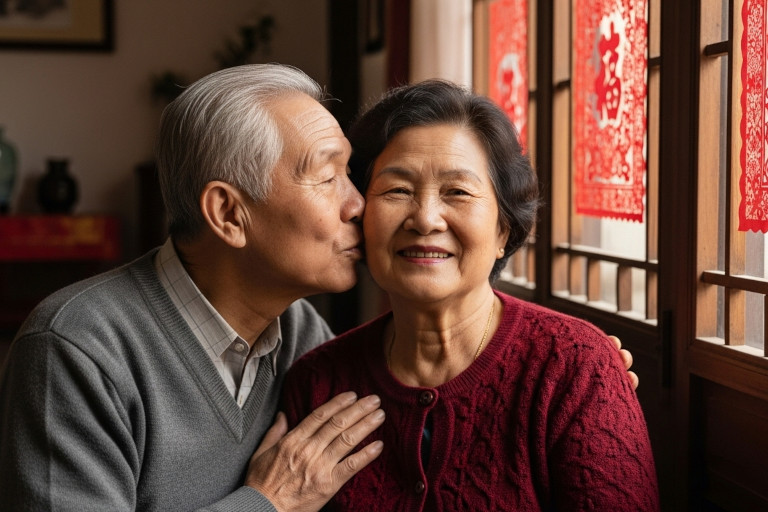
To Grandpa, Grandma’s devotion was a blessing most men only dream of. To Grandma, Grandpa’s lifelong tenderness was the kind of love found only in novels — real, steady, and everlasting.
Together, they created a quiet miracle of inner peace. They lived simply, yet their love was profound: she embodied love through kindness, patience, and lifelong dedication; he returned it through loyalty, respect, and unwavering care.
“Old companions,” they call them — two people who have walked through life side by side, sharing every hardship and every joy, their love quiet, steady, and enduring.
Postscript
This story was first written in 2006 — a true account of two souls who walked hand in hand through life and grew old together.
Grandpa passed away in 2008, and Grandma soon followed in 2009, leaving behind a love that time could never erase.
This piece remains a tribute to their devotion — for it was through them that my husband and I first came to know each other, and through them that we learned what love truly means.
Today, we honor and carry forward their legacy — one of steadfast love and quiet devotion.
— Adapted from “MXZ’s Deerpark Life,” GanjingWorld.com
Translated by Katy Liu
Follow us on X, Facebook, or Pinterest
