

At first, the words the man read in the newspaper shocked the World War II survivor. But as the reality sank in, a quiet truth emerged: Behind every kind of greatness lies someone who has silently borne humiliation, struggle, and hardship.
The betrayal
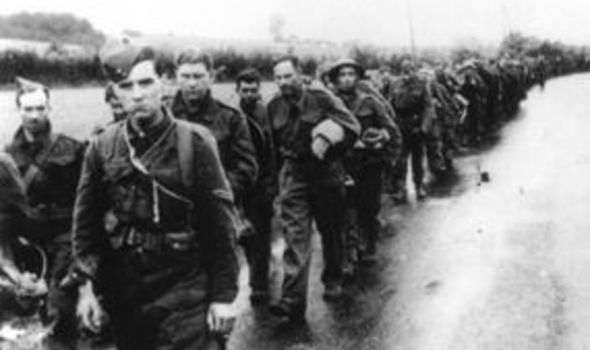
Rodick was a British soldier captured during the Second World War at Dunkirk, France. He was sent to a German prisoner-of-war camp that held nearly a thousand British soldiers. Life there stripped men of all dignity, driving them like animals to perform brutal labor day after day.
Rodick had once served as a driver in the British army. The Nazi guards needed drivers and began recruiting among the prisoners. In truth, several were trained, but no one wanted to serve the Nazi’s nor perform the task that was required — transporting the bodies of those who had died from wounds or disease. Yet Rodick alone stepped forward: “I can do it,” he said with surprising enthusiasm. Soon he became the camp’s driver — and something unexpected began to unfold.
He treated the other prisoners harshly and barked orders. Worse still, when weak prisoners collapsed, he would throw them onto the truck, even if they were not yet dead. The prisoners came to hate him deeply, calling him a traitor and a servant of the Nazis.
Ironically, the Nazis began to trust him more. At first, guards accompanied him whenever he drove out of the prison camp; eventually, he was allowed to go alone, his reliability earning their growing confidence. The prisoners’ anger reached a boiling point, and some secretly attacked him. On several occasions, he was beaten nearly to death by the very men who had once been his comrades.
After one particularly savage assault, Rodick permanently lost a hand. Unable to drive, he became useless to the camp authorities. Without hesitation, the Nazis discarded him like a worn-out sack. Unprotected, he now faced the prisoners’ full fury. One rainy day, he died alone beside a damp wall in the prison camp. For a time, it seemed his story had ended there.
The truth comes to light
Sixty years passed. Rodick’s hometown barely remembered him. Even his family avoided speaking his name. History had buried him beneath layers of silence. Then one day, a British newspaper ran a striking headline: “The Man Who Saved Me Was the One I Hated Most.”
The article told the story of Rodick, a prisoner who had seemed a traitor — serving the Nazis in ways that made him despised by his fellow men. The writer described his time in the camp with Rodick. One day, the man fell gravely ill. Though still alive, Rodick threw him onto the truck, telling the guards he would dispose of the body. What happened next shocked him.
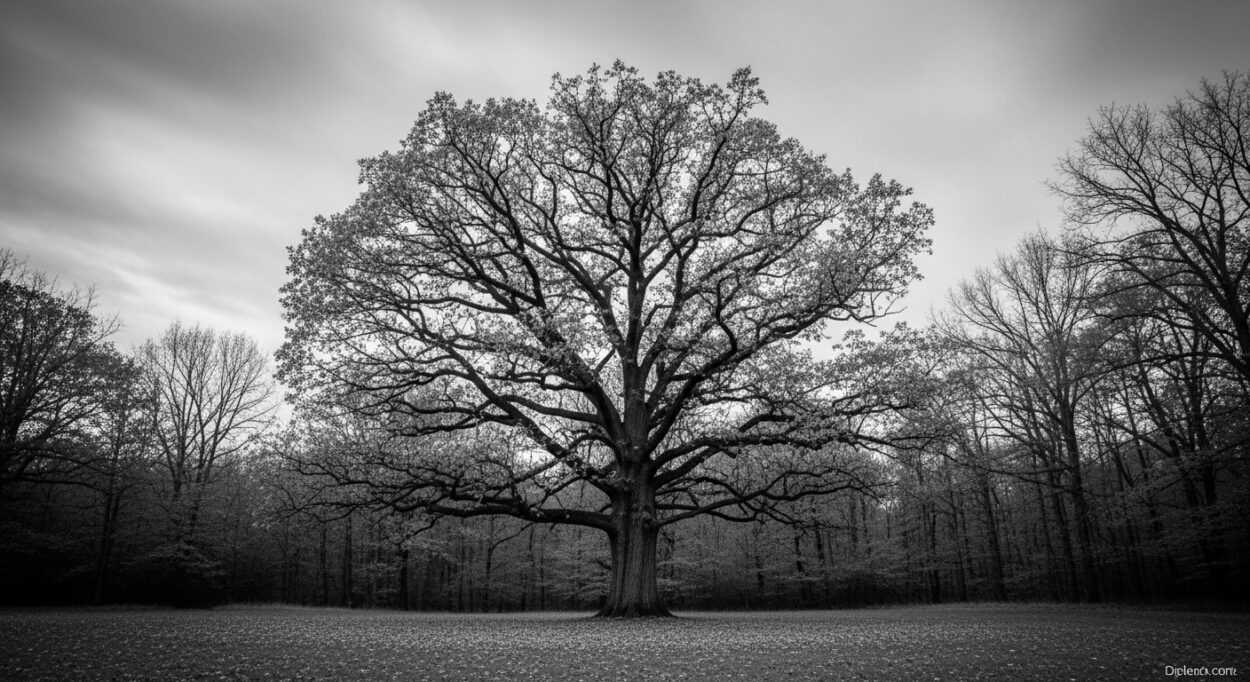
Halfway down the road, Rodick stopped the truck. He lifted the nearly unconscious man, carried him into the woods to a hidden spot, and laid him beneath a large tree. He left several pieces of black bread and a bottle of water. Before driving away, he spoke hurriedly: “If you survive, come back and visit this tree.”
Soon after the story appeared, the newspaper began receiving calls. Every caller was a World War II veteran, a former prisoner of the same camp. Twelve men in all. Astonishingly, each told nearly the same story. Rodick had secretly taken them out of the camp, hidden them beneath that same tree, and given them a chance to survive. Every time he left, he spoke the same words: “If you survive, come back and visit this tree.”
The article had been edited and recommended for publication by an elderly editor who had lived through the war. His instincts told him that this mysterious tree held an important secret. So he organized a group of the 13 surviving veterans and retraced their escape route, hoping to find it again. When they arrived, the valley remained unchanged. And there, still standing, was the tree. One veteran rushed forward and embraced it, sobbing. Inside a hollow in the trunk, they discovered a rusted metal box containing a worn diary and a stack of yellowed photographs.
They opened the diary carefully. One entry read: “Today I saved another comrade. That makes twenty-eight so far… I hope he survives… Twenty more prisoners died today… My comrades beat me again last night… But I must continue. If the truth is revealed, I will not be able to save more people… My dear comrades, I have only one wish: if you live, please come back to see this tree.”
By now, the editor’s voice was choked with emotion. The old soldiers stood beneath the tree, their hair now white with age, tears streaming freely down their faces. At last, they understood the full truth: Rodick had saved 36 British prisoners in all. Perhaps some of the others might still be alive somewhere in the world.
An extraordinary spirit
The diary and photographs hidden in the tree hollow became powerful evidence, exposing life in the Nazi prisoner of war camps. Soon, the newspaper published a full report about Rodick’s story. People began visiting the once-silent valley, leaving flowers beneath the old tree. Rodick, the man once cursed as a traitor, was finally honored as a national hero.
A writer later visited the valley. He placed a small bouquet of wildflowers beside the simple monument and sat quietly beneath the tree for a long while. In a book, he later wrote: “Perfection always demands a price. And to pay that price requires an extraordinary spirit — one that can endure humiliation and carry heavy burdens without breaking.”
Sometimes, noble actions appear to contradict their true purpose. Circumstances may twist them into forms that invite misunderstanding — even hatred. Yet those who endure such pressure for the sake of a greater good will one day see their names raised like banners of honor. Rodick was one of them.
In this world, the kind of person I admire most is the one who, even in the harshest conditions, chooses to carry a heavy burden — rather than survive by compromising their conscience. Rodick’s story reminds us that true heroism is rarely recognized in the moment. Sometimes, we cannot see the full truth of a situation or the hidden sacrifices made for others.
Such courage lives in quiet choices — in acts of conscience carried out under extraordinary pressure. Those who bear burdens unseen, face misunderstanding, or even hatred for doing what is right, and persist nonetheless, reveal the extraordinary strength and compassion of the human spirit.
We may never face trials like his, but we can carry his lesson: courage often wears a mask, greatness may hide in the shadows, and a man’s moral heart is revealed not in applause, but in steadfast commitment to what is right. Rodick’s life teaches us that sometimes the greatest heroes are those who suffer in silence, so that others may survive.
Translated by Katy Liu and edited by Tatiana Denning
Follow us on X, Facebook, or Pinterest
