
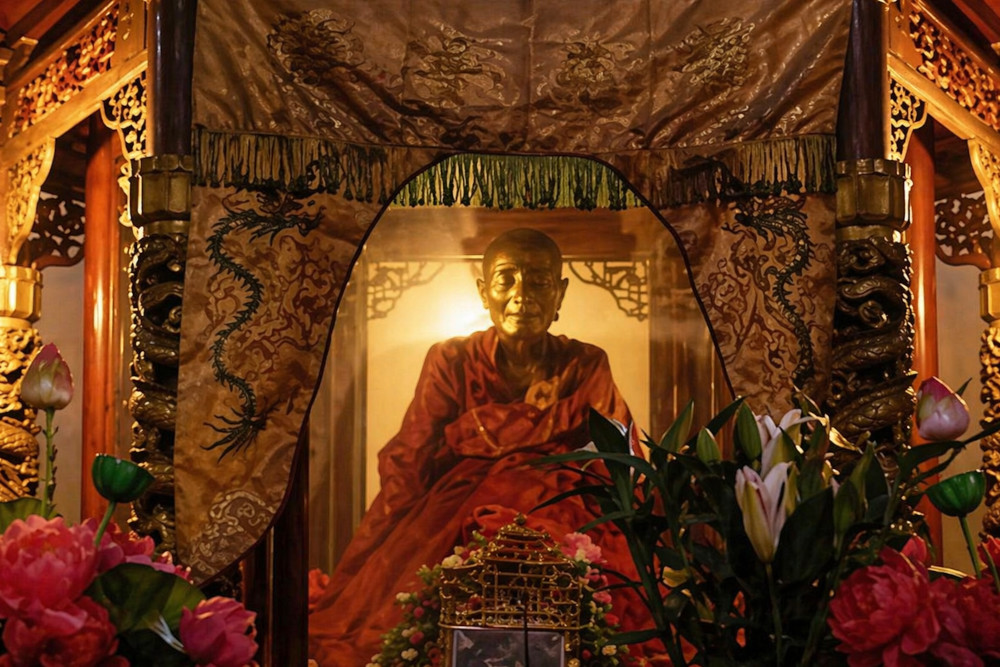
Birth, aging, sickness, and death are part of the natural order. From an ordinary scientific viewpoint, once life has ended, the body begins to decay. Yet throughout Chinese Buddhist history, there have been cases that seem to challenge that understanding.
For centuries, people have recorded accounts of highly respected monks and spiritual practitioners whose bodies did not decompose after death. In some reported cases, the joints were said to remain movable. In others, new hair and fingernails reportedly appeared. These accounts have long been regarded in Buddhist circles as genuine phenomena, even though modern science has not been able to fully explain them.
In Buddhism, such remains are often called “full-body relics” or “flesh bodhisattvas.” Among China’s sacred Buddhist mountains, Mount Jiuhua is especially well known for them. Located in Chizhou, Anhui Province, on the southern bank of the lower Yangtze River, Mount Jiuhua is celebrated for its natural beauty, with 99 peaks and 99 temples. It is also known as the site of 14 flesh bodhisattvas.
Two of the most striking modern accounts are those of the Buddhist Abbess Renyi of Mount Jiuhua and Buddhist Monk Miaozhi of Fujian.
Abbess Renyi of Mount Jiuhua
Among the best-known examples of incorruptible remains is Abbess Renyi, a Buddhist nun whose lay name was Jiang Sumin. She was born in 1911 into a wealthy family in Tonghua, Jilin Province. As a teenager, she devoted herself to studying medicine, especially acupuncture. Later in life, she was known for using those skills to help others.
In 1940, she went to Mount Wutai and entered monastic life at Xiantong Temple, where she received the Dharma name Renyi. In 1983, she moved to Mount Jiuhua. She passed away peacefully on the night of Nov. 28, 1995, at the age of 85.
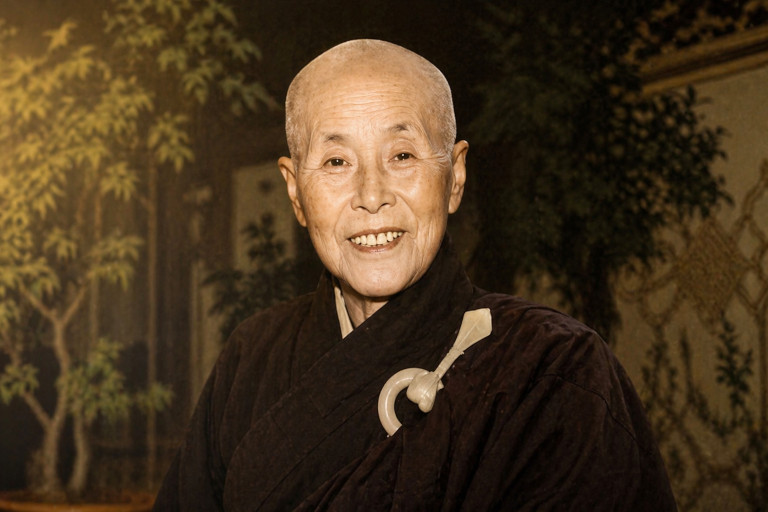
More than three years later, on Jan. 2, 1999, her disciples opened the sealed container in which her body had been placed in the traditional seated posture. What they reportedly saw left a deep impression. Renyi was still sitting upright. Her black-and-white hair had grown by more than an inch. Her teeth remained intact, her skin pores were visible, and the body still retained some elasticity. The account also says that her female physical characteristics had disappeared.
Within Buddhist tradition, cases like this are not seen as ordinary curiosities. They are viewed as signs connected to a person’s spiritual attainment and lifelong cultivation. For believers, such remains are a reminder that the human body may reflect far more than what can be explained through ordinary material understanding.
Buddhist Monk Miaozhi of Fujian
Another often-cited example is the Buddhist monk Miaozhi, who passed away in 2003 at the age of 116. He is regarded as the only known flesh bodhisattva in Fujian Province.
From Sept. 9 to Sept. 17, 2002, when he was 115 years old, Miaozhi traveled thousands of miles on a pilgrimage to Mount Jiuhua and other historic religious sites. During that journey, he paid respects to the preserved body of Buddhist Monk Ciming at Mount Jiuhua and was said to have been deeply moved by what he saw.
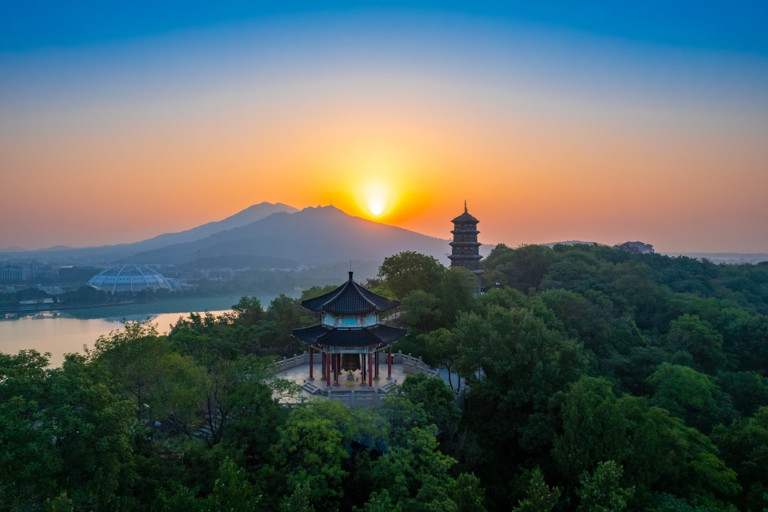
That same evening, he spoke to Master Dichen, the abbot of Tianchi Temple on Mount Jiuhua, and said: “After this old monk passes on in the future, please look after me.”
The following year, on the 28th day of the first lunar month, Miaozhi passed away. In accordance with his wishes, his disciples invited monks from Mount Jiuhua to help preserve his body. He was placed in the full lotus position inside a sealed vat, with charcoal, sandalwood, lime, and other materials set inside before the container was closed and protected with brickwork.
Three years later, on the same lunar date in 2006, the vat was opened. Reports say Miaozhi’s body was intact and his face appeared lifelike. Even more remarkably, new fingernails and hair were said to have grown.
A phenomenon that science still cannot explain
According to ordinary scientific understanding, organic matter decays once life is gone. Yet reports of incorruptible bodies among religious practitioners have existed for more than a thousand years, and the phenomenon remains unexplained.
For many in the cultivation world, this is not something legendary or symbolic, but a real and recurring phenomenon. Modern empirical science has made enormous advances, but there are still unusual accounts that fall outside its current ability to explain.
Whether one sees these cases through the lens of faith, history, or mystery, they continue to raise enduring questions about the human body, spiritual discipline, and the limits of what modern science can account for.
Translated by Patty Zhang
Follow us on X, Facebook, or Pinterest
