
A patent that should not exist
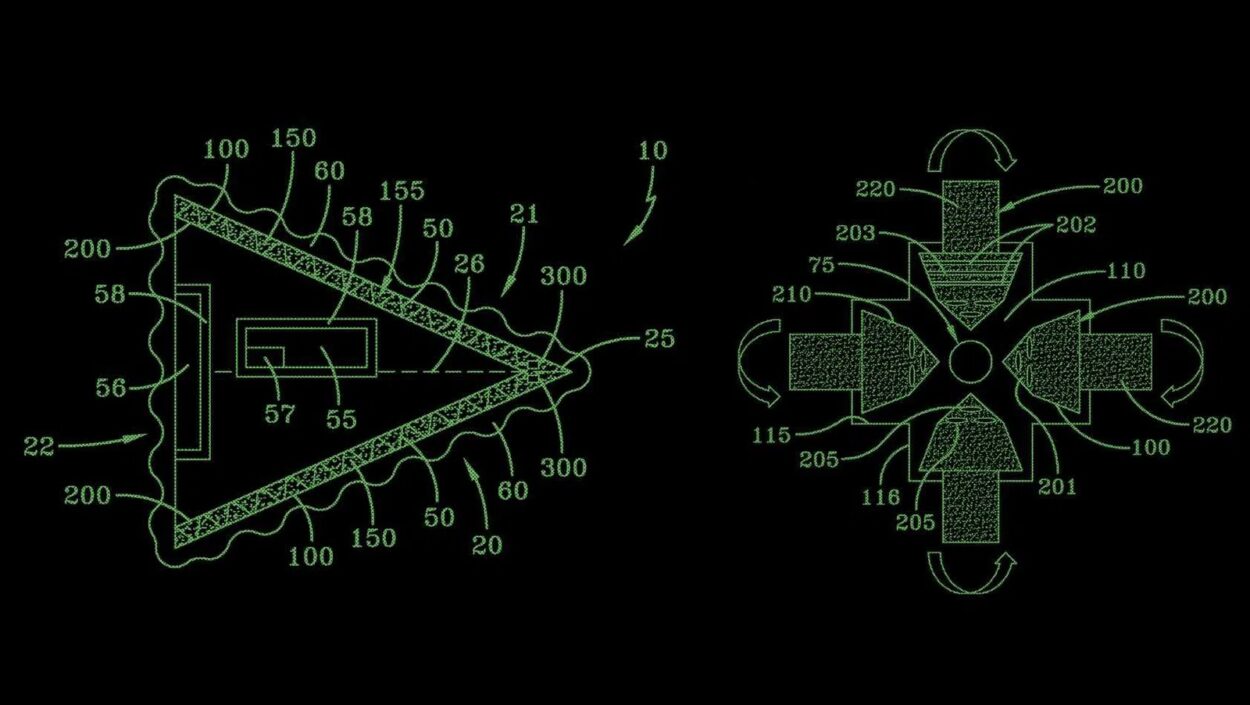
There is a document filed at the United States Patent and Trademark Office, number 10,144,532 B2, titled “Craft using an inertial mass reduction device.” The assignee is the United States Department of the Navy. The drawings show a triangular hull. The mathematics inside describe a vehicle that reduces its inertia by manipulating the quantum vacuum, then moves through air, water, and space as though none of them existed. The patent was approved. It is public. You can pull it up on Google Patents in under a minute.
By every standard of conventional physics, this document should not exist. It describes magnetic field strengths in the range of 10^10 to 10^18 Tesla, while humanity’s strongest sustained magnetic fields, built at facilities like CERN, top out around 100. It describes room-temperature superconductors as though they were a workshop component. The original patent examiner rejected it as physically impossible, which is what an honest examiner is supposed to do. Then, the Chief Technology Officer of the Naval Aviation Enterprise, Dr. James Sheehy, wrote a letter declaring the concepts “operable” and citing the need to secure the intellectual property before China did, and the patent was granted.
Anti-gravity, in the form that a layperson means when they say the word, has not been demonstrated in any peer-reviewed setting on Earth. The Navy spent over half a million dollars between 2016 and 2019 trying to replicate the “Pais Effect” in a laboratory and produced nothing. CERN’s ALPHA-g experiment confirmed that antimatter falls down. Several of the relevant patents have since lapsed for unpaid maintenance fees, which is the bureaucratic equivalent of quietly walking away.
And yet the document exists. The triangular drawings exist. The sworn testimony of decorated intelligence officers, given to Congress under penalty of perjury, exists. A silver sphere scanned by a Colombian radiologist, with a three-layer internal structure and engravings that look like nothing any one civilization on this planet ever wrote alone, exists. The question is not whether we have alien technology. The question is what kind of epistemic system we have built, in which the most consequential possibility of our era cannot be answered by anyone who is not already inside the wall.
What is on the public record, exactly
Strip away the temptation to either dismiss or believe, and walk through what is documented. Not what is whispered. What is filed, sworn, and scanned?
The Pais patents
Between 2016 and 2019, theoretical aerospace engineer Dr. Salvatore Cezar Pais filed a series of patents on behalf of the Naval Air Warfare Center Aircraft Division. They include a hybrid aerospace-undersea craft with a triangular hull, a high-frequency gravitational wave generator, and a room-temperature superconductor. These documents are not internet folklore. They are real instruments of intellectual property law assigned to a branch of the United States military.
The Grusch testimony
In July 2023, former intelligence officer David Grusch testified to the House Oversight Committee under oath that the United States operates a multi-decade UAP crash-retrieval and reverse-engineering program. He stated that he knew the names and locations of the relevant operations. He stated that biological remains had been recovered. Under questioning, he conceded that his testimony rested on interviews with more than forty witnesses rather than on first-hand observation of the craft.
The Elizondo and Gallaudet hearings
In November 2024, former AATIP lead Luis Elizondo and retired Rear Admiral Tim Gallaudet testified that an arms race over reverse-engineered technology is underway across multiple nations, and that information about UAPs is being intentionally withheld from legitimate congressional oversight. Their statements were also under oath.
The AARO rebuttal
The Pentagon’s All-domain Anomaly Resolution Office, granted access to the classified files in question, concluded in its 2024 historical report that the alleged programs either did not exist, were misidentifications of conventional classified projects, or, in one case (“Kona Blue”), were proposed but never authorized. AARO described the persistence of the reverse-engineering narrative as “circular reporting” inside a tight-knit community.
The Buga Sphere
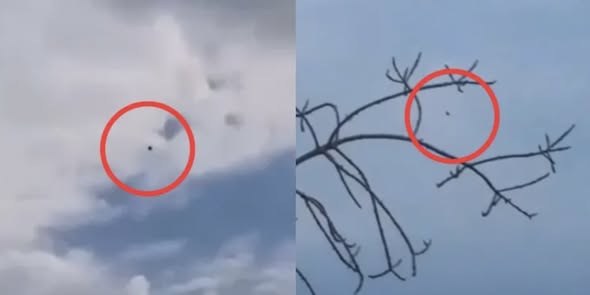
On March 2, 2025, witnesses in Buga, Colombia, reported a basketball-sized metallic orb flying erratically, striking a high-voltage power line, and crashing into a forest. The recovered object reportedly weighs about 4.5 pounds, is imperceptible to the naked eye, and is engraved with marks resembling a blend of Ogham, Norse runes, and Mesopotamian scripts. Dr. José Luis Velasquez, a Colombian radiologist, performed X-ray and CT scans that revealed a three-layered interior, with an internal core surrounded by microspheres. He has publicly stated that the manufacturing techniques exceed conventional human engineering. Independent physicists, including Dr. Julia Mossbridge, have argued that the object is most likely a sophisticated terrestrial artifact or installation.
All of this is on the record. None of it is on the same record. The patents live in patent law. The testimony lives in congressional transcripts. The sphere lives in a clinic in Colombia. The rebuttal lives in a Pentagon office. No single body holds them all in one hand and rules on their collective meaning. There is no court for this.
The non-replication trap
When the institutional response to all of this is presented to the public, it follows a predictable shape. The patents are speculative, the science is unproven, the testimony is hearsay, no physical artifact has been independently verified, and no peer-reviewed replication exists. Each individual sentence is true. Together they form a closed loop that cannot, by construction, ever be opened from the outside.
Consider what would actually be required to validate a claim of reverse-engineered exotic technology. A scientist would need access to the material. Access requires a security clearance. The clearance requires a non-disclosure agreement enforceable under Title 18 of the U.S. Code, carrying federal prison sentences for violation. Once cleared, the scientist works in a Special Access Program, often a “waived” one, in which even the vast majority of Congress is legally prohibited from learning of the program’s existence. The work is conducted at private defense contractors, such as Lockheed Martin’s Skunk Works, Northrop Grumman, or Boeing Phantom Works, which means it is shielded from Freedom of Information Act requests because FOIA does not apply to private corporations.
The scientist cannot publish. The scientist cannot peer-review. The scientist cannot, on pain of imprisonment, even confirm to other scientists working on adjacent classified programs that the program exists, which they themselves cannot discuss. The result, by design, is that no public record of the technology can ever be produced from the inside. And no public verification can be produced from the outside, because the outside has nothing to verify. Absence of public evidence, in a system engineered to eliminate public evidence, is not the absence of the thing. It is evidence of the system.
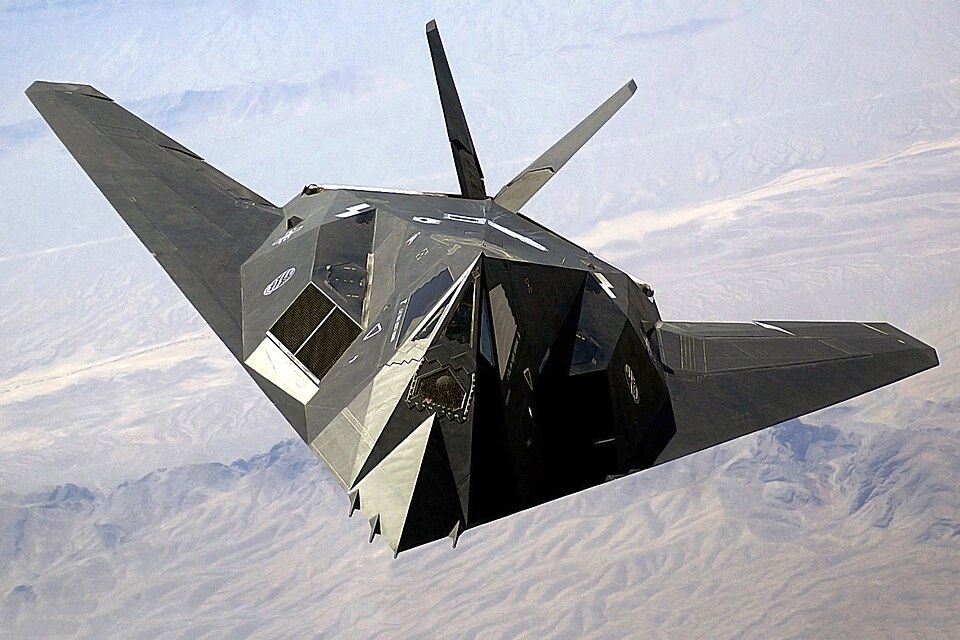
This is not paranoia. It is the documented operational architecture of how the United States manages its most sensitive programs. The F-117 Nighthawk flew at Tonopah Test Range from the late 1970s. The Pentagon publicly acknowledged it in 1988. For nearly a decade, the most authoritative public physics literature held that a stealth aircraft with that geometric profile could not fly stably because the academic world lacked access to the classified fly-by-wire software the military had quietly developed. The CORONA satellite reconnaissance program ran from 1959 to 1972 and was declassified only in 1995. For thirty-six years, the most informed public estimates of American orbital surveillance capability were wrong by orders of magnitude, and the people producing those estimates were not stupid. They were simply outside the wall.
Why the patent is the strangest part of the story
Inside the skeptical reading, the Pais patents are dismissed as speculative mathematics dressed up in defense-grade jargon. The official Navy line, articulated when pressed, is that the patents serve a defensive purpose: to secure intellectual property in case foreign adversaries make a breakthrough first, and to force them to waste resources investigating concepts the United States may know are impossible. This is presented as wisdom. It is also, looked at directly, a strange thing for a major military power to admit on the record.
Read the explanation carefully. The Navy is saying it spent the institutional capital required to override a USPTO examiner’s rejection, took the reputational risk of publicly tying its name to a patent that mainstream physicists describe as containing invented jargon, and then allowed the patents to lapse without commercial development, all because it wanted to lay an intellectual property trap for the People’s Liberation Army. This is a coherent story. It is also a story in which the most strategically secretive military on Earth voluntarily published a roadmap to what it considered nonsense in order to confuse another military it considered serious.
There are two readings, and both are uncomfortable. In the first, the institution is telling the truth, and the patents are bait, which means a state apparatus is willing to publicly degrade its scientific credibility to win a long-tail strategic game over technologies it does not believe in. In the second, the institution is misdirecting, and the patents are crude descriptions of something that already exists, in which case the patents are partly true and partly camouflage. There is no third reading in which everyone involved was simply earnest. The document is too well-formed for that.
The Buga Sphere and the limits of a single scientist
The Colombian sphere occupies a different category from the patents and the testimony. The patents are paper. The testimony is words. The sphere is a physical object that a human being can hold, weigh, and place in a CT scanner. This makes it the most testable artifact in the present discourse and, paradoxically, the one most exposed to the failure mode of premature certainty in either direction.
Dr. José Luis Velasquez has done the work that a single radiologist can do. He has imagined the interior. He has measured what his equipment is built to measure. His public conclusion, that the manufacturing exceeds known human technique, is a credentialed statement. It is also a statement made by one person, operating outside the institutional structure of peer review, working with the equipment available to him in Buga. This is not a criticism. It is the reality of how a working scientist with limited resources confronts an object that no academic body wants to formally touch.
What would close the question is not more rhetoric. It is an isotopic analysis. Every element on Earth has a characteristic isotopic ratio, set by the conditions of stellar nucleosynthesis and subsequent terrestrial processing. Titanium mined in Australia and titanium mined in Brazil are nearly isotopically identical because both were forged in the same dying stars and settled into the same accretion disk. A material formed under different stellar conditions, or fabricated from elements processed through technology unlike our own, would show isotopic ratios that no terrestrial mine can produce.
This test exists. It is not exotic. It is done routinely in geology and forensic metallurgy. The fact that it has not, as of this writing, been performed on the Buga Sphere by an independent international body is itself the story. The artifact is being kept within a small circle of researchers loyal to a particular interpretation, which is exactly the structural pattern that, on the institutional side, is criticized as “circular reporting.” The same epistemic failure mode operates on both sides of the wall, for the same reason: when the cost of being wrong is reputational annihilation, no one in a position to settle the question wants to be the one who looks foolish first. The artifact does not need to be alien to be important. It needs to be examined honestly enough that the answer, whatever it is, can survive contact with people who do not already want it to be true.
The structural principle underneath all of it
Step back from the specific question of whether anti-gravity, or recovered extraterrestrial craft, or unknown propulsion physics actually exists in a hangar somewhere in Nevada. The deeper structure is this: A society has built an information architecture in which its most consequential possibilities are answerable only by institutions that, by design, have been granted the legal right to lie about them. The same architecture handles nuclear weapons, signals intelligence, advanced biological research, and orbital reconnaissance. It works. Things stay secret. The cost is that on certain questions, the citizenry is structurally locked out of knowing what is true, and the scientific community is structurally locked out of correcting itself.
This is not unique to the United States. Every state with a serious military operates a version of this. China runs it through its civil-military fusion programs. Russia ran it through closed cities. Israel runs it through ambiguity itself. The architecture is the price of national survival in a competitive technological era, and it is also, simultaneously, a system that converts certain categories of truth into permanent unknowns for everyone outside the cleared population.
The standard institutional skeptic will object that this argument proves too much. By this logic, the absence of evidence for any sufficiently fantastical claim could be reinterpreted as evidence of a successful cover-up, and the very tool of rational discrimination collapses. The objection is correct. Once you accept that an entire category of truth is sealed off from public verification, you have also accepted that you cannot tell, from the outside, the difference between a real technology that is being hidden and a sophisticated institutional myth that is being sustained by the same secrecy machinery. The honest answer is that you cannot tell, and pretending otherwise is the failure mode.
Back to the patent on the desk
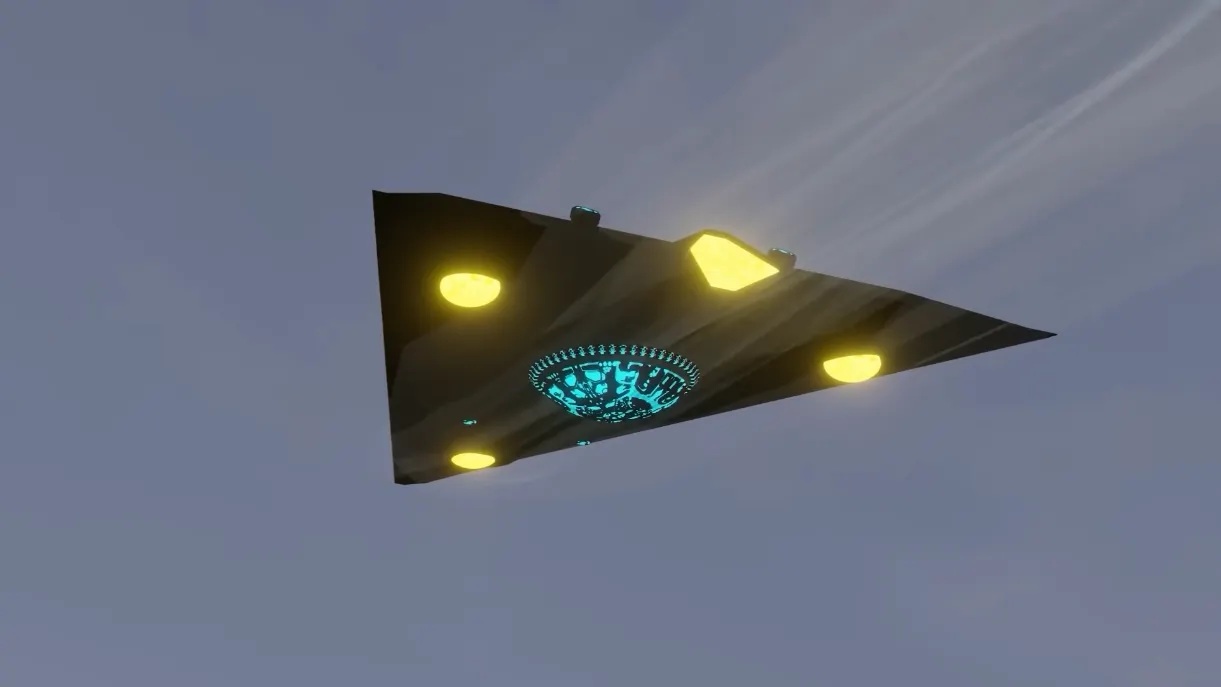
Return to the document the article opened with. U.S. Patent 10,144,532 B2. Triangular hull. Inertial mass reduction. Filed by the United States Navy, approved by the USPTO over its own examiner’s objections, partially defended in court, partially abandoned by maintenance fee.
Hold it next to David Grusch’s sworn testimony that he knows the names of the programs. Hold it next to Luis Elizondo, telling Congress an arms race is underway. Hold it next to a Colombian radiologist, who is showing CT scans of a three-layered interior within a seamless metal sphere. Hold it next to AARO, concluding none of this is real, while operating under exactly the kind of classification authority that would prevent it from saying otherwise if it were.
What you are looking at is not a question with an answer. It is the shape of a question that the public information environment is structurally unable to resolve. A reasonable person can read the same set of documents and arrive at “this is a coordinated cover-up of recovered exotic technology,” or “this is a sustained institutional myth supported by classification opacity,” or “this is a strategic disinformation program operating exactly as intended,” and none of those readings can be falsified from outside the wall.
The question is no longer whether anti-gravity exists. The question is what it means to be a citizen, a scientist, or an honest analyst within a system that has deliberately made certain truths unverifiable. The answer to that question does not require classified access. It requires only that the reading be done with both eyes open.
Somewhere in a vault, or in a warehouse, or in nothing at all, a triangular craft either exists or it does not. The document describing it is on a desk we can all touch. The truth is in a room we are not allowed to enter. And the wall between those two facts is, in the end, the only object in this story whose existence is not in dispute.
Follow us on X, Facebook, or Pinterest
