

In the Qing Dynasty, there was a scholar named Zeng Yuanhai (1797-1833), from Min County in today’s Fujian Province. His family was well known in the region. His father, Zeng Huichun, was the cousin of Lin Zexu — the statesman remembered for his opposition to the opium trade — and was respected locally for his generosity. Of Huichun’s five sons, all achieved success, but Zeng Yuanhai stood out the earliest.
By his early twenties, Zeng Yuanhai had already earned the title of juren — one who passed the highly competitive provincial-level imperial examination, a distinction achieved by only a small fraction of candidates. Four years later, he went even further, attaining the rank of jinshi, the highest degree in the examination system and a gateway to elite government service. He placed fifth nationwide, an extraordinary accomplishment that marked him as one of the brightest minds of his generation. Many believed his brilliance was linked to something unusual — the awakening of memories from a past life.
A miraculous cure in childhood
As a child, Zeng Yuanhai fell gravely ill with dan du, a kind of bacterial cellulitis. This condition, which can recur and become life-threatening if untreated, is easily managed today with penicillin — which, unfortunately for Zeng, would not be discovered until more than a century later. His illness worsened until his life hung by a thread.
At that moment, a wandering monk appeared at the family home. The doorkeeper initially tried to turn him away, but the monk insisted he had come to cure the boy. The monk produced 37 small needles and instructed that Zeng swallow them. Alarmed, the family resisted, but with the child already near death, they decided to risk it. To their astonishment, after swallowing the needles, Zeng recovered rapidly.

Before departing, the monk left behind more needles, telling the family that if Zeng ever fell ill again, he could swallow them to be healed. Remarkably, whenever sickness struck afterward, the treatment worked.
Memories of a past life
At the age of seven, Zeng suddenly displayed extraordinary insight, claiming to recall experiences from a previous lifetime. He engaged his teachers in debates that even they found difficult to win.
Later, as a scholar in the prestigious Hanlin Academy, Zeng traveled through Sichuan on his way to an official post in Guizhou. Passing a particular town, he remarked that in a past life he had lived there as an old Confucian scholar. He visited the man’s former residence, where the scholar’s son was still alive. Walking directly into the study, Zeng pointed to a particular page in a book on the shelf, saying that a manuscript written by the old scholar lay there. When the family searched, they found the manuscript exactly as described.
37 years of life
At the age of 37, Zeng developed a lump beneath the skin of his abdomen. The family searched for the monk’s needles but could not find them. Soon after, Zeng passed away.
Only then did people understand the deeper meaning of the monk’s earlier treatment. When he had given the boy 37 needles, it was not just a cure but a sign: those 37 needles represented 37 years of life.
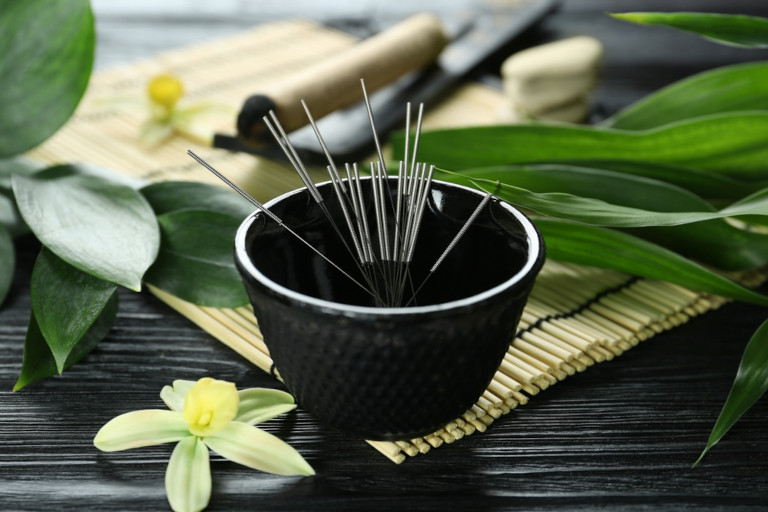
This story was later preserved thanks to Zeng’s younger brother, Zeng Yuancheng, who was a close friend and in-law of Guo Boyin. Generations later, Guo’s great-grandson, Guo Zeyun, who once served as Secretary General of the State Council of the Republic of China, collected accounts of unusual events and recorded this episode in his writings.
A monk with extraordinary powers
From a modern medical standpoint, swallowing needles would damage the stomach and intestines. Yet throughout history, there have been monks and sages with unusual abilities who could perform such feats unharmed.
One example comes from the Northern and Southern dynasties, when the Indian monk Kumārajīva was in China. Under political pressure, he was forced to marry, breaking his vows. Later, when other monks considered imitating him, Kumārajīva gathered them together. On the table were two bowls filled with water and needles. In full view of everyone, he swallowed one entire bowl of needles, then declared: “Whoever can swallow the other bowl may also marry and have children.” None dared try, and the idea of breaking vows quickly faded.
Legacy of an unusual life
Zeng Yuanhai’s story continues to be retold not just for its mystery but for its lessons. To his contemporaries, the monk’s intervention was both a miracle and a warning: life can be extended, but only to the extent Heaven allows.
His brilliance, early success, and unusual memories marked him as exceptional, yet his fate was sealed at the age of 37. The image of “thirty-seven needles, thirty-seven years” remains a striking reminder of how destiny and human experience intertwine in ways beyond easy explanation.
Translated by Eva
Follow us on X, Facebook, or Pinterest
