
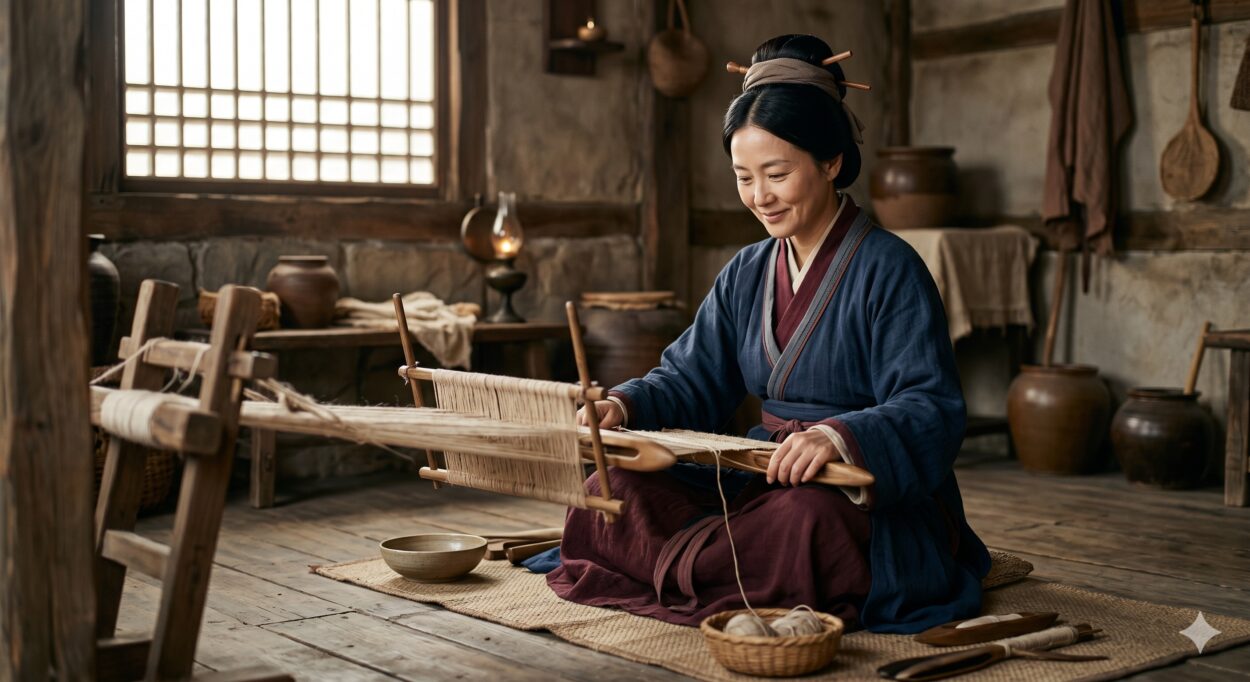
The ancient Chinese cherished the principle of “drinking water without forgetting its source,” a reminder to honor one’s origins and those who came before. Throughout history, countless remarkable individuals have risen to prominence, yet behind many of these achievements stands the quiet devotion and guidance of a mother.
When parents uphold virtue, children are more likely to receive sound moral formation. Among all forms of parental influence, a mother’s role in shaping a child’s character and destiny is often the most profound. History preserves the memory of ten exemplary mothers whose lives have been admired and passed down through generations.
Confucius’ mother, Lady Yan: A pioneer of early childhood education
Lady Yan Zhengzai, the mother of Confucius, was born into a scholarly family. However, she entered marriage as a secondary wife rather than the principal spouse. When Confucius was only three years old, his father passed away. Lady Yan was barely 20 when she became a widow. She endured harsh treatment from the principal wife of the household, received no share of the family inheritance, and was even denied the right to participate in ceremonies honoring her late husband. Yet she possessed remarkable resilience.
Bearing the weight of social prejudice and personal hardship, she left with her young son to establish an independent life. Though her means were limited, she gathered her husband’s treasured books and settled in Qufu. Mother and son lived in a humble one-room dwelling. To support them, Lady Yan gathered neighborhood children and taught them to read and write. Young Confucius studied alongside them under his mother’s instruction.
The modest tuition she received helped sustain their livelihood, but the experience offered something even more valuable. Learning alongside other children profoundly influenced Confucius’ later vision as a great educator. His advocacy of private education and his belief that education should be available to all, regardless of background, can be traced, in part, to his mother’s example. The educational ideals for which Confucius became famous — nurturing human potential and teaching without discrimination — were first planted by his mother.
At that time, Qufu, the capital of the State of Lu, was renowned for its highly developed ceremonial traditions and cultural institutions. Most educated people studied the Six Arts, the essential disciplines of classical learning.
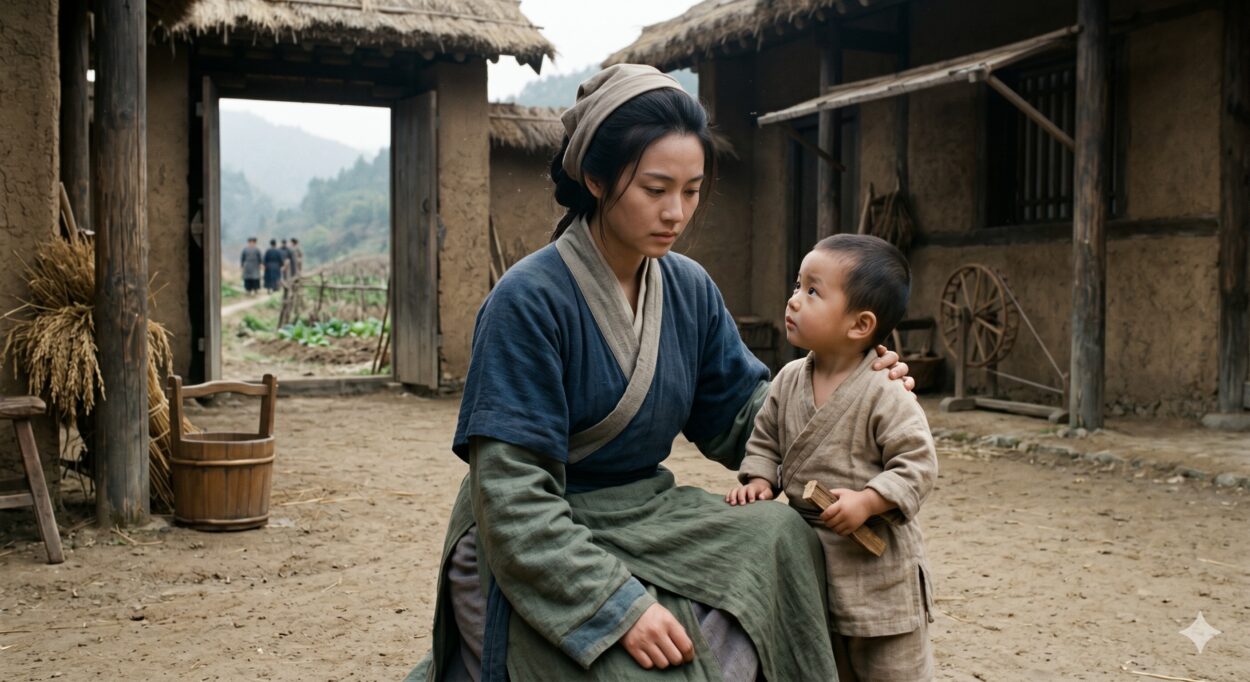
While Confucius was still a child, his mother frequently took him to observe ceremonies and rituals, helping him become familiar with the customs inherited from the Zhou dynasty. Even in everyday life, she transformed play into learning. Through toys and games, she taught him ritual propriety: how to offer prayers to Heaven, use ceremonial vessels, present libations, and express reverence.
Therefore, Confucius’ extraordinary familiarity with ritual was not acquired overnight. It was cultivated through years of immersion in the environment his mother created. Later, his emphasis on propriety, moral cultivation, and social harmony would become foundational principles of Confucian thought.
Looking back across 25 centuries, we can see the true greatness of Confucius’ mother: her far-reaching vision. Despite poverty, widowhood, and social prejudice, she did not focus solely on immediate survival. Instead, through patience, wisdom, and quiet determination, she helped lay the foundation for an educational approach that would influence China for millennia. In such an ancient age, this required uncommon foresight and conviction. Confucius’ core teachings — benevolence (ren), virtue (de), and ritual propriety (li) — were deeply rooted in the values his mother instilled in him.
Mencius’ mother: A model of teaching by example
Mencius, often honored as the “Second Sage” after Confucius, holds a unique place in Chinese intellectual history. Much of his development is traditionally attributed to the careful guidance of his mother, Lady Zhang. Among the most well-known accounts is the story of “Mencius’s mother moving three times.” It has been passed down through generations and widely praised by scholars, officials, and ordinary families alike. Later tradition even established memorial halls and monuments in her honor.
One of her most enduring lessons remains relevant even today. This episode is known as “Cutting the Loom.” In modern times, parents may sometimes respond to poor academic performance with anger, scolding, or punishment, often justified as being “for the child’s own good.” Lady Zhang chose a different approach.
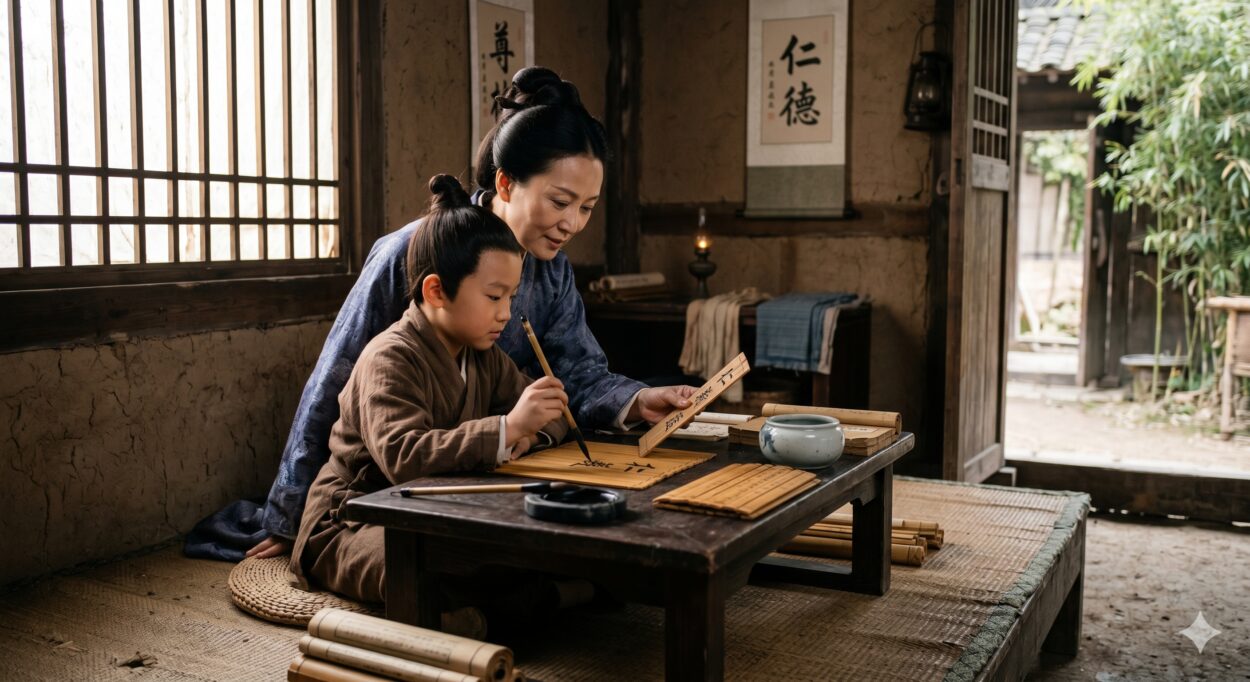
One evening, as she sat weaving cloth by lamplight, she noticed young Mencius neglecting his studies. Without raising her voice or expressing anger, she quietly took a pair of scissors and cut through the cloth she had worked so diligently to weave. Then she explained: “Learning is like weaving. If you abandon it halfway, it becomes like this cloth. Once cut, it cannot be easily restored and can no longer serve its purpose. What a pity that would be.”
The lesson was simple, yet profound. There was no shouting, no humiliation, and no intimidation. Instead, she used a vivid, tangible example from everyday life to teach perseverance and responsibility. Her guidance was gentle, practical, and deeply effective. For centuries, Lady Zhang has been remembered not merely for teaching her son, but for teaching him wisely — through both words and actions. Her patient example shaped character far more effectively than lofty lectures ever could.
Another well-known story illustrates the same principle.
One day, young Mencius saw a neighbor slaughtering a pig and asked his mother: “Why are they killing the pig?” Busy with household tasks, she answered without much thought: “To cook meat for you.” It was not a formal promise, but a casual remark made in passing. The boy’s eyes lit up, and he eagerly began looking forward to the meal.
Soon afterward, his mother realized her mistake: Although she had not intended to make a commitment, her son had taken her words as a promise. She had often taught him that honesty is essential and that one’s words must align with one’s actions. If she failed to follow through, even on a statement made lightly, would she not weaken the very lesson she was trying to instill?
Although the family was poor, she chose to honor her words. She went to the neighbor, purchased meat, and prepared it for her son. To her, integrity was worth more than material hardship. Mencius would later become one of the greatest representatives of Confucian thought, standing alongside Confucius as a towering figure in Chinese philosophy. His teachings emphasized benevolence (ren), righteousness (yi), and the inherent goodness of human nature.
It is difficult to overlook the profound influence of his mother’s example. Had she relied on anger instead of wisdom, harshness instead of guidance, or empty words instead of integrity, could she have nurtured the virtues for which he would later become renowned? The answer seems self-evident. The character of the teacher often becomes the character of the lesson, and in the case of Mencius, that lesson began at home.
In Part 2, we will explore the stories of the mothers of Tao Kan and Yue Fei, whose guidance and example helped shape two of China’s most celebrated historical figures.
See Part 2 here
Translated by Katy Liu and edited by Tatiana Denning
Follow us on X, Facebook, or Pinterest
