
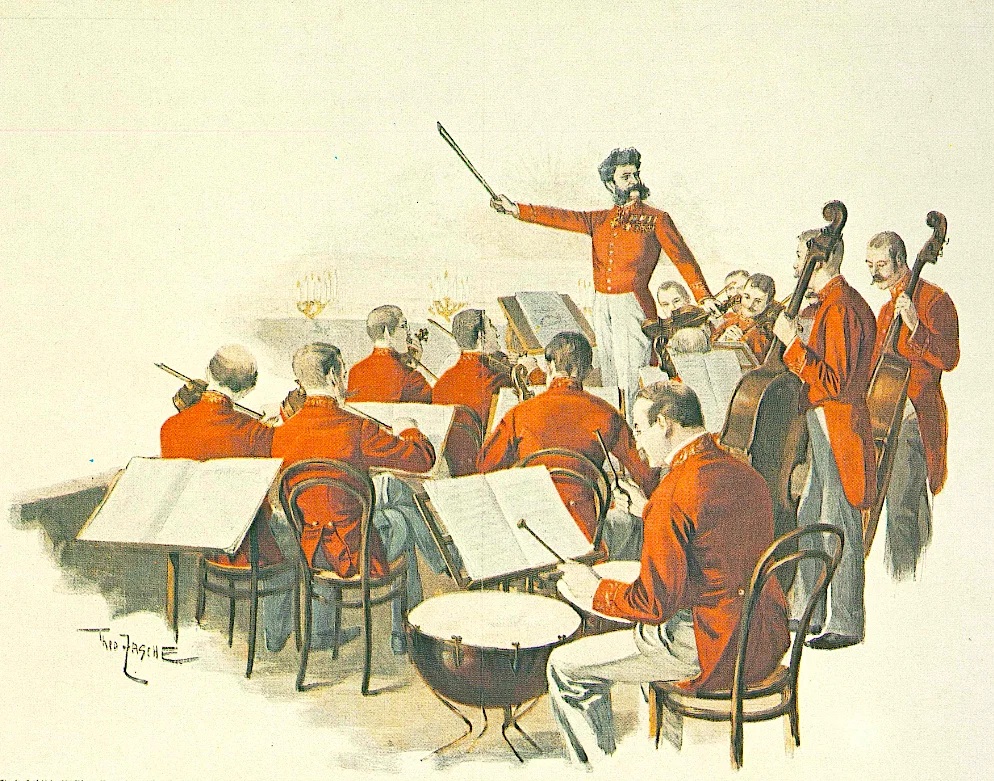
The “Waltz King” who conquered countless souls with his notes lived an emotional world far more turbulent than his most dazzling compositions. If Strauss’s music was the golden shimmer of the Danube, then his relationships with the three women in his life resembled a grand Viennese waltz — full of sweeping rises and sudden falls.
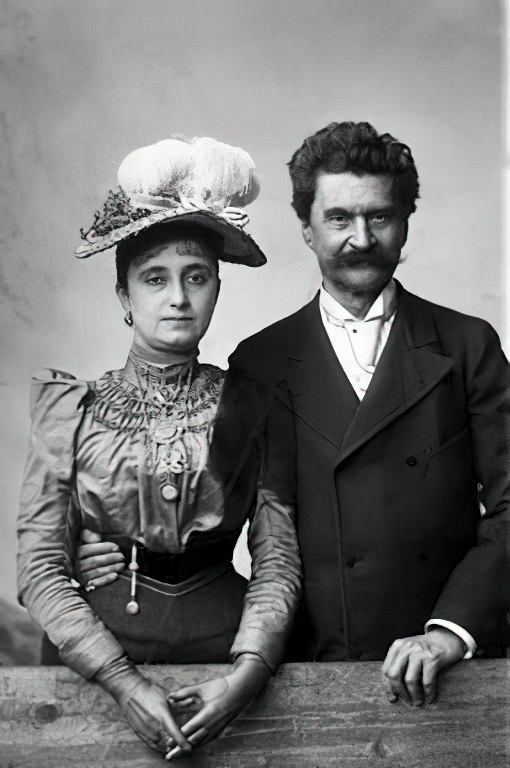
Reappearance: Redemption of the soul and struggle with the law
Just when Strauss thought he would spend the rest of his life in loneliness and humiliation, the third woman in his life appeared like spring sunlight breaking through Vienna’s clouds. Her name was Adele Deutsch. Adele, the widow of a wealthy Jewish businessman, was 31 years younger than Strauss. They had known each other in earlier years, but it was only later, during this period of isolation, that she reentered his life with quiet admiration for his music and a steady, supportive presence. Adele combined beauty with the tenderness and intelligence of Strauss’s first wife, Jetty. She brought order back to his household, restored calm to his daily life, and listened to his work with devoted admiration. Gradually, his creative energy began to return.
Yet their love faced a deadlock in Catholic law. In the Austrian Empire, Catholicism was the state religion, and divorce was forbidden. Despite Lili’s betrayal, Strauss was still legally her husband. To give Adele a rightful place, the nearly 60-year-old Strauss made a shocking decision: he renounced Austrian citizenship. In 1885, he gave up Vienna, the empire, and Catholicism, applying instead for citizenship in the Duchy of Saxe-Coburg and Gotha in Germany. Vienna was stunned. Emperor Franz Joseph I watched helplessly as the nation’s musical treasure “defected” to Germany for love.
In August 1887, after a long struggle with law and nationality, Strauss and Adele finally married legally in Saxe-Coburg. That day, he was as joyful as a 20-year-old youth. Revitalized by love, Strauss’s creativity surged once more in his later years. He expressed his affection for Adele by writing her into his music. In 1883, during their passionate romance, he composed the tender and beautiful waltz Lagunen-Walzer, openly dedicating it to her. In 1889, he created the famous Kaiser-Walzer. Though named for emperors, its gentle, lingering string dialogues felt more like whispers of happiness by the fireplace with Adele.
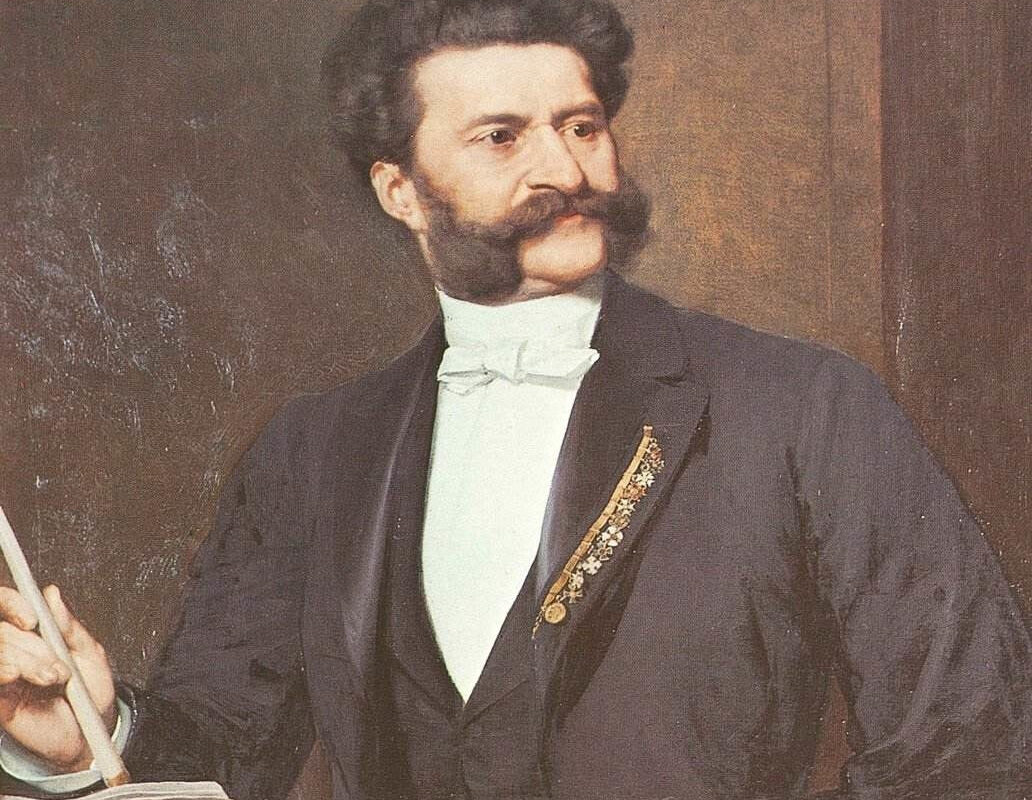
Coda: The eternal waltz
On June 3, 1899, Johann Strauss II died peacefully at home in Vienna at the age of 73 from pneumonia. At his deathbed, Adele held his hand tightly. In his final moments of fading consciousness, Strauss’s right hand tapped a gentle three-beat rhythm on the sheet — a last farewell to the world and to Adele. After his passing, 100,000 Viennese citizens spontaneously filled the streets to mourn him. To them, he was forever the “Waltz King” who nourished their city with music. He was buried with the grandest ceremony in Vienna’s Central Cemetery, alongside Mozart, Beethoven, and Schubert. Adele took up Jetty’s mantle, dedicating the rest of her life to preserving Strauss’s musical legacy. She founded the Strauss Society to ensure his scores would be passed down in perfect form.
The life of Johann Strauss II was itself a magnificent Viennese waltz: Jetty gave him the most splendid prelude, Lili brought a chaotic and discordant interlude, and Adele accompanied him to the warmest and most complete finale. Today, Strauss’s music continues to define the sound of Vienna, performed in concert halls and celebrated each year in the city’s New Year traditions. His waltzes remain a living reminder of a world that once revolved around elegance, romance, and rhythm.
See Part 1 here
Translated by Cecilia and edited by Tatiana Denning
Follow us on X, Facebook, or Pinterest
