

Amid China’s political upheaval in the late 1940s, some intellectuals noticed warnings that others overlooked. The signs were not always dramatic. They appeared in clothing, political language, forced public statements, and even the tone of official proclamations. To those perceptive enough to notice, such details revealed that the new communist regime would not merely change who held power. It would seek to control thought, culture, speech, and even silence.
Fu Sinian saw the significance of ‘lowbrow popular fiction’
Fu Sinian, courtesy name Mengzhen, was a noted historian. He served as acting president of National Peking University, president of National Taiwan University, and director of the Institute of History and Philology at Academia Sinica. Known for his blunt character and fierce opposition to corruption, he earned the nickname “Fu the Cannon.”
Near the end of the Second Sino-Japanese War, China’s long war against Japan that became part of the wider World War II, some members of the China Democratic League hoped that China’s two major political forces might jointly govern the country after Japan’s defeat: the Nationalists, led by Chiang Kai-shek, and the Communists, led by Mao Zedong. They decided to go to Yan’an, the Communist base, to meet Mao and discuss the possibility. Chiang did not object.
On July 1, 1945, a six-member delegation of scholars, including Fu Sinian, arrived in Yan’an by special plane. On the afternoon of July 2, Mao and others met them at Yangjialing in Yan’an to discuss cooperation between the Nationalists and Communists.
Because Mao had once worked as an assistant librarian at Peking University, he used that Peking University connection to spend an evening speaking privately with Fu. He also gave Fu a poem. Through this close contact, Fu gained a detailed impression of Mao.
The delegation returned to Chongqing on July 5. Afterward, Fu told Luo Jialun, president of National Central University, several times that Yan’an’s style was purely one of autocratic rule over an ignorant populace. In other words, it was opposed to freedom and democracy.
Fu said that during his night conversation with Mao, he discovered Mao was highly familiar with all kinds of popular fiction, even lowbrow entertainment novels. Mao studied the psychology of ordinary people through such material and then used that knowledge to exploit them.
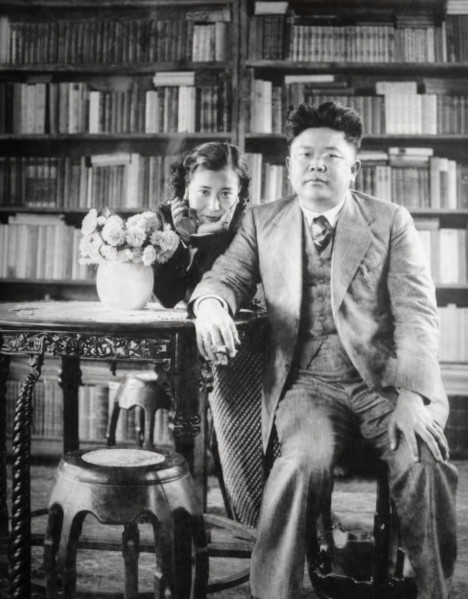
Fu therefore concluded that Mao was merely a “Song Jiang” type. This account appears in Luo Jialun’s essay on Fu Sinian in Remembering Fu Sinian. Fu was a historian, so when he referred to “Song Jiang,” he meant the bandit Song Jiang of official history, not the hero of popular chapter novels.
In January 1949, Fu left for Taiwan and became president of National Taiwan University. He brought the spirit of academic freedom from Peking University to Taiwan, along with the idea of education without discrimination. From then on, National Taiwan University began to develop its own character.
Qian Mu saw the regime’s ‘bearing’
Qian Mu, along with Chen Yinke, Lü Simian, and Chen Yuan, was known as one of the “four great modern historians.” During a time of upheaval, he was the only one among them who had a clear understanding of communism and took consistent anti-communist action.
In Recollections of Teachers and Friends, Qian recorded a critical moment in his life. In 1949, CCP troops had already crossed the Yangtze River and were advancing south. Intellectuals had reached the final moment of deciding whether to stay or leave.
At the time, most Academia Sinica academicians chose to stay. Many viewed the change of rule as just another change of dynasty. Culture, they believed, still needed people to pass it on.
Qian Jibo, a master of Chinese classical learning from Wuxi, the same hometown as Qian Mu, urged him to stay. Wait a little longer, he said. Watch a little more. Perhaps the new dynasty would have a new atmosphere.
Qian Mu did not argue. He simply spread out on the table a newspaper printed with Mao Zedong’s “Crossing the Yangtze Proclamation.” Pointing to the words, “We have ordered the People’s Liberation Army to advance bravely, wipe out all Nationalist reactionary troops who dare to resist, and arrest all incorrigible war criminals,” Qian quietly asked: “You study classical prose. Please look at this proclamation. Between the lines, do you see any bearing of magnanimity or tolerance?”
Qian Jibo said nothing. He did not realize that what the CCP least wanted was the transmission of culture. Qian Mu, seeing no sign of broad-mindedness or tolerance in the proclamation, chose to go to Hong Kong. Before leaving, he visited or wrote to all the friends he could reach, including Chen Yinke, Lü Simian, and Liang Shuming, urging them to leave. None of them moved.
Later, the campaigns to destroy the “Four Olds” and the Cultural Revolution struck down masters of classical learning, historians, intellectuals, and cultural figures one after another. Lü Simian, another major historian, was almost completely deprived of academic freedom and died in 1957 in grief and illness. Even death did not spare him from the Cultural Revolution. In 1966, his grave was burned, and his ashes were lost.
Chen Yinke, who insisted on independence and freedom and thought he was far removed from political storms, was still thrown into the furnace of the Cultural Revolution. Even 30 years after his death, his ashes had not been buried.
After arriving in Hong Kong, Qian Mu founded New Asia College and worked to promote traditional Chinese culture. He later wrote in A History of Chinese Thought: “The communism now spreading wildly through China will at most be a walking corpse with bones and flesh. The Three Red Banners were terrifying. The Red Guards and the Cultural Revolution were terrifying. More terrifying things are still to come.”
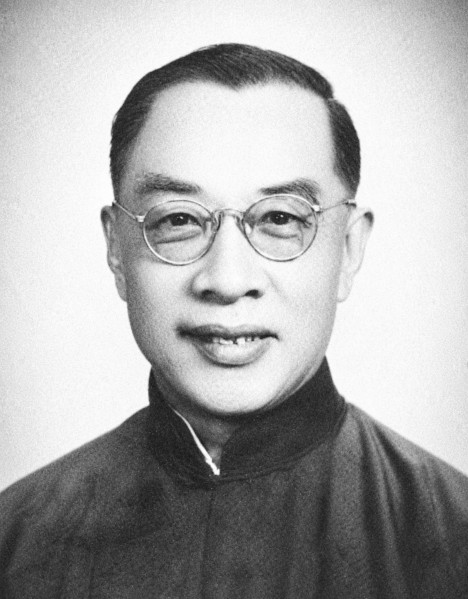
Qian firmly rejected the national name “People’s Republic of China.” He said the name meant that China was no longer being led by Chinese people themselves, but by non-Chinese people such as Marx, Engels, Lenin, and Stalin. Qian Mu never held the slightest illusion about the CCP regime, and the regime’s actions fell within what he had foreseen.
Why did intellectuals go along with the CCP’s deception?
Qian Mu also urged Liang Shuming to leave. Liang stayed because he believed he had a duty to help the Communist Party understand traditional China. In the early years after the CCP took power, he offered suggestions about political campaigns.
During the Cultural Revolution, however, Liang’s home was also ransacked. Although he was an intellectual who had followed the Communist Party, he was still labeled a “rightist.”
In 1974, Liang was criticized as a reactionary. Later, the CCP allowed him to join the National Committee of the Chinese People’s Political Consultative Conference. Why? Mao Zedong gave the answer plainly in “Criticizing Liang Shuming’s Reactionary Thought”: “Because he can still deceive some people. He still has a little use in deception.” The statement appears in Volume 5 of the Selected Works of Mao Zedong.
Many Chinese scholars and cultural figures believed they could still play some role. The CCP used exactly that “role” to “deceive some people.” Then, through all those who had been deceived, it sought to deceive everyone.
If the painful memories buried deep in the DNA could be erased and these people could choose again, would those who suffered under the CCP change their decisions about whether to stay or leave? The CCP’s deceptions misled hundreds of millions of people across several generations. This must not happen again. Yet in that moment of crisis, how could one avoid confusion?
Those who protected themselves from deception in a crisis had what people might call “luck.” But that luck came from a sensitivity to details and an insight into the essence of things. It came from a decision that fame and profit could not shake: the pure value of life itself.
Notes
[1] Qian Mu recalled that “the intellectuals of that generation generally approached the new communist regime with goodwill toward others. Toward the new republic, they generally maintained an attitude of support, compliance, and expectation.” See Xie Yong, ed., The Age of Thought: Selected Reminiscences from Yellow River.
[2] In 1986, Qian Mu firmly rejected the national name “People’s Republic of China” in his essay “Looking at the Current Situation in the New Year.” He said that as long as the national name and communism remained, the two sides of the Taiwan Strait could not discuss unification. The name, he said, meant that “from then on, China would no longer be led by Chinese people themselves, but would have to be led by non-Chinese people such as Marx, Engels, Lenin, and Stalin.”
Translated by Chua BC
Follow us on X, Facebook, or Pinterest
