

In the northeast corner of the Forbidden City stands a small stone well, now capped, its mouth barely 33 centimeters across. In the summer of 1900, as foreign armies closed in on Beijing, they ordered a 24-year-old woman into it. She had been the emperor’s favorite. She had argued with the wrong person. Palace staff have reported weeping near that courtyard ever since. Ghost stories are usually told for the shiver. But the haunted places in China are strange in a particular way, and once you see the pattern, you cannot unsee it. The spirits here are almost never monsters. They are a murdered concubine. Conscripts who never came home. A general destroyed by a lie. That is not an accident of storytelling. It is a cosmology.
In Chinese tradition, the dead who linger are the dead who were wronged, or the dead whom nobody remembered. A haunting is not a horror. It is an unpaid debt. What follows are eight places where that debt is still spoken of, and the histories the ghosts are trying to tell. Most are true. One famous haunting, as you will see, turns out to have been invented outright. The last ends with a promise a single family kept for nearly 400 years.
What is a Chinese ghost? Why China’s haunted places are different
In Chinese belief, a ghost (鬼, gui) is not a monster but a person whose death went wrong. Two kinds recur. The yuanhun (冤魂) are wronged souls, those who died unjustly and cannot rest until the wrong is acknowledged. The egui (饿鬼) are hungry ghosts, left with no descendants to mourn or feed them. Chinese ghost beliefs rest on an old framework. A person carries two souls: the hun (魂), light and yang, which rises after death, and the po (魄), heavy and yin, which stays with the body and returns to the earth. When the rites are performed and the descendants make their offerings, both find their place. The ancestor is honored. The house is quiet. That conviction, that something essential outlasts the body, still draws serious attention today, as scientific perspectives on the soul show.
When a death is not orderly, something remains. A man executed on a false charge, a soldier buried where he fell, a woman drowned on someone’s order: these deaths leave the accounts open. And in a culture built on filial duty, being forgotten is its own injustice. A soul with no one left to remember it goes hungry. This is why the Western instinct to expel a ghost sits oddly here. You do not evict a wronged soul. You answer it. You name what happened, perform the rites, and feed it. Understood this way, the stories that follow are not entertainment. They are a civilization’s method of refusing to forget, and they belong beside the other unexplained phenomena and mysteries that resist tidy explanation.
8 haunted places in China
So as we walk through these 8 haunted places in China, ask not what each ghost wants. Ask what was taken from them. Here are the seven, and the wrong each one remembers.
- The Forbidden City: A 24-year-old consort sent into a well on an empress dowager’s order.
- Fengdu Ghost City: Not a haunting at all, but a city built to picture the underworld.
- The Great Wall: Conscripts who died far from home and were never mourned by name.
- Prince Gong’s Mansion: A grieving wife in the garden of China’s most corrupt official.
- Huguang Guild Hall: A scolding voice in an empty courtyard, in a hall built for exiles.
- High Street, Hong Kong: One building that held nurses, executions, and an asylum in turn.
- The Tomb of General Yuan: A general killed by a lie, and a grave kept for 390 years.
- Chaonei No. 81: Beijing’s most famous haunted house.
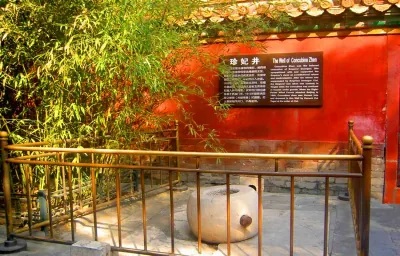
1. The Forbidden City: The Well of the Pearl Consort
She was born in 1876 and entered the palace at 13. Consort Zhen, known to foreigners as the Pearl Consort, became the favorite of the Guangxu Emperor: sharp, willful, and fascinated by photography, smuggling cameras in to practice it. She also backed her husband’s constitutional reforms, which set her against the most powerful woman in China.
After the reforms collapsed in 1898, she spent roughly two years confined alone in a small building. Then, in August 1900, during the Boxer Rebellion, the armies of the Eight-Nation Alliance reached Beijing and the court prepared to flee. In the most widely told account, Empress Dowager Cixi summoned the young consort and, enraged when Zhen begged that the emperor stay and negotiate, ordered her thrown into a well. She was 24. Her body was recovered the following year. Honesty requires a caveat. Sterling Seagrave has argued that Edmund Backhouse, a British orientalist now known to have forged much of what he claimed to witness, embroidered the scene. Consort Zhen may have been killed by eunuchs acting alone, or she may have jumped. What is certain is that she went into the well.
The Palace Museum denies that anything haunts the complex. Visitors and staff have said otherwise for a century. The Forbidden City ghost stories are the most repeated in the country: a woman weeping near the concubines’ quarters, a figure in white, music after dark. Of all the haunted places in China, this is the one whose ghost has a name, a face, and photographs she probably took herself. The well is still there, a stone cap over its mouth. Cixi’s court remains among the least understood in Chinese history, as the strange story of the miraculous monk of Empress Cixi’s court suggests, and the Forbidden City has never fully shaken it off.
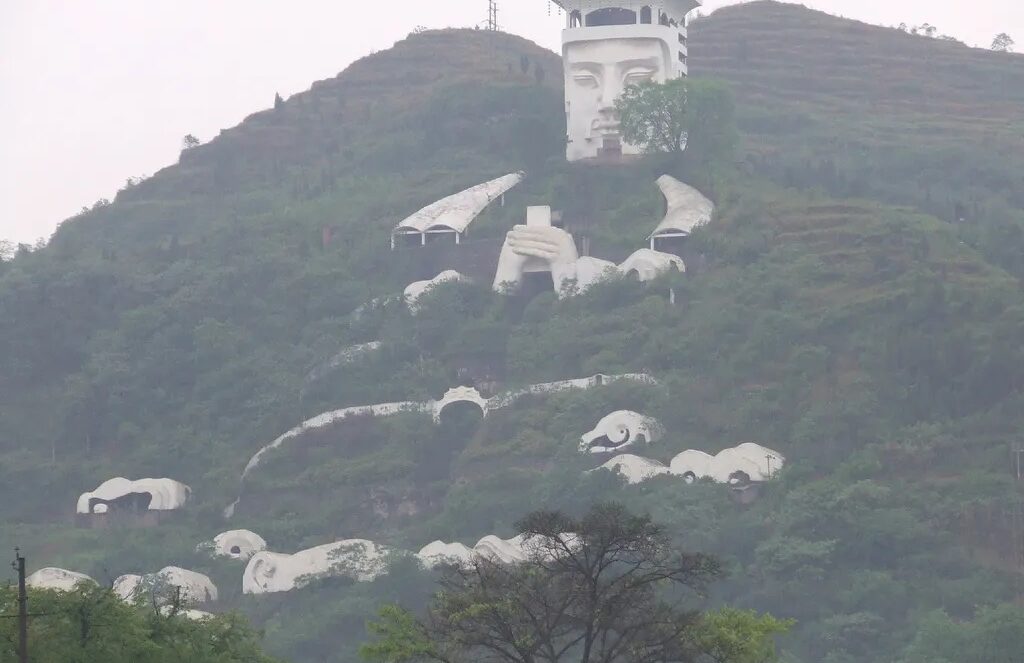
2. Fengdu Ghost City: Where the underworld has an address
Most haunted sites are accidents of history. Fengdu was built on purpose. On Ming Mountain, above the north bank of the Yangtze in Chongqing, stands a complex of temples and painted halls devoted entirely to the afterlife. Its origin is one of the great puns in Chinese religion. During the Eastern Han Dynasty, two Daoist adepts, Yin Changsheng and Wang Fangping, were said to have cultivated there. Later generations combined their surnames into “Yinwang” (阴王), which reads naturally as “King of the Underworld.” A pun became a pilgrimage site, and by the Song Dynasty popular belief had made Fengdu the earthly capital of the Chinese hell.
The complex imitates Youdu, capital of Diyu (地狱), its halls crowded with sculptures of the punishments awaiting the wicked. Visitors cross the Naihe Bridge (奈何桥), the Bridge of Helplessness, a Ming Dynasty span that tradition places between this world and the next. Fengdu is listed among the most haunted places in China, and it is the one entry where that framing misleads. Nobody was wronged here. No one died badly. It is not a place where ghosts linger; it is a place built to think about where they go. It is closer to a cathedral than a crime scene. After the Three Gorges Dam raised the Yangtze, the water separated the old site from the county town below, rebuilt on higher ground. The Ghost City now looks down on a river that swallowed its own city of the living. Among places worth discovering in China, few are stranger.
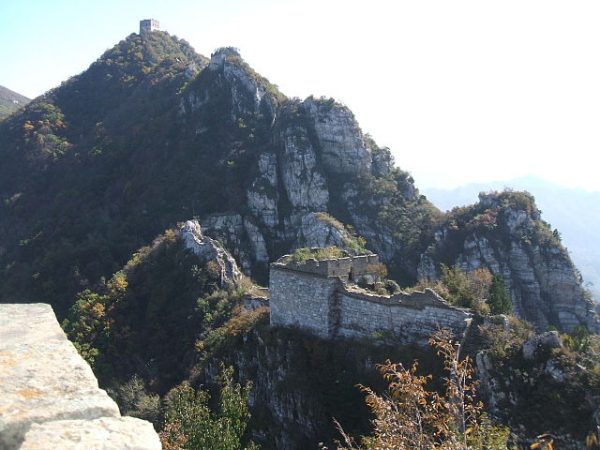
3. The Great Wall: The soldiers who never came home
Along the unrestored stretches that hikers call the Wild Wall, visitors report footsteps in step, the sound of an army moving, and no army to be seen. The wall’s reputation as one of China’s haunted places rests on a claim repeated everywhere, including in the earlier version of this article: that a million men died building it. No comprehensive records of the construction dead survive, across any of the dynasties that raised and rebuilt the wall over two millennia. Estimates run from several hundred thousand to a million, and they are estimates. The more lurid claim, that the dead were entombed inside the wall itself, has no archaeological support.
Strip away the inflated number and something harder remains. Conscripted peasants, convicts, and soldiers built the wall, sent to a frontier most would never leave. They died of exhaustion, disease, and cold, and were buried where they fell. Most were never named, never returned, and never mourned by the families who owed them rites. In the framework we began with, that is precisely a hungry ghost.
China understood this and wrote it into one of its most beloved folktales. Meng Jiangnü’s husband was taken to labor on the wall and died there. She traveled to find him, learned he was gone, and wept at the foundations until a section collapsed and gave up his bones. She had come to bury him properly. That is the whole point of the story. The tragedy of the Great Wall was never that men died. It was that nobody could bring them home.
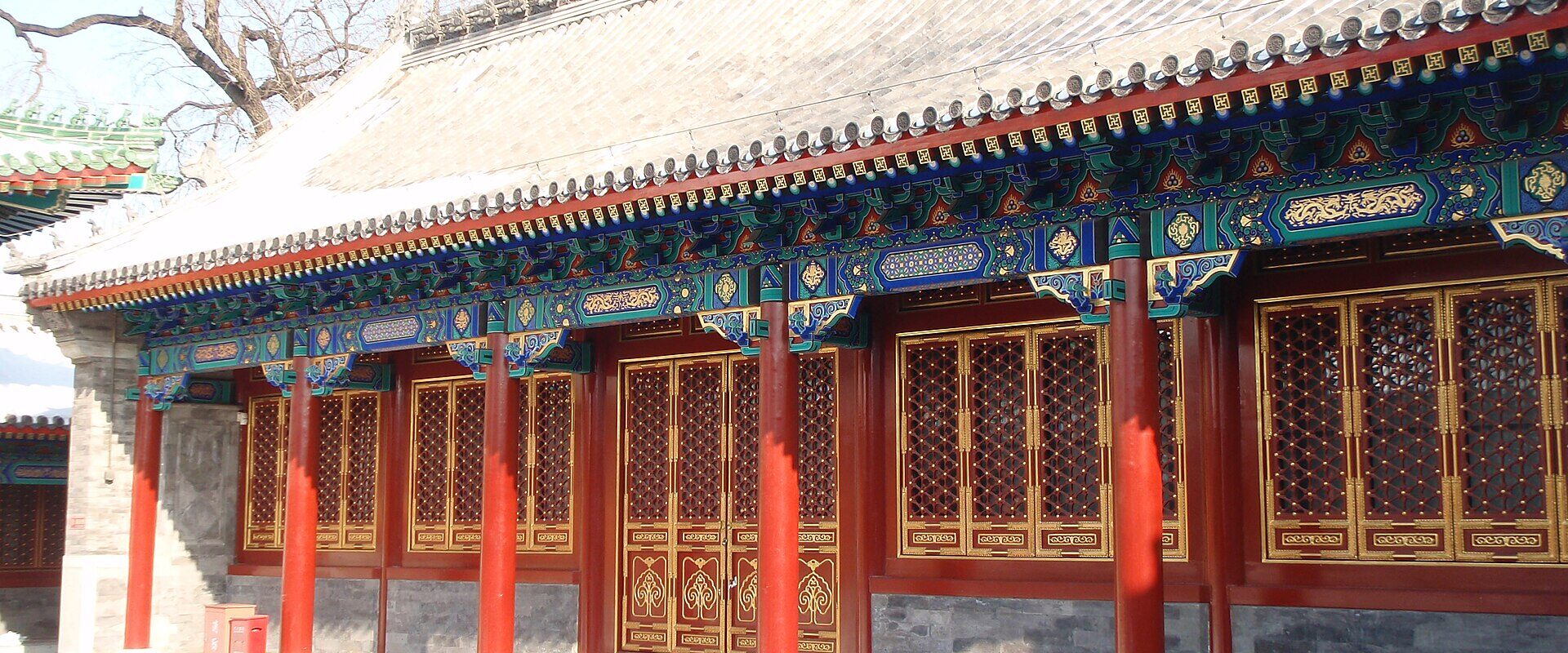
4. Prince Gong’s Mansion: The richest man in China
He Shen was the most spectacular case of corruption in Chinese history, and he built a house to match. A favorite of the Qianlong Emperor, he rose with astonishing speed into the offices controlling state finance and civil appointments, and used them exactly as you would expect. Between 1776 and 1785, he raised a mansion and garden in Beijing on a scale reserved for princes. When Qianlong abdicated in 1796, He Shen effectively ran the empire for his own benefit, embezzling funds meant to suppress the White Lotus Rebellion.
The reckoning came in 1799. The Jiaqing Emperor charged him with corruption, stripped him of everything, and compelled his death. The confiscated estate was assessed at over 800 million taels of silver. In 1851, the Xianfeng Emperor granted the property to his sixth brother, Prince Gong, whose name it still carries. The haunting is quieter than the biography. Among China’s haunted places, this is one of the gentler ghosts. Visitors describe a woman in white in the gardens after dark, and nights when the buildings seem to carry the sound of crying. She is usually identified as He Shen’s wife, said to have declined into illness and grief after their youngest son died. Chinese storytellers have never missed this moral symmetry. The man who took everything is not the one who lingers. She is. Wealth on that scale bought him a garden of extraordinary beauty and nothing else that mattered, the same lesson told more gently in the power of virtue.
5. Huguang Guild Hall: The voice in the empty courtyard
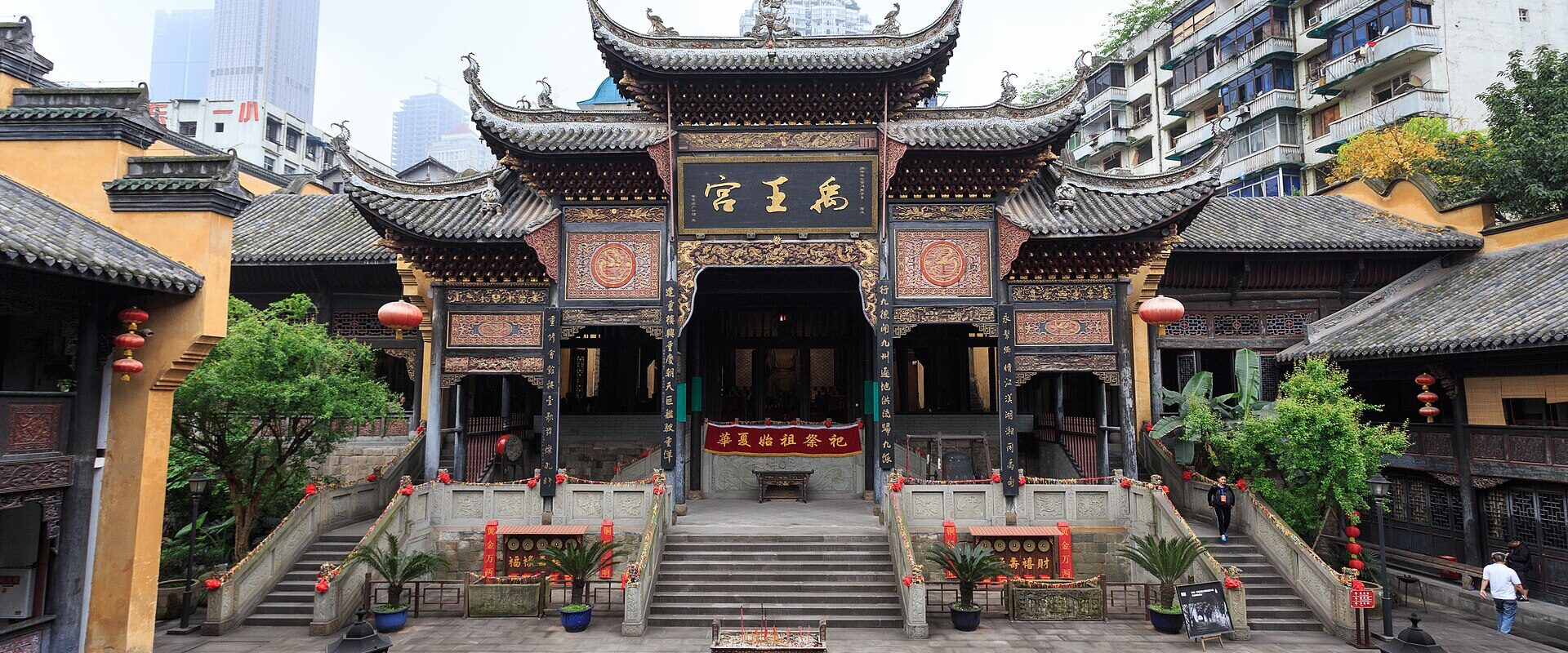
Throw a stone into the courtyard at night, the story goes, and a voice will scold you from the dark. Look, and no one is there. The building beneath that legend has been consistently misdescribed, including in this article’s earlier version, which called it a shelter built for the poor. It was nothing of the kind. The Huguang Guild Hall (湖广会馆) dates to 1807 and was founded by Liu Quanzhi, a scholar from Changsha in Hunan, and Li Junjian, an official from Huanggang in Hubei. It was a huiguan (会馆), a native-place association: a cultural, business, and social home for people from those two provinces living in the capital, far from their own dialects and their own dead.
It became one of Beijing’s four great theaters. The giants of Peking opera performed on its stage, among them Mei Lanfang (1894-1961) and Tan Xinpei (1847-1917). On August 25, 1912, Sun Yat-sen convened the meeting there that founded the Kuomintang. After more than a year of restoration, the hall reopened as a working opera house in January 2024. Some accounts say it was built over an old burial ground. Whether or not that is so, the hall’s real history is denser than its ghost story. A place where exiles gathered to hear their own music, and where a republic was declared, has much to be haunted by.
6. High Street, Hong Kong: A building that absorbed a century
Some buildings are unlucky. This one was made to hold suffering three separate times. The Sai Ying Pun Community Complex on High Street opened in 1892 as quarters for European nurses. Under Japanese occupation during the Second World War, it is widely reported to have served as an execution site. After the war, it became a mental hospital and remained one into the 1970s, through decades when psychiatric care in the territory was underfunded and poorly understood. It then stood derelict for years, its granite facade blackened.
Hong Kong’s ghost stories about the place are among the city’s most persistent: a figure wrapped in flame moving along the corridors, a headless shape on the stairs, sounds from empty rooms. Notice what the legends preserve. Almost nobody who tells them can date the building, yet the stories cluster precisely around the three eras when people suffered there. The nurses’ quarters are forgotten. The executions and the asylum are not. This is what a ghost story is for: a building’s memory, kept by people who were never taught its history.

7. The tomb of General Yuan: A promise kept for 17 generations
Yuan Chonghuan was a scholar from Guangdong who became the finest soldier of the late Ming Dynasty. In 1626, at Ningyuan, he held a walled town with roughly 9,000 men against the Jurchen leader Nurhaci and a much larger force, using European-pattern cannon mounted on the walls. It was the first serious defeat of Nurhaci’s career. Yuan later held the same ground against Nurhaci’s successor, Hong Taiji. For a few years, he was the reason the Ming still stood. Then Hong Taiji, unable to beat him, arranged for the Chongzhen Emperor to distrust him. Rumor did the rest, and eunuchs at court whispered that Yuan had been in league with the enemy all along. He was arrested on January 13, 1630, and convicted of collusion on evidence that amounted to nothing. On September 22, 1630, he was executed by lingchi (凌迟), the punishment known as death by a thousand cuts. Imperial records note that he took half a day to die. Before he died, Yuan composed a poem. In it he promised that after death his loyal spirit would go on guarding the northern frontier.
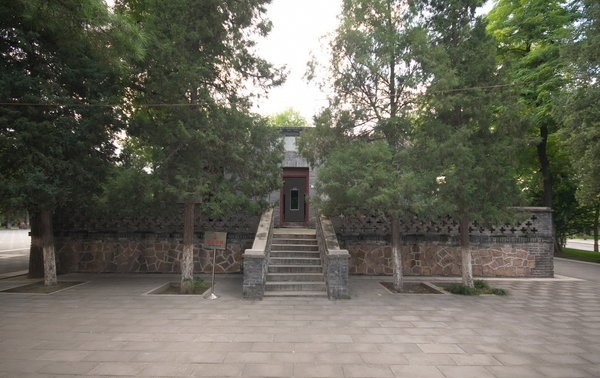
This detail reframes everything. When people say General Yuan’s tomb is haunted, when they speak of a headless figure still walking his post, they are not describing a vengeful spirit. They are describing a man keeping his word. His ghost is not seeking revenge. It is still on duty. And he was not left to guard it alone. A man surnamed She (佘) took Yuan’s severed head from the execution ground at enormous personal risk and buried it near Guangqumen, then left his descendants an ancestral instruction: guard this grave, generation after generation. They did, through the collapse of the Ming, the whole of the Qing Dynasty, the republic, the war, and everything that came after. The last of them, She Youzhi, tended the tomb from 1970 until her death in August 2020, at the age of 81. She was the 17th generation. That is 390 years, because one man made a promise about another man’s grave. If you want to understand what Chinese tradition means by ancient lessons in loyalty, it is here, in a quiet Beijing courtyard behind an apartment block.
8. When a haunted house isn’t haunted: Chaonei No. 81
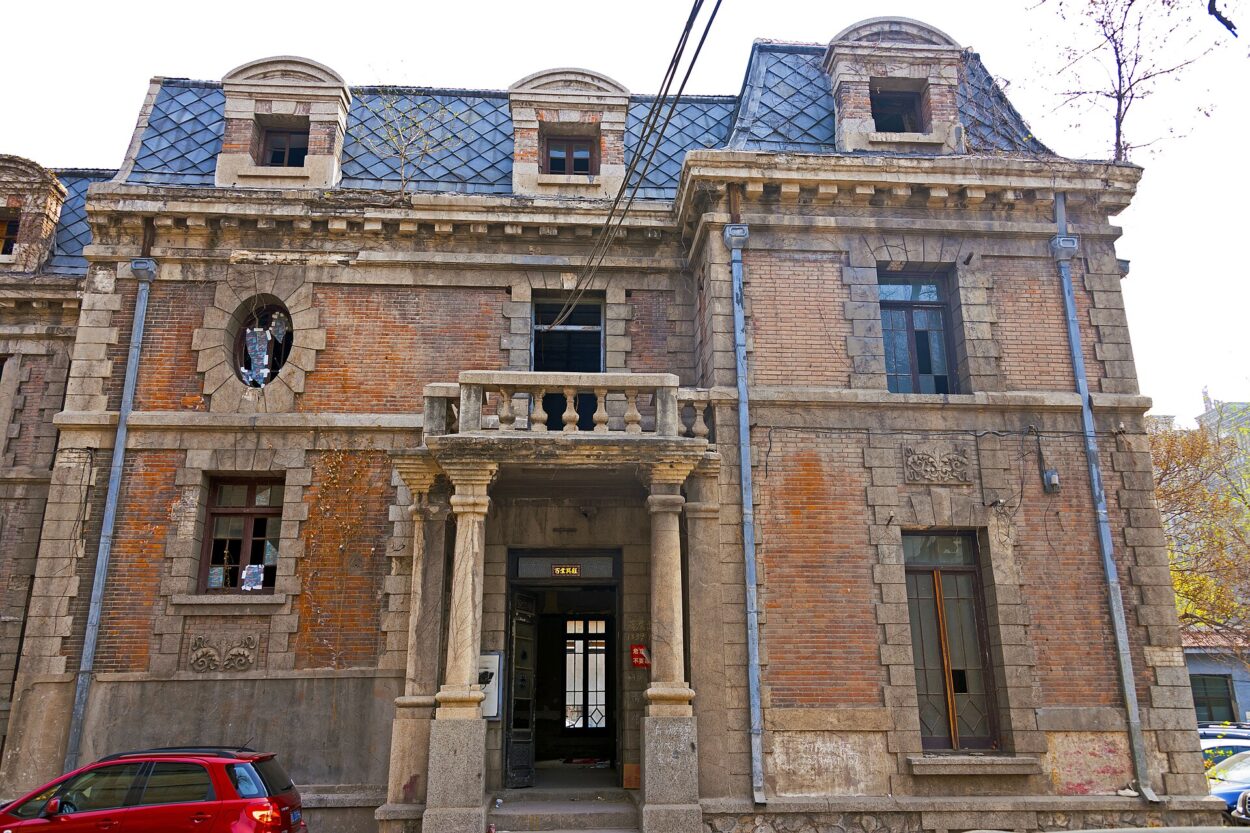
Balance requires admitting that a culture which remembers its dead can also invent them. Chaonei No. 81 is Beijing’s most famous haunted house: a decaying French Baroque mansion in the Chaoyangmen neighborhood, three stories of gray brick behind a locked gate. The legend is well worn. A Kuomintang officer fled to Taiwan in 1949, abandoning his wife or mistress, who hanged herself and never left. Teenagers broke in for years to look for her, and the 2014 horror film The House That Never Dies took the story to a national audience.
The legend is false. There was no Kuomintang officer. The house appears to have been built in the early 20th century as church property. An Irish-born priest may have tried to use it in 1937; Belgian Augustinian nuns ran it as a clinic during the Second World War and after; by 1949, the Irish Presbyterian Mission had it. Today, it belongs to the Roman Catholic Archdiocese of Beijing.
So the most famous haunted house in China is a former missionary clinic with an invented tragedy attached. The other stories here persist because something terrible happened and the memory needed somewhere to live. This one persists because an empty, decaying building in a modernizing city was too suggestive to leave alone. Famous places attract invented pasts, much as the legends of Venice gathered around the Bridge of Sighs. Both impulses are human. Only one of them is history.
What China does with its ghosts: The Hungry Ghost Festival
Every year, on the first day of the seventh lunar month, the gates of Diyu are said to open, and for the rest of the month the dead walk among the living. Its solemn peak is the 15th night: Zhongyuan Jie (中元节), the Ghost Festival, known in Buddhist practice as Yulanpen. In 2026, Ghost Month runs from August 13 to September 10, and that 15th night falls on August 27. Families burn joss paper, set food at the roadside, float lanterns, stage operas with the front row left conspicuously empty, and lay an extra place at the table.
Look closely at who the offerings are for. Not ancestors, principally; they are cared for at other festivals, by the descendants who owe them. Ghost Month exists for the egui: the dead with no family left to feed them, the drowned, the executed, the ones who died far from home and whose names nobody now knows. Once a year, the living feed strangers’ dead. That is the answer to every story in this article. The Western tradition wants its ghosts gone, and reaches for the exorcist. The Chinese tradition wants its ghosts fed, named, and settled, and reaches for a bowl of rice. One treats the restless dead as an infestation. The other treats them as an obligation. It is a strikingly humane idea, and it runs deeper than a single festival. It animates other traditions too, including the mystery of preserved monks whose remains have resisted decay for centuries.
Conclusion: What China’s haunted places are asking for
Set these seven places side by side, and the pattern is unmistakable. A consort drowned on an order. Laborers buried where they dropped. A grieving wife in a stolen garden. A general dismembered for a crime he did not commit. The haunted places in China are not where evil gathers. They are where justice failed, and where the failure was never repaired. Which is why the last story matters most. A man whose name is barely recorded took a dead man’s head, buried it, and promised that his family would watch over it. For 17 generations they did, for 390 years, while dynasties rose and fell around that small courtyard, until an old woman named She Youzhi finished her watch in 2020.
That is the Chinese answer to a haunting, and it has nothing to do with fear. Yuan Chonghuan is said to walk because his name was never cleared. The She family’s response was not to drive him away. It was to stay, sweep the grave, and make sure that whatever else the world forgot, this one man would be remembered. Ghosts, in this tradition, are simply the dead asking not to be forgotten. Every culture is haunted by the people it failed. What China built, in its festivals and its faithful families, is a way of answering them.
Follow us on X, Facebook, or Pinterest
