
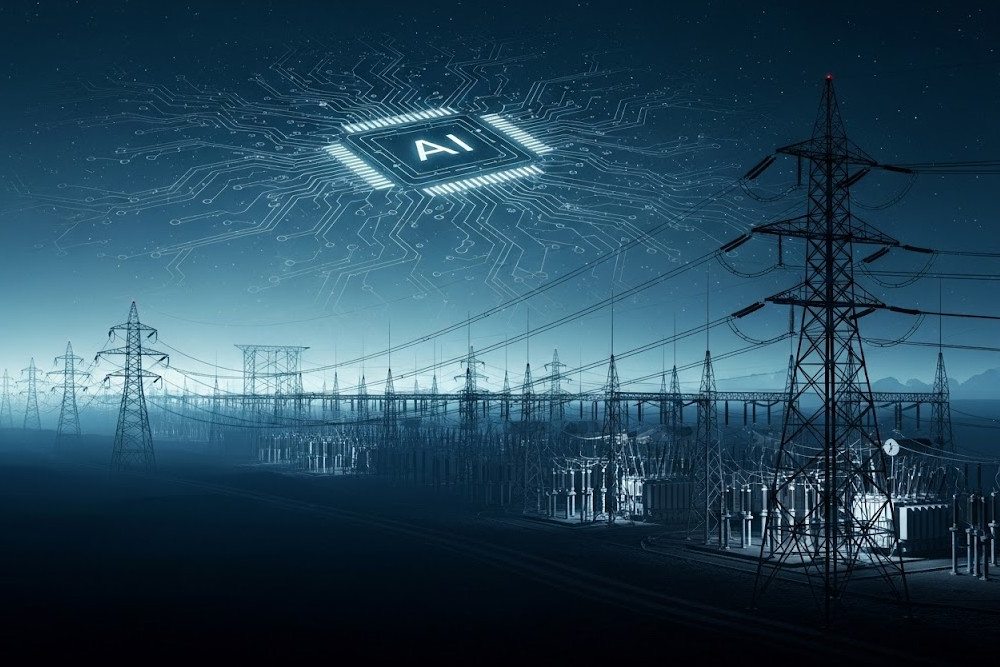
In the race to dominate artificial intelligence, a powerful but often overlooked challenge is emerging: energy. As AI models grow more advanced, their demand for computational power — and the electricity to fuel it — is accelerating. The massive infrastructure behind chatbots, recommendation engines, and foundation models doesn’t run on ideas alone. It runs on electricity — vast quantities of it. And that demand is quickly outpacing our planet’s ability to deliver.
Table of contents
- The invisible engine: AI’s power crisis
- Global electricity capacity vs AI demand
- China, the U.S., Russia, and Europe: A tale of four grids
- The Iberian warning: Renewable fragility
- Fusion hopes and future fantasies
- Can rooftop solar save AI?
- What comes next: Opportunity or overload
- Summary: Key takeaways
1. The invisible engine: AI’s power crisis
While AI headlines often spotlight breakthroughs in automation and intelligence, the underlying story is one of watts, not words. As of 2024, AI workloads already account for a rising share of data center electricity use. Data centers themselves consume over one percent of global electricity, and the portion attributed to AI is climbing fast.
The International Energy Agency (IEA) projects that electricity consumption from data centers could more than double by 2030, reaching 945 terawatt-hours (TWh) annually — roughly equivalent to Japan’s current electricity use. In the U.S., McKinsey estimates that data centers could consume up to 12 percent of the national electricity supply by the end of the decade. AI is expected to be the primary driver of these increases.
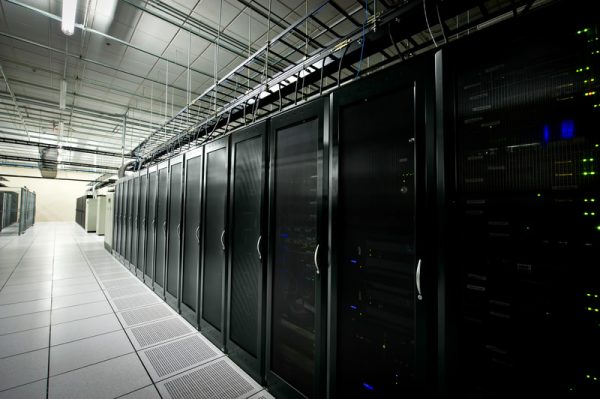
Industry leaders are sounding the alarm. Eric Schmidt, former Google CEO, has warned that chips may soon outpace the electrical grid, becoming a constraint on innovation. Elon Musk and Amazon’s Andy Jassy have echoed these concerns: the AI boom could hit a wall — not because of technical limits, but because of power shortages.
2. Global electricity capacity vs AI demand
To grasp the scale of the issue, consider the projections: AI-related data center demand could add more than 130 gigawatts (GW) of new load globally by 2030, according to Columbia University’s Center on Global Energy Policy.
Current global electricity generation capacity stands at roughly 30,000 GW (as of 2024). But capacity on paper doesn’t equate to availability. Electricity must be generated and delivered exactly where and when it’s needed — especially for data centers, which require continuous, high-quality power.
Data centers consumed an estimated 460 TWh in 2022. If AI drives that total to 945 TWh by 2030 — as projected — that would represent about 3 percent of global electricity use. This near doubling in under a decade has major implications, not just for power producers but for economies, tech companies, and national security.
Countries are now facing a new question: can they generate, store, and distribute enough reliable electricity to power the intelligence economy?
3. China, the U.S., Russia, and Europe: A tale of four grids
China has moved aggressively. With a growing share of global data center infrastructure, it added close to 300 GW of new generation in 2023 alone — through a mix of coal, solar, and wind. New renewable projects are approved in months, not years. This aligns with Beijing’s AI strategy: to treat computation as a strategic national asset.
The U.S., though a leader in AI development, lags behind in grid expansion. Giants like OpenAI, Meta, and Microsoft require vast amounts of power, but the U.S. is only adding around 5 GW annually. Political conversations have acknowledged the gap, but no major infrastructure acceleration has yet been enacted.
Russia remains a wildcard. While it has abundant natural gas and a large physical territory, its power grid is aging, and data on AI infrastructure is sparse. Sanctions and limited access to cutting-edge chips keep it on the fringes of the AI power race.
Europe presents a paradox. It is rich in renewables, yet its grid is fragile. AI-related electricity use in Europe is projected to hit 3-4 percent by 2030. But the April 2025 blackout across Spain and Portugal showed how vulnerable the system is. A sudden 30 GW drop in generation cascaded through the grid, revealing insufficient backup and poor resilience. Europe is green — but not yet stable.
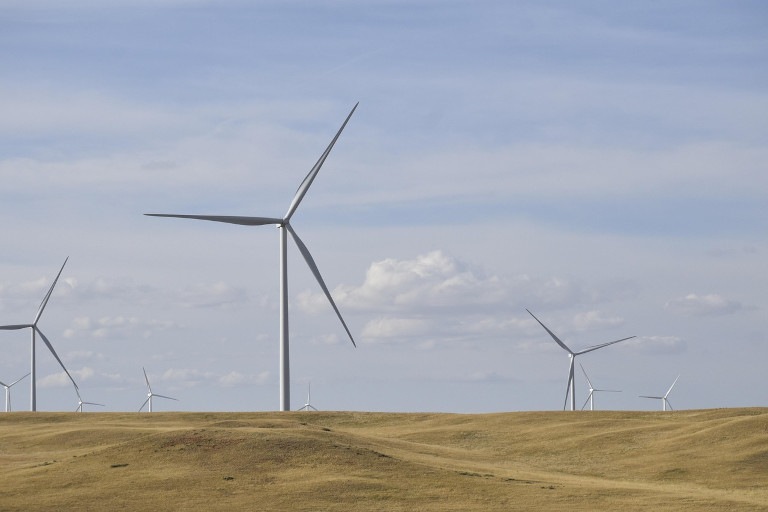
(Image: SailingOnChocolateRoses via Pixabay)
4. The Iberian warning: Renewable fragility
The Iberian blackout was a brutal reminder that even high-renewable grids need more than clean energy. They need stability.
Despite backup plans, Spain and Portugal were plunged into darkness — returning parts of the region to a modern-day “dark age.” The cause wasn’t sabotage or a cyberattack. It was simply a lack of inertia: solar and wind, while clean, don’t offer the same grid stability as thermal generation.
This event forced EU policymakers to confront a tough reality: weather-dependent energy sources are not enough to support the always-on, power-hungry demands of AI. Massive storage, smarter grids, and dispatchable reserves will be critical in bridging the gap.
5. Fusion hopes and future fantasies
China is also investing in long-term solutions. Its EAST reactor recently sustained plasma for over 1,000 seconds, while its HL-3 reactor hit ion temperatures of 117 million degrees Celsius. Beijing aims to connect the world’s first hybrid fusion-fission reactor to the grid by 2030.
Fusion is more than a scientific milestone — it’s a strategic bet. If AI is the defining technology of the century, fusion may be the ultimate enabler. While commercial viability remains distant, countries are now pouring money into it, hoping for a payoff before AI outgrows the grid.
6. Can rooftop solar save AI?
Fusion isn’t the only hope. What if, instead of massive reactors, we used rooftops?
The National Renewable Energy Laboratory (NREL) estimates that rooftop solar on U.S. homes and businesses could technically generate up to 1,400 TWh per year — well beyond projected AI demand. With smart inverters and vehicle-to-grid tech, distributed solar could ease demand spikes and decentralize power production.
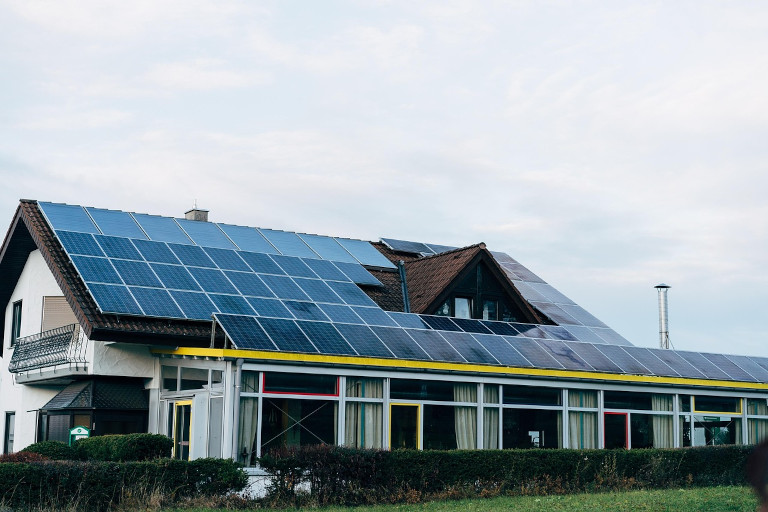
Yet the barriers are real. In Europe, regulatory red tape limits adoption. In the U.S., net metering fights disincentivize small producers. And in the developing world, surplus solar often goes to waste without expensive batteries.
Distributed generation holds promise — but it remains underutilized.
7. What comes next: Opportunity or overload
We are at a tipping point. AI has the power to transform medicine, science, productivity, and governance. But it runs on more than algorithms. It runs on amps.
Without smarter grids, diversified power sources, and political will, the AI revolution could short-circuit. Brownouts, energy bottlenecks, and regional inequities could stall the promise of intelligent systems.
But there’s also hope. Fusion, rooftop solar, smarter batteries, and better grid coordination offer a way forward. The intelligence boom doesn’t have to become an energy bust. The choice is ours.
Summary: Key takeaways
- AI’s energy demand is rising faster than global grid capacity.
- China is leading in energy infrastructure, while the U.S. and Europe are lagging behind.
- Renewables alone aren’t enough — resilience and storage are essential.
- Fusion and distributed solar both offer solutions, each with trade-offs.
- The future of intelligence depends as much on power delivery as on computing power.
Follow us on X, Facebook, or Pinterest
