
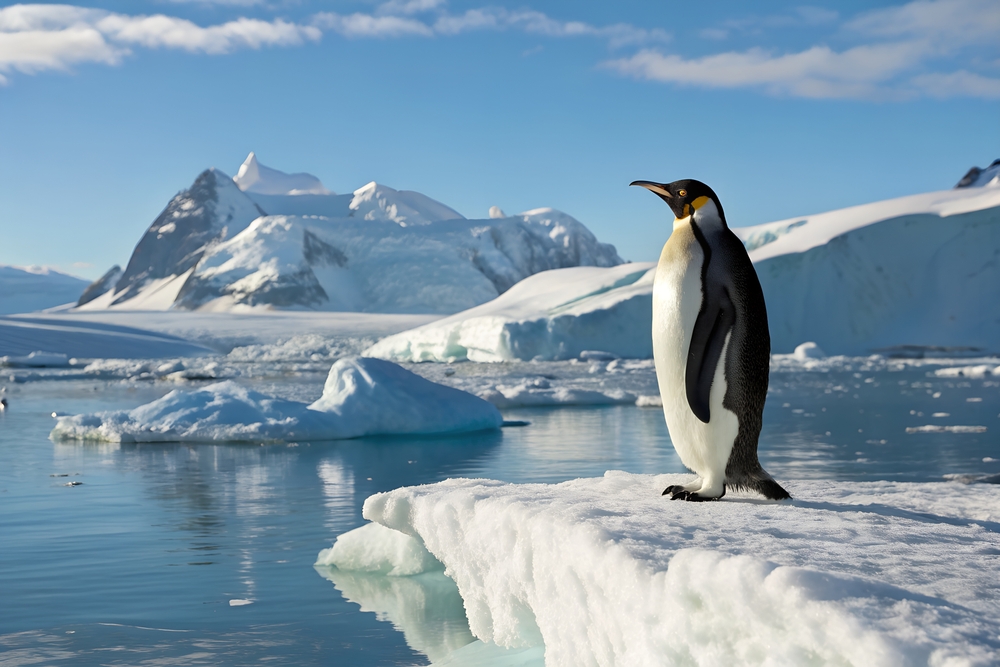
There’s a place on Earth you can’t just walk into. Not Area 51, not some shadowy government lab, not even North Korea.
We’re talking about an entire continent — bigger than the U.S. and Mexico combined — where setting foot without the proper paperwork can get you fined, jailed, or worse.
That place is Antarctica.
To most of us, it’s just penguins and ice. Empty. Pointless. But if it’s really so worthless, why does it cost tens of thousands of dollars — and require navigating a bureaucratic maze of permits — just to visit? Why is it the only landmass on Earth governed by an international treaty signed by 58 nations? And why are parts of it blurred out on Google Earth?
Something doesn’t add up.
Maps that shouldn’t exist
Let’s start with a story that sounds fake but isn’t.
In 1929, archivists cleaning out a Turkish palace stumbled across a 1513 map drawn by Ottoman admiral Piri Reis. Unlike most old charts, this one didn’t just sketch vague coastlines. It showed something impossible: the detailed coastline of Antarctica — 300 years before it was supposedly discovered.
Here’s the kicker: the map didn’t just depict an outline under the ice. U.S. Air Force analysts in the 1960s confirmed the geography matched seismic surveys of the bedrock itself. In other words, someone mapped Antarctica thousands of years ago when it wasn’t under two miles of ice.
Where did Piri Reis get the data? He admitted that he compiled it from ancient sources, some dating back to the 4th century BC. Another map from 1531 by Oronteus Finaeus shows rivers and mountains in Antarctica that modern scientists only rediscovered using radar in the 20th century.
Coincidence? Maybe. But that’s a massive coincidence.
Antarctica’s hidden lakes and alien life potential
Beneath two and a half miles of Antarctic ice lies Lake Vostok, a body of water the size of Ontario sealed off from the surface for 15 million years. Russian scientists drilled down to it in 2012, expecting sterile water. Instead, they found 17 species of microbes that defied everything we know about life.
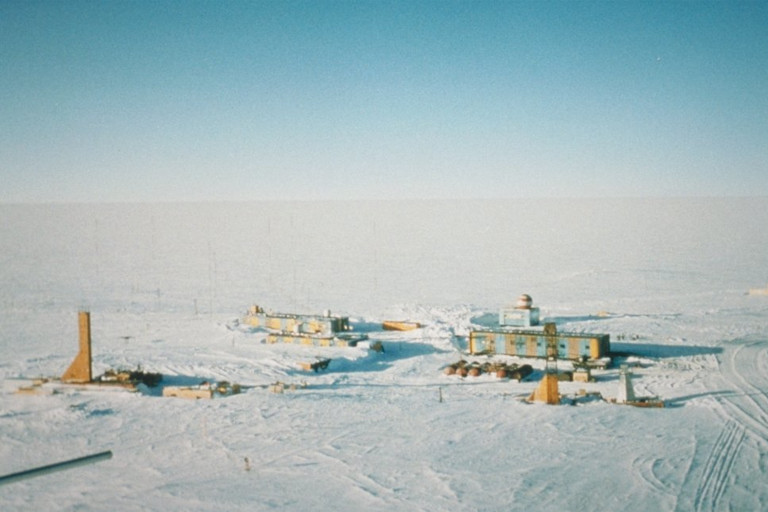
No sunlight. No oxygen. Crushing pressure. And yet, thriving. Feeding on iron and sulfur instead of photosynthesis.
These extremophiles are more than just biological oddities. If life can survive in an Antarctic tomb, it can probably survive in Europa’s icy oceans or under the Martian surface.
And Lake Vostok isn’t some lonely outlier. Scientists have found over 140 hidden lakes beneath the ice — but we’ve barely explored even one.
Then there’s Blood Falls, a glacier in the McMurdo Dry Valleys that bleeds crimson streams of iron-rich water, sustained by bacteria that eat metal and exhale rust. It looks like a horror movie prop but is entirely natural — and entirely baffling.
Heat from below
Antarctica should be frozen solid. Instead, radar scans reveal massive cavities under the ice — some large enough to fit entire cities — warmed by unexplained heat sources.
This isn’t normal volcanic activity. It doesn’t match any geological model we have. Something underground is pumping out millions of watts of energy, melting ice from beneath at rates climate change can’t explain.
Officially, scientists shrug: “unknown geothermal flux.” Unofficially, people whisper about alien reactors, hidden bases, or ancient tech buried in the ice.
Nazis, UFOs, and Operation Highjump
Antarctica isn’t just about microbes and ice. It’s also about some of the wildest conspiracies ever spun.
In 1938, Nazi Germany launched an expedition to claim “New Swabia,” dropping swastika markers across 350,000 square kilometers of Antarctic territory. Officially, they were scouting for whaling stations. Unofficially? Rumors swirled of “Base 211,” a secret Nazi hideout where advanced tech — maybe even flying saucers — was developed.
After the war, stories spread of U-boats vanishing south, resurfacing in Argentina, or maybe not resurfacing at all.
The U.S. wasn’t taking chances. In 1946, Admiral Richard Byrd led Operation Highjump: 4,700 personnel, 13 ships, 33 aircraft. Officially a “training exercise.” In reality, a massive military expedition that ended abruptly after just eight weeks.
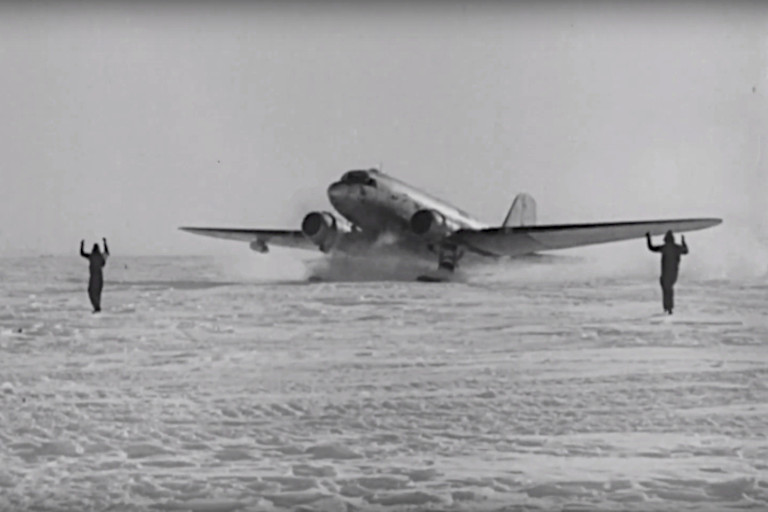
Byrd later spoke cryptically about “objects that could fly from pole to pole at incredible speeds.” Conspiracy theorists claim he encountered hostile UFOs or was escorted into Hollow Earth by tall, blond aliens into chambers with swastikas on their walls.
Sounds insane. But here’s what isn’t insane: Operation Highjump was real. It did end suddenly. And during the mission, pilots documented something called the Bunger Oasis — a vast, ice-free area with lakes of liquid water and algae, described by Byrd himself as looking like it belonged on another planet.
Strange signals and pyramid shapes
Zoom in on Google Earth, and Antarctica reveals some odd shapes. Triangular peaks that look like pyramids, 230 feet tall, with sides too straight to be natural. Caves carved into the ice that resemble entrances.
People post coordinates, but when others check, the images are mysteriously blurred or deleted.
Meanwhile, the ANITA experiment (Antarctic Impulsive Transient Antenna) has detected radio signals blasting from beneath the ice that shouldn’t exist. Signals that violate the laws of particle physics as we understand them.
So, are we looking at natural anomalies? Or breadcrumbs pointing to something governments would rather we didn’t see?
The hollow earth hypothesis
The most enduring Antarctic theory is Hollow Earth — the idea that massive openings at the poles lead into a habitable inner world. Cultures, from ancient Greeks to Tibetan Buddhists, have imagined subterranean realms like Hades or Agartha.
Admiral Byrd’s alleged “secret diary” feeds into this myth, describing lush landscapes inside the Earth and warnings from advanced beings.
Most scientists dismiss it outright. Satellite data gaps at the poles? Just orbit limitations. Strange auroras and compass anomalies? Magnetic weirdness.

But for true believers, Antarctica is the locked front door to another world.
Why governments guard Antarctica so closely
Let’s step back from aliens and Nazis and look at cold, hard economics.
Antarctica is sitting on an estimated 200 billion barrels of oil — more than Saudi Arabia. It has massive coal deposits, rare earth minerals critical for electronics, and 70 percent of Earth’s freshwater locked in ice.
No wonder governments want to keep everyone else out.
In 1991, the Madrid Protocol banned all mining in Antarctica until 2048. That’s just 23 years from now. When the treaty comes up for review, it will take only 75 percent of signatories to open the floodgates. Nations are already jockeying for position.
China has gone from zero to five Antarctic bases in a few decades. The U.S. runs three permanent stations. Russia maintains several more. And the largest, McMurdo Station, isn’t run by penguin biologists — it’s managed by Raytheon, a defense contractor best known for missile systems.
Fortress Antarctica
Here’s the part most people don’t get: the real fortress in Antarctica isn’t military. It’s legal.
Seven nations claim slices of Antarctica — Argentina, Australia, Chile, France, New Zealand, Norway, and the UK. Their claims overlap, but the Antarctic Treaty freezes disputes. Nobody officially “owns” Antarctica, but those who claimed early get to act like landlords.
To visit, you don’t just need cash. You need permits, insurance, environmental assessments, and approval from the International Association of Antarctica Tour Operators. Even then, only 100 tourists can land at a time, on pre-approved sites, under strict monitoring.
Try chartering your own expedition, and you’ll hit a bureaucratic wall. It can be harder to get into Antarctica than North Korea.
The environmental defense
Of course, there’s a rational counterargument.
Antarctica isn’t just another landmass. It’s the planet’s climate control system. If its ice melts, sea levels rise catastrophically. Its ecosystems are fragile — a single footprint can remain for decades. Introducing a non-native species, even bacteria, could wipe out isolated communities millions of years old.
Add in the danger: -120°F temperatures, 200-mph winds, storms that last weeks, and zero rescue options. Even professionals die regularly down there.
So maybe the restrictions aren’t about aliens or oil. Perhaps they are just about not letting us surface dwellers screw up the last pristine frontier.
The locked future
Here’s what’s undeniable:
- Antarctica holds unimaginable resource wealth.
- It’s geopolitically strategic.
- It’s wrapped in secrecy, bureaucracy, and blurred satellite images.
- And in 2048, the treaty that protects it could unravel.
Until then, Antarctica remains the world’s last locked box. Whether it’s hiding alien tech, Nazi bunkers, or just the planet’s final untapped oil field, nobody’s getting in without permission.
And maybe that’s the real conspiracy: it’s not what’s down there. It’s who gets to decide.
Follow us on X, Facebook, or Pinterest
