

Buddhism teaches that every action carries consequences: those who sow good deeds reap blessings, while those who sow evil deeds face inevitable retribution. Though such truths are often dismissed as superstition in modern societies — including China, where atheism is widespread under the CCP — the reality of cause and effect is undeniable when it unfolds before your very eyes.
The following are four chilling cases, witnessed firsthand by a police officer and a forensic pathologist in mainland China, that illustrate a universal truth: no wrongdoing goes unpunished, and the consequences of our actions eventually find us, whether near or far.
A police officer’s firsthand account of karmic retribution
In 1994, a newly transferred police officer encountered a case that would leave a lasting impression.
A caller reported a fatal stabbing outside a recently opened karaoke bar near Qianmen. Upon arriving at the scene, the officer and his colleagues quickly discovered that the truth was far stranger than the initial report suggested. The victim had slipped while entering the bar, crashing into a one-meter-tall Guan Gong statue stationed at the entrance. Guan Gong, also known as Guan Yu, was a revered general of the Three Kingdoms era, later deified as a god of loyalty, righteousness, and protection. The bronze sword he held pierced the victim’s throat, striking an artery. The death was ultimately ruled an accident.
During the investigation, the officer learned that the statue had been delivered by a man named Yu Zixing from Anhui Province. When police went to question him, they discovered Yu had been missing for three days.
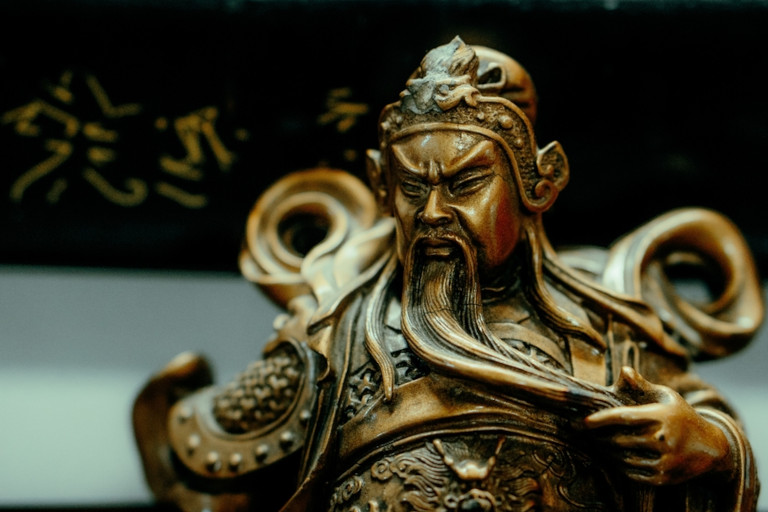
The nightclub owner mentioned that Yu had discussed buying a Xiali car while drinking at the bar several days prior. This revelation prompted investigators to take a closer look at his history. They discovered 31,000 yuan (US$4,350) in cash missing from his mistress’s home, as well as evidence that Yu had earned money by helping someone obtain over 100 kilograms of government-supplied cement. A Northeasterner who had worked with him on the cement deal had recently visited Yu’s mistress for drinks.
Meanwhile, Xiyuan Police Station reported discovering a severely decomposed head. Forensic analysis confirmed it belonged to Yu Zixing and ruled it a homicide. When police questioned Yu’s mistress, she confessed to collaborating with the Northeasterner to murder Yu. Shockingly, the same Northeasterner who had killed Yu was the individual found dead outside the karaoke bar.
As the saying goes, Heaven’s justice is clear and inescapable. The seemingly accidental incident at the karaoke bar — the fatal encounter with Guan Gong’s statue — had inadvertently unraveled the entire murder case.
The police officers involved all remarked that it seemed like Old Yu’s vengeful spirit had exacted retribution. The police chief overseeing the investigation concluded:
“Whatever you do will have consequences. Heaven and the spirits will know. It’s just a matter of when retribution comes. May all deeply believe in cause and effect. In every thought, action, and deed, never harm others! As the old saying goes: Doing good to others benefits oneself; harming others harms oneself. Indeed, this is the truth: as humans act, heaven observes. Those who do evil may deceive others, but they cannot deceive heaven and earth.”
Three cases of karmic retribution witnessed by a forensic pathologist
After studying Buddhist teachings, a forensic pathologist came to a striking conclusion through years of observation, investigation, and research: death is not accidental — it is the ultimate proof of the iron law of cause and effect. The pathologist recounted three cases he personally witnessed.
Case one: A young man kills his parents
In 2002, late one night, a 28-year-old man brutally murdered his parents, both in their sixties.
He had been spoiled throughout his childhood, growing up arrogant, self-centered, and stubborn. After marrying, he and his wife moved in with his parents, and the household was constantly tense. Arguments were frequent, simmering resentments lingered, and over time, the young man developed a dark fixation. He admitted later that he had long contemplated killing his parents, and finally carried out the act by slitting their throats.

The investigation revealed a chilling detail. The elderly couple had spent their entire working lives slaughtering chickens. Their daily work involved binding live chickens and cutting their throats, a repetitive act of killing lives. The coroner noted that the method of their deaths — the precise way their son killed them — mirrored exactly how they had killed chickens for decades.
What had seemed like a senseless, violent act now appeared almost like karmic justice. The very technique of death was returned to the parents at the hands of their own child.
Case two: Coal mine owner haunted by vengeful spirits
Another case involved a coal mine owner surnamed Zhao. Mr. Zhao operated a small coal mine in a rural township. Following a mining accident, he was initially criminally detained, but then transferred to a hospital due to his diabetes. Through his connections, his detention was later downgraded to residential surveillance. Yet his health rapidly deteriorated, and he never left the hospital.
During his hospitalization, Zhao suffered immensely. He became emaciated and skeletal, his body covered in severe ulcers. When he finally died, those preparing his body for transport witnessed something horrifying: his bones were so brittle that they fractured in multiple places, and before they could even place him in the freezer, his body had nearly disintegrated into a pile of flesh.
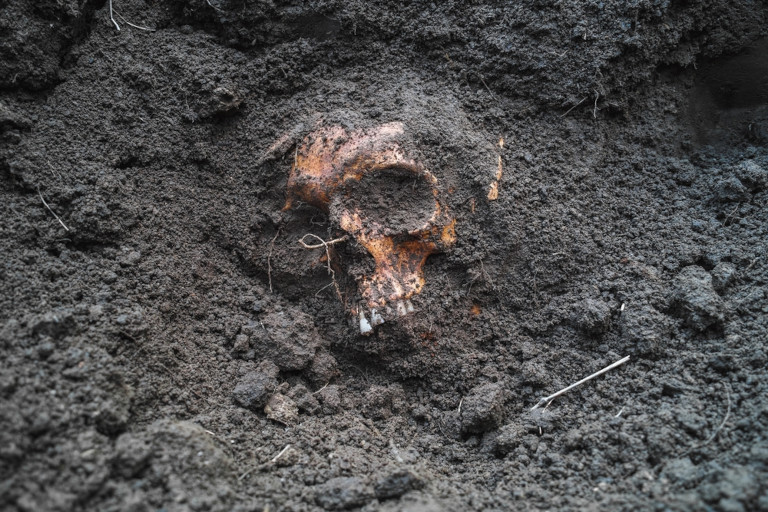
The reason for such a gruesome fate was not mysterious. Zhao himself recounted the story to the pathologist. Over a decade earlier, when he first started his small coal mine, he lacked funds and resorted to deception. He had enlisted someone to lure mentally disabled vagrants at the train station into working in his mines without pay, employing only a few guards to oversee them. Once he had accumulated his initial fortune, Zhao sealed the shaft of the small coal pit to cover up the crime, leaving those vulnerable individuals trapped underground to slowly starve and suffocate in darkness.
Years later, Zhao’s confession was corroborated when police unearthed over twenty skeletal remains at the location he had described. The pathologist concluded that Zhao’s own agonizing death — the rapid deterioration, the ulceration, the brittle bones — was a direct form of karmic retribution for the suffering he had inflicted. The vengeful spirits of those he had wronged, it seemed, had claimed him in the only way they could.
Case three: The gossip-monger whose tongue froze off
The third case involved a man whose malicious gossip set off a tragic chain of events.
In a quiet village, one evening, a married couple had a fierce argument after the wife suspected her husband of having an affair. Consumed by anger, the husband stormed out and went drinking with friends, leaving his wife and their infant child alone at home. That night, despair overwhelmed the wife, and she took her own life. Tragically, the child, not yet a year old, froze to death in the cold house. A once-happy family was destroyed in a single night, leaving behind a scene of unimaginable sorrow.
The person who had set this tragedy in motion was Liu, a local man who repaired motorcycles by the national highway. He had spread the false rumors that ignited the wife’s suspicions. In truth, the alleged affair had never occurred. The police reprimanded Liu, but there was little else they could do at the time.
Yet within a few months, fate caught up with him in a most bizarre and horrifying way. The local beat cop informed the pathologist that Liu had suffered a strange accident. One night, while drunk, he accidentally inhaled liquid helium used for painting motorcycle bodies. The cold substance froze his tongue, causing severe tissue damage that required immediate amputation. The man who had caused so much suffering through lies had received a punishment as cruel and precise as the pain he had indirectly inflicted on others.

The pathologist later reflected that the case was a stark reminder of the law of cause and effect: even actions that seem minor — spreading rumors, stirring conflict — can spiral into irreversible consequences, and retribution, in one form or another, eventually arrives.
Conclusion
These cases of karmic retribution, recounted by both the police officer and the forensic pathologist, are far from isolated incidents. Across cultures and throughout history, countless stories attest to the law of cause and effect: as you sow, so shall you reap.
The mechanisms of justice and retribution may seem obscure, invisible, or like tall tales, yet throughout China’s history, countless teachings and proverbs have offered timeless wisdom:
“Good deeds beget good rewards; evil deeds beget evil rewards — it is only a matter of time.”
“The retribution for good and evil follows like a shadow.”
“In the end, good and evil will receive their due; even fleeing far and high, one cannot escape.”
“One deed begets one retribution.”
“He who does much wrong will surely destroy himself.”
Perhaps these warnings, together with the firsthand experiences of the police officer and forensic pathologist, can awaken those who commit evil or turn a blind eye to it. Remember: the law of retribution governs all things. Heaven sees everything, and sooner or later, justice always comes, in one form or another.
Translated by Audrey Wang
Follow us on X, Facebook, or Pinterest
