

In early November 2025, a series of significant diplomatic moves focused on deterring Beijing unfolded from Berlin to Tokyo and Brussels. These events highlighted a strategic shift among democratic allies and exposed friction within China’s established foreign approach.
Within just a few days, three significant diplomatic announcements occurred on the international stage. The central figures in these events were three prominent female leaders and diplomatic experts: Tsai Ing-wen, Sanae Takaichi, and Hsiao Bi-khim. Their actions collectively sent a powerful signal about Beijing’s diplomatic posture.
Tsai Ing-wen: Positioning Taiwan within global democratic memory
On November 9, 2025, in Berlin, marking the 36th anniversary of the fall of the Berlin Wall, Taiwan’s former president Tsai Ing-wen delivered a keynote address at the “First Berlin Freedom Conference.”
Her speech was strategically potent. She emphasized that while the Chinese Communist Party (CCP) excels at military intimidation and information warfare, Taiwan’s democratic resilience is difficult to overcome. Tsai called for democracies to unite, sending a clear message to Beijing: “You are no longer facing just Taiwan, but the democratic community.”
By deliberately choosing the anniversary of the Berlin Wall’s collapse, Tsai used historical symbolism to respond to China’s current expansion. Her presence successfully placed Taiwan’s narrative at the core of the global democratic dialogue — not as a passive pawn, but as an active partner in resisting authoritarianism.
Sanae Takaichi: Japan defines its security red line
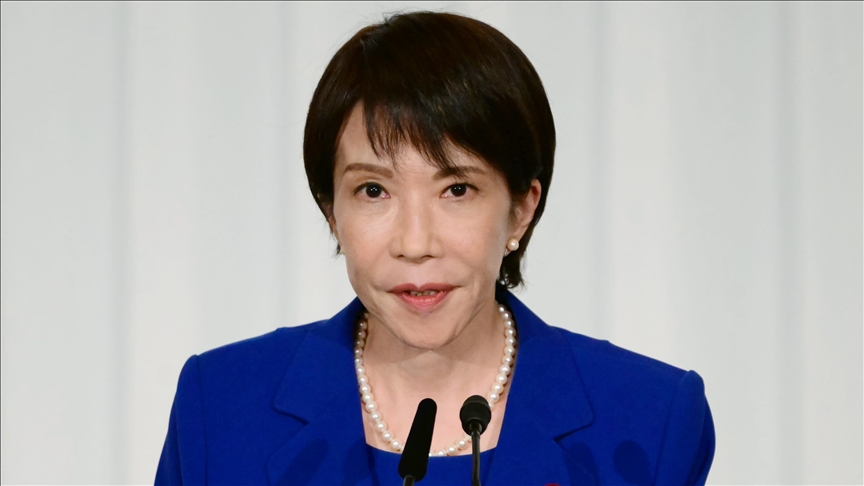
While attention was on Berlin, Japan’s parliament witnessed a parallel strategic shift. Japan’s new prime minister, Sanae Takaichi, offered a precise clarification of Japan’s security policy regarding the Taiwan Strait.
During questioning in the House of Representatives, Takaichi responded directly: “If China attacks Taiwan with warships or military force, it would very likely be recognized as a ‘survival-threatening situation.’”
This was not political rhetoric; it was a legal declaration. For a sitting prime minister to state this meant Japan had effectively established the defense of Taiwan as a predetermined national policy within its legal framework. This marked Japan’s most explicit stance on the Taiwan Strait since World War II, moving Japan-China relations toward an era of “clear deterrence.”
Hsiao Bi-khim: The diplomatic surprise in Brussels
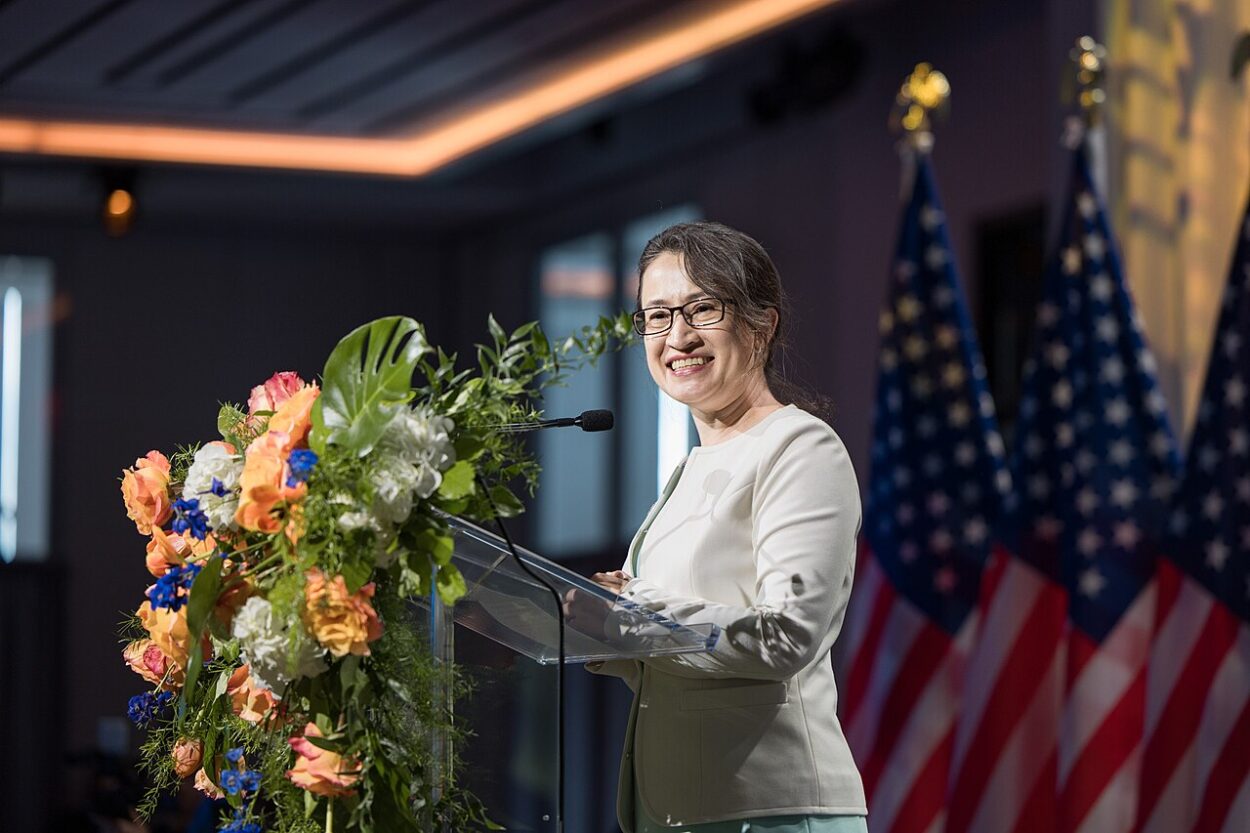
On November 7, 2025, Taiwan’s vice president Hsiao Bi-khim made an unannounced appearance, walking calmly to the podium of the European Parliament’s main chamber in Brussels. The sudden appearance caught Beijing’s mission to the EU completely by surprise.
Hsiao delivered a confident and composed speech, stating: “Europe defends freedom under fire. Taiwan defends democracy under pressure.”
Her message was clear: “Taiwan matters not because we are victims, but because global prosperity and international order depend on a free Taiwan.” This message repositioned Taiwan’s international narrative.
The delayed reaction from Beijing — a full day passed before a statement was issued — suggested internal confusion and a lack of prepared guidance from the central leadership. Their eventual statement, repeating “severely damaging,” “severely violating,” and “severely eroding” multiple times, confirmed that their diplomatic networks had been successfully circumvented and their narrative control had failed.
The unintended consequence of ‘Wolf Warrior’ diplomacy
As these three democratic signals reverberated globally, a Chinese diplomatic official inadvertently compounded Beijing’s diplomatic losses.
Xue Jian, China’s consul general in Osaka, reposted Prime Minister Takaichi’s remarks on social media and added a highly inflammatory comment: “For such a filthy head that sticks itself out, there is no choice but to cut it off without hesitation. Are you prepared?”
The Japanese public viewed this as an unprecedented diplomatic disgrace and a violent threat. Japanese society overwhelmingly concluded that Xue’s comment offered ironclad proof of the danger Takaichi had warned about from the CCP.
Beijing’s subsequent action further escalated the crisis. After Xue deleted his post, Beijing maintained a 48-hour silence, suggesting internal opinions were divided. When China’s ambassador to Japan, Wu Jianghao, finally responded, he did so not with an apology but by reposting President Xi Jinping’s speech on Taiwan. This move effectively escalated the incident, implying that the consul general’s inflammatory behavior aligned with the general spirit of the top leadership’s directives.
The consequences of the combined actions of Tsai Ing-wen, Sanae Takaichi, and Hsiao Bi-khim in early November represent a deliberate effort to redefine the democratic narrative against authoritarianism. This series of events marks a significant new phase in international relations concerning the Taiwan Strait, where democratic allies are increasing strategic coordination and actively challenging Beijing’s dominance.
Translated by Cecelia and edited by Helen London
Follow us on X, Facebook, or Pinterest
