
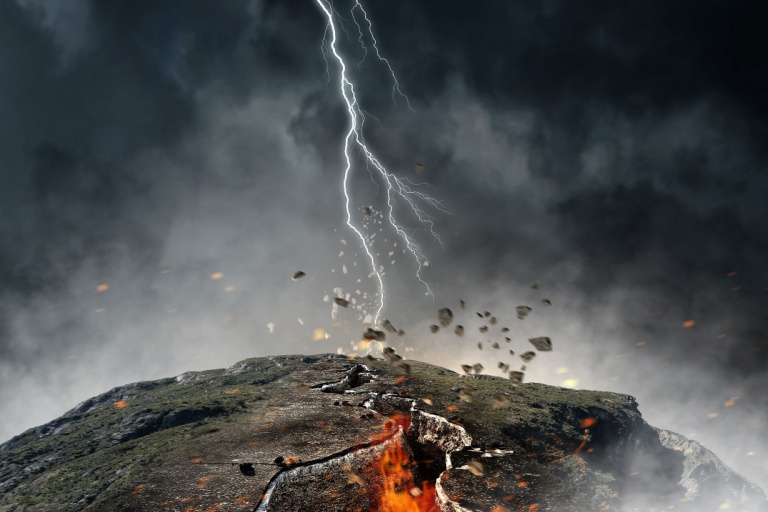
Few phrases strike as sharply as “Heaven’s punishment and Earth’s destruction.” The phrase, once used to condemn individuals for unforgivable cruelty or immorality, is today dismissed as a metaphor or exaggeration. But in traditional lore — and, as some historical accounts suggest, this was once believed to be a real, literal form of retribution.
Most are familiar with “Heaven’s punishment,” often symbolized by a lightning strike. But “Earth’s destruction,” the idea that someone could be swallowed by the very ground they walk on, is far more chilling. Through several strange and well-documented incidents from the Qing Dynasty, we explore what ancient people believed were actual examples of divine and earthly justice.
What Heaven’s punishment and Earth’s destruction really meant
In traditional Chinese cosmology and Biblical accounts, the Heaven and the Earth weren’t just passive backdrops to human life — they were active forces of moral balance. When someone’s actions tipped that balance, Heaven and Earth would respond.
Heaven’s punishment referred to lightning or natural forces striking down evildoers while Earth’s destruction implied that the ground itself would consume the wicked — a rare and terrifying fate. These weren’t just dramatic ideas — they were regarded as warnings to society: some crimes were so vile that they couldn’t be judged by human courts alone. Let’s examine some real cases passed down through generations.
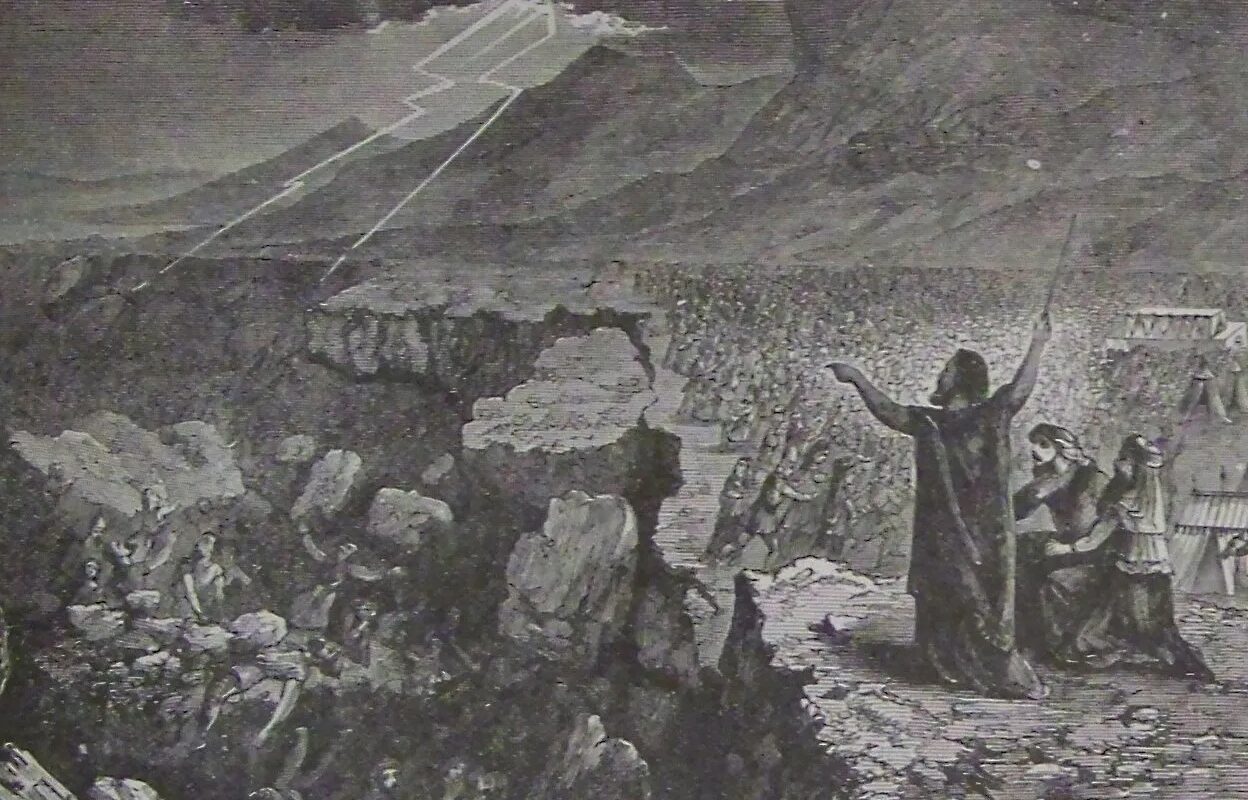
The man who was swallowed by the Earth
During the early Tongzhi era of the Qing Dynasty, a man from Jiangyin (modern-day southern Jiangsu Province) was known for his habitual wrongdoing and cruelty. One day, after buying groceries at the market, he returned home carrying a basket. As he walked across the clearing in front of his house, he suddenly froze in place — unable to move, as if his feet were bound. Then, slowly and horrifyingly, he began to sink into the earth.
Neighbors rushed to help. Some tried to pull him out, but he cried out in pain. Others attempted to dig the ground with tools, but the man only suffered more. Soon, he could no longer speak. By the third day, only the top of his head was visible — and then, he was gone, completely absorbed by the earth. The ground showed no sign of disturbance. Smooth. Silent. This was regarded as a textbook case of “Earth’s destruction” — a supernatural form of justice so severe that the ground itself refused to bear the weight of his presence.
The unfilial daughter-in-law and the tragedy of three women
In another disturbing tale, a village south of Kaifeng (Henan Province) witnessed a tragic and bizarre chain of events tied to filial impiety, a core sin in Confucian ethics.
A woman lived with her mother-in-law and children while her husband was away. One day, an elderly beggar woman — a local widow — came to the door seeking food. The mother-in-law, moved by pity, secretly gave her her own meal. However, her daughter-in-law discovered this and berated her violently. She snatched the bowl from her hands, dumped the freshly added rice outside, and stomped it into the dirt with her feet. Heartbroken and humiliated, the mother-in-law returned to her room and hanged herself.
The villagers, too afraid of the daughter-in-law’s notorious temper, said nothing. But three days later, the same beggar returned, only to learn what had happened. Devastated, she threw herself into a nearby pond, saying she would die to repay the kindness of the old woman.
What happened next defied logic. A thunderclap cracked the sky, and the beggar’s body rose from the pond, while the daughter-in-law sank into the earth — right where she had thrown and stomped the rice. Kneeling, legs buried a few inches deep, she became trapped. She couldn’t move. She screamed in pain, starving and weeping, but no one could reach her — the ground near her burned like fire. Some tried to feed her using long sticks, but even the sticks were scorched black by the intense heat surrounding her. On the fifth night, a storm arrived. By morning, she was gone. The ground was undisturbed, as if she had never been there at all.

The performers struck by lightning — Heaven’s punishment in plain sight
In yet another example, two men from Tongzhou who earned a living performing comedic skits were struck dead by lightning while walking in the rain. At first, it seemed like a freak accident — until a third man, their travel companion, revealed the truth. Behind their harmless performances, the two were actually traffickers, luring young women under false pretenses and selling them into brothels. Just days earlier, they had sold two girls to a red-light district.
The lightning strike happened just after they had stepped out of the shelter during a thunderstorm. Their companion had remained with them until that moment — possibly the reason Heaven had not struck them earlier. The timing seemed to imply that once the innocent company had left, divine justice had full authority to act. Their bodies were found with small, clean holes burned through their chests and backs — a surgical precision that further convinced locals of celestial judgment.
Justice beyond human hands
Stories like these may sound fantastical to modern ears. But in traditional Chinese thought, they served a deeper moral purpose. They reinforced the invisible laws of the universe — that even if human justice fails, cosmic justice does not, and warned people that certain lines should never be crossed, especially when it came to cruelty, deception, or betrayal of sacred bonds (such as family). They also offered comfort to those who suffered in silence — Heaven and Earth were always watching.
Today, we may regard “Heaven’s punishment and Earth’s destruction” as a figure of speech, whereas our ancestors understood these stories as literal. They were reminders that morality transcends human judgment, and that ultimate justice is never out of reach.
Follow us on X, Facebook, or Pinterest
