
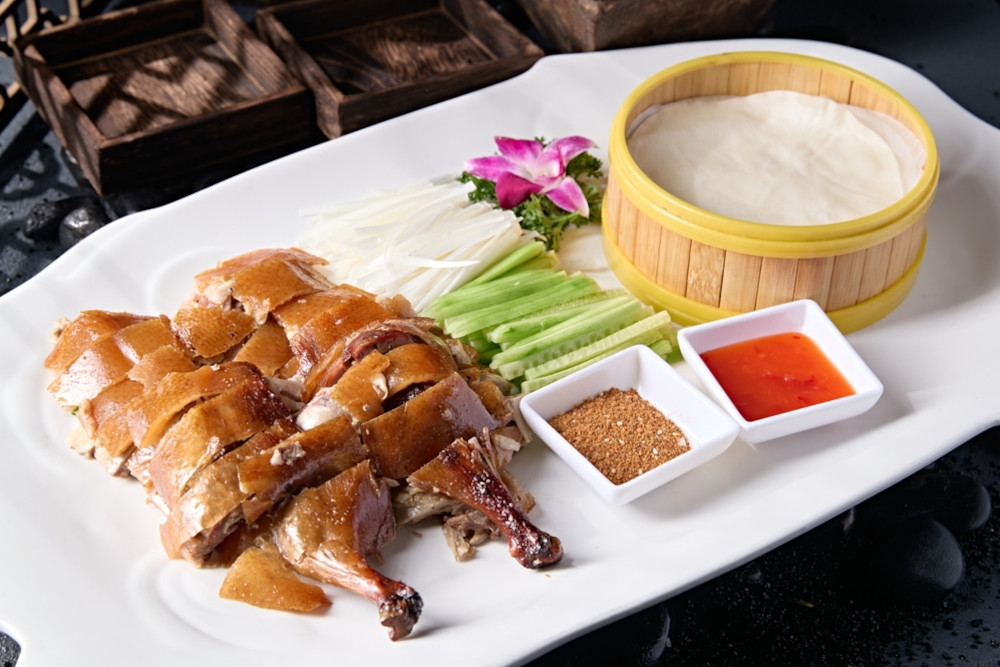
A sentimental retelling of Quanjude’s 10 years between life and death
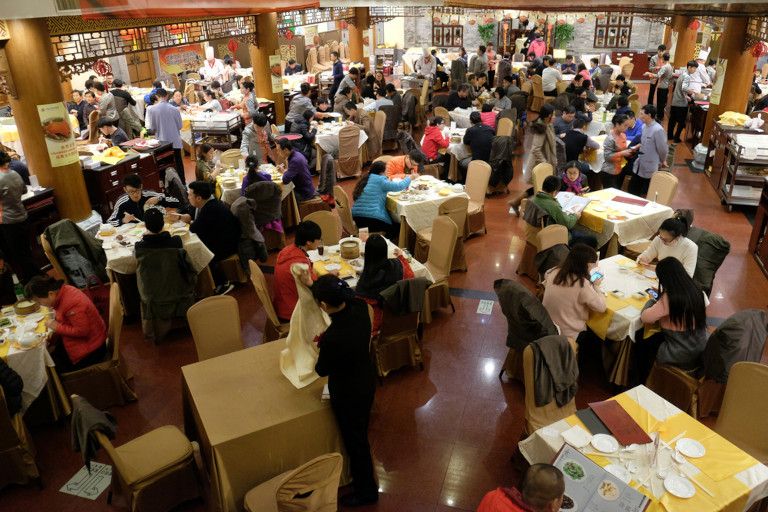
When Peking duck is mentioned, almost no one in China fails to think of Quanjude, Beijing’s most famous roast duck restaurant and one of the city’s oldest surviving brands. For more than a century, its signboard bore witness to prosperity — and later to absurdity. During the fevered years of the Cultural Revolution, this storied restaurant was seized by the Red Guards. Its old plaque was smashed to pieces under wooden hammers, replaced with blood-red slogans and portraits of Mao Zedong.
Through the memories of a firsthand participant — a former Red Guard — we can now look back and see how Quanjude was drawn, step-by-step, into that national frenzy.
The story behind the signboard
The year was 1864, the third year of the Tongzhi Emperor’s reign. Outside Beijing’s Qianmen Gate, Meat Market Street buzzed with voices and commerce.
A tall, slender young man named Yang Quanren moved through the crowd, balancing shoulder poles. He was from Jizhou in Hebei Province, and after floods destroyed his hometown, he fled to Beijing at the age of 15 to make a living. At first, he sold live chickens and ducks. Life was hard, but he was diligent, and over time, he managed to save a little money.
Each day, he passed a dried-goods shop called De Ju Quan. Its signboard was bright, but business was bleak, with dust gathering by the wooden door. Yang took note. At 45, he finally used his life savings to buy the shop. Since he knew poultry well, he decided to sell hang-roasted duck and roasted meats.
Before opening, Yang invited a feng shui master. After circling the shop twice, the old man stroked his beard and said: “This is a blessed site. The two alleyways beside it are like sedan poles. One day, if a building rises here, it will be like an eight-bearer sedan chair — your future will be limitless.”
But he added: “The shop’s former name carries ill fortune. Reverse the characters De Ju Quan to become Quan Ju De, and the bad luck will be dispelled.”

The name suited Yang perfectly. It echoed his own name and carried the meaning “gather virtue and practice goodness.” He commissioned a learned scholar to write the three characters in bold, powerful calligraphy. The gold-lettered plaque, hanging quietly above the street, gave the humble shop new dignity.
The secret inside the oven
At first, business was slow. Qianmen was crowded with famous eateries, and a new shop struggled to gain a foothold. Refusing to give up, Yang sought out master chefs and eventually recruited one from an imperial kitchen.
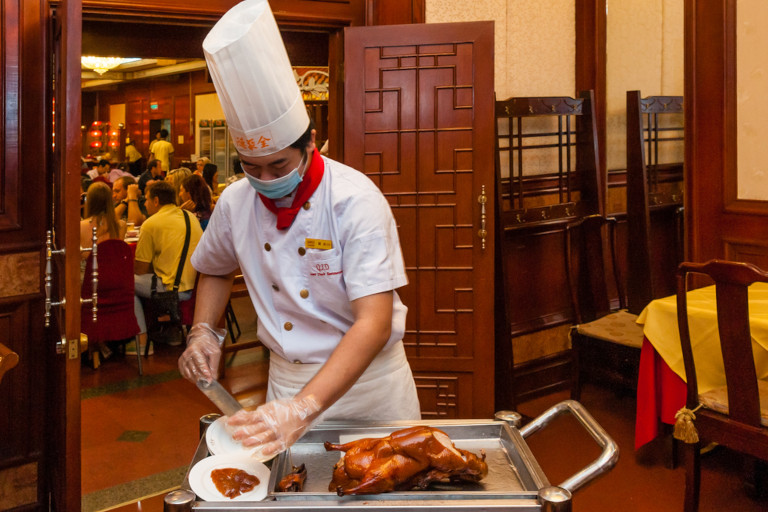
The chef redesigned the oven, making it larger and deeper, and introduced hang-roasting instead of the sealed-roasting method common at the time. Ducks were suspended inside, bathed in fruitwood flames. Their skin slowly turned date-red as fat dripped onto the coals, crackling and releasing an irresistible aroma that drifted into the street.
Soon, Quanjude’s roast duck became legendary — crisp skin, tender meat, rich, but never greasy. Officials and commoners alike saved their money for a chance to taste it.
After Yang’s death, his son Yang Qingmao inherited the business. Though he lacked his father’s culinary skill, he was bold and pragmatic, appointing the capable Li Ziming as head manager. It was a break from tradition, as Li was not a family member. Under his leadership, Quanjude flourished, becoming one of Qianmen’s most prominent restaurants and thriving through dynasties and regimes.
That era ended in 1949, when the Communist Party entered Beijing.
On the eve of the red storm
In 1952, Quanjude was absorbed into the nationwide public-private partnership policy and became a state-owned enterprise. As a symbol of Beijing, it continued to host foreign dignitaries. Premier Zhou Enlai often entertained guests there. The old sign still hung high, the walls were warm with murals, and the scent of roast duck lingered in the air.
Everything changed in the summer of 1966.
With Mao Zedong’s call to “Smash the Four Olds” — old ideas, old culture, old customs, and old habits — historic establishments became prime targets.
A night of terror
A former Red Guard recalled standing in Tiananmen Square on August 18, 1966, as Mao reviewed the Red Guards. Inflamed with zeal, they felt entrusted with a sacred revolutionary mission.
The following night, thousands of Red Guards from several middle schools surrounded Quanjude. Red flags waved. Slogans thundered.
They summoned the restaurant’s manager and declared that the name “Quanjude” was a capitalist symbol that could no longer be used. A new sign had already been prepared — it had to be installed immediately.
Sensing danger in the swelling crowd, the manager tried to explain that Quanjude was no longer privately owned but a socialist, state-run enterprise.
“Then why keep the word ‘virtue’ from the old society?” the Red Guards demanded.
With no choice, the manager agreed to change the sign. He instructed employees to remove the old plaque and store it away.
“Store it?” the Red Guards shouted. “So you can hang it again someday?”
Moments later, the 70-year-old signboard was smashed, trampled underfoot. A long wooden sign reading “Beijing Roast Duck Restaurant” was hoisted above the entrance. The shattered plaque was later displayed in a “Four Olds Destruction Exhibition” — a revolutionary trophy.
Total takeover
Changing the sign was only the beginning.
The Red Guards forced employees to study Cultural Revolution documents, declaring the name “Quanjude” a symbol of exploitation and class oppression. Calligraphy, paintings, shop rules — everything was destroyed. One hundred portraits of Mao were pasted throughout the restaurant, including dining halls once reserved for foreign guests.
A mural of Peking ducks was torn down and replaced with Mao’s quotations.
By morning, the century-old restaurant was unrecognizable. A new sign at the door read: “Workers, Peasants, and Soldiers Welcome.” Red Guards remained inside as enforcers and ideological monitors.
The head manager, Yang Fulai, was paraded and denounced, then sent to feed pigs. A man who had devoted his life to perfecting flavor now learned silence as a means of survival.
Customers were interrogated about their class background. Business collapsed. Yet the stationed Red Guards ate well — lavishly fed by staff who dared not offend them.
A Red Guard’s confession
Years later, the former Red Guard spoke of the incident, but refused to apologize.
“I smashed Quanjude,” he said, “but if I apologize, I’ll be utterly disgraced.”
They had been indoctrinated from school with relentless class-struggle rhetoric, he explained — taught that struggle must be constant and enemies ever present. Passionate young people like him believed the Party’s claims that the world outside socialism lived in misery worse than animals.
Mao’s public endorsement convinced them that they — not the law — decided who the enemies were.
His father, a laborer, urged restraint. “Don’t go too far,” he warned. “Capitalists aren’t as bad as the newspapers say. Enough is enough. Don’t beat people.”
Though he never struck anyone, the man admitted he still took part in destruction.
“Our generation suffered,” he said quietly. “We were sent to the countryside, then laid off later in life. That’s how it went.”
The old name returns
Quanjude was not alone. Countless historic institutions across China were renamed or destroyed. Peking Union Medical College Hospital became the “Anti-Imperialist Hospital.” Rongbaozhai, famed for Chinese calligraphy and paintings, was renamed beyond recognition.
Gravely wounded, Quanjude survived. In 1980, after the storm finally passed, it was allowed to reclaim its name. The shattered signboard was retrieved from the Palace Museum.
It was repaired.
Rehung.
But was never truly the same.
Wood remembers blows.
History moved on — but scars remained.
Translated by Katy Liu
Follow us on X, Facebook, or Pinterest
