
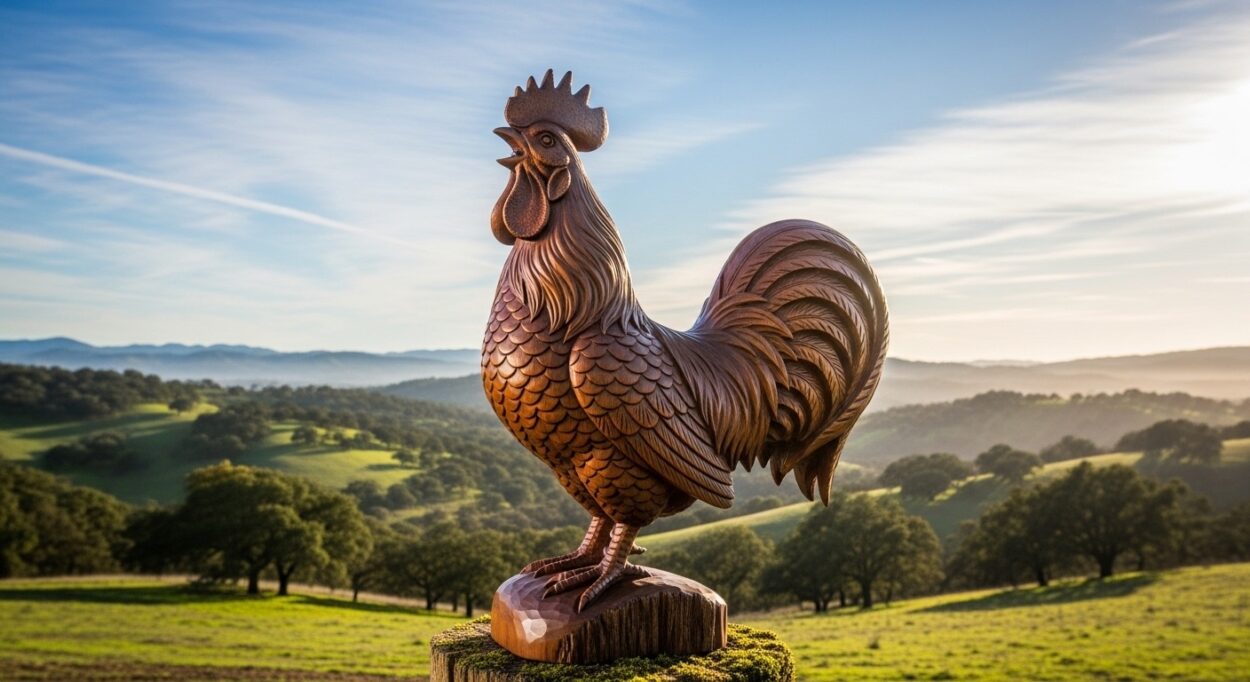
There was once a sumo wrestler who was troubled by the fact that he ultimately could not become a “wooden rooster.” (A reference to the idiom “as dumb as a wooden rooster!”) Does such a person really exist? Yes, as the following story of Futabayama Sadaji reveals.
Sumo, Japan’s traditional sport, is listed alongside judo, kendo, and kyudo as a “national sport,” similar to soccer in Argentina, baseball in the United States, or table tennis in China. Sumo is immensely popular, and everyone wants to become a wrestler, yet it is difficult to achieve, much like the elusive swan meat. This is due to the stringent requirements.
Obesity is the most obvious characteristic. They all appear to have large bellies, resembling lazy creatures that eat and sleep all day, hardly able to walk. Is that not true? Generally, a young person feels overweight if they reach 70 or 80 kilograms, but in sumo, one must weigh at least 120 kilograms to qualify, so the physiques of sumo wrestlers are unique. Moreover, if one looks at seals in the sea, they seem to have no legs or arms, yet they have a round, barrel-like belly. They rely on this belly to bounce up and down freely. Sumo wrestlers are also heavy, yet their movements are agile.
Futabayama Sadaji (1912-1968) was a Japanese professional sumo wrestler. Entering sumo in 1927, he was the sport’s 35th yokozuna from 1937 until his retirement in 1945. He won 12 yūshō, or top division championships, and had a winning streak of 69 consecutive bouts, an all-time record.
However, setting new records that surpass those of predecessors, or breaking existing ones, isn’t easy and doesn’t happen often. Therefore, whenever a sumo wrestler sets a record, the name of Futabayama will appear in the media, comparing this “god of sumo” with the current record holder. Despite the comparisons, no one has surpassed Futabayama’s record. In fact, he possessed no superior qualities.
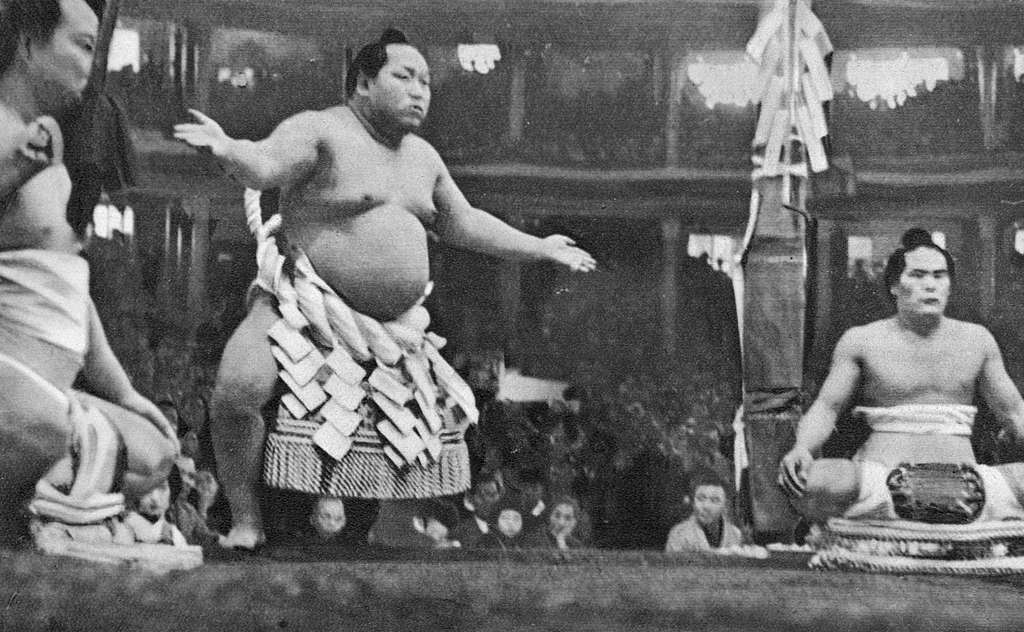
First, he failed the weight test. The retired Hawaiian wrestler Konishiki weighed up to 285 kilograms, while the recently popular wrestler Akebono weighed only 140 kilograms. In comparison, Futabayama weighed only 89 kilograms, less than one-third of Konishiki’s weight. In addition to not being heavy enough, he faced misfortunes in childhood, truly embodying the saying “when it rains, it pours.”
At the age of five, he was shot in the eye by an arrow from a playmate, resulting in partial blindness in his right eye. At age 10, he lost his mother; at 11, due to poverty, he went to work on a fishing boat, where he accidentally got caught in a winch and lost his right pinky finger. Despite these handicaps, he always won the sumo competitions among the children in the village. Once, a visiting training dojo witnessed his win and recognized his potential and ability to turn defeat into victory.
His tactics possessed no secrets; just the basic principles of offensive and defensive engagement with his opponent. Typically, smaller wrestlers would suffer losses as taller opponents could easily pull them forward. Strangely, Futabayama, who was small, proved to be different in this regard. In the moments he appeared to be falling, he often managed to roll over and counterattack, pushing his opponent out of the ring.
This skill was honed through a childhood filled with misfortunes and a drive not to be easily defeated. He had experienced the ups and downs of life on a fishing boat in rough seas during his childhood, which left him with unsteady movement. To stabilize himself, he needed strong core muscles and leg strength, which he developed in such an environment, becoming as strong as steel. The powerful core and leg strength he cultivated allowed him to stand firm on the sumo ring. No matter how opponents pushed or pulled, he could respond calmly and remain undefeated, turning defeats into victories.
In summary, he achieved 69 consecutive victories, winning the top prize for three consecutive years, an unprecedented achievement in sumo history. The competition records from that time period indicate that he was in peak condition, weighing 135 kilograms. During matches, he would always calmly stare at his opponent, waiting for them to stand up before he would rise to engage. As soon as they clashed, he would swiftly grab the opponent’s waist with both hands and throw them out forcefully.
This routine led him to victory in every match, so for the 70th match, the audience naturally expected him to win; his victory seemed assured. However, the match ended in a loss. Despite this, his record remains unbroken to this day. Unmoved by winning or losing, he felt deep regret for not becoming a “wooden rooster.” After the match, he sent a telegram to his admired teacher, Masatake Anko, stating: “I have yet to reach the realm of the wooden rooster.”

The term “wooden rooster” comes from a fable about a fighting rooster in the parable Zhuangzi. So what exactly is a “wooden rooster”? Why does a wrestler who excels in the ring regard it as the highest realm?
Once, there was a master who raised fighting roosters for the king. After 10 days, the king inquired about the rooster’s progress, and the master replied that it was not yet ready, as the rooster was still showing off and displaying a combative nature. Another 10 days passed, and the king asked again, and the answer was still negative. After 40 days, the master finally reported that the “wooden rooster ” had been raised; one that possessed a restrained demeanor, neither arrogant nor impatient, outwardly calm as wood, yet inwardly fully self-sufficient — mastering the art of self-actualization.
This was fully displayed in the arena, a rooster that showed no surprise, panic, arrogance, or fear when facing its opponents. In short, it exuded an extreme confidence that was unassuming, not regarding other roosters as threats. Before the clash, the other roosters would retreat in fear, seeing his manner as a wooden rooster.
Who was Masatake Anko, the teacher who instructed Futabayama? He was a modern thinker and a Yangming scholar. Many prime ministers, such as Shigeru Yoshida, Takeo Fukuda, and Masayoshi Ōhira, sought his advice. He revised many prime ministers’ inaugural speeches beforehand. A nation’s leader, much like a wrestler in the ring, must remain composed to defeat his opponents, he said. It is no wonder that this philosophical giant founded a school called “Golden Rooster Academy.”
Translated by Joseph Wu and edited by Maria
Follow us on X, Facebook, or Pinterest
