
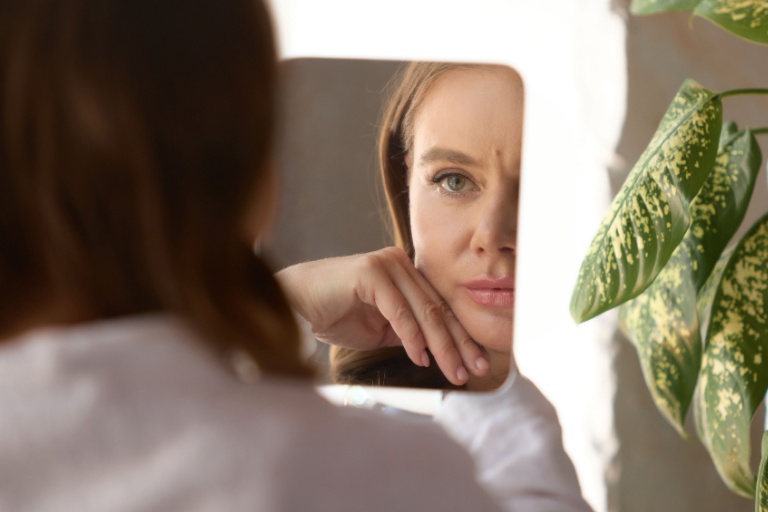
For the past few months, Linda hadn’t been able to sleep well. At 35, she moved through life like an actress, changing costumes throughout the day. In the morning, she was a gentle mother; by day, a decisive manager; after work, a dutiful daughter; and at home, a considerate wife and capable daughter-in-law. The roles shifted endlessly. Yet the harder she tried to perform them all well, the more hollow she felt inside. Late at night, standing in front of the mirror, she would ask quietly: “Who am I, really?”
One evening, she watched a film at a local theater called Life Is Like a Dream, about a mother searching for her lost child during wartime — an aching, tragic tale that moved the audience to tears. Watching the heroine cry, Linda felt tears streaming down her own face. She knew it was only a performance. And yet, in that moment, a strange thought arose: “What if my own life is also a performance?”
Roles and expectations
In truth, everyone spends a lifetime playing various roles. A man may be a son, a husband, a father, or a colleague. A woman may be a daughter, a wife, a mother, or an employee. Roles are natural; society depends on them. The deeper problem arises when we mistake a role for our true self. Too often, when something goes wrong in that role, the pain feels heavier than it needs to be.
Linda, for example, measured her marriage against a silent script in her mind — what a husband “ought” to be. When he failed to meet that imagined standard, disappointment turned into resentment. Gradually, she began to feel she had married the wrong man. But perhaps the person she resented was not the real man at all. Perhaps she resented the character she had written for him.
We do the same with everyone around us. We hope our father will be a calm, reliable harbor. When he becomes irritable or distant, we feel wounded. We hope our spouse will be gentle and attentive. When they seem careless or withdrawn, we feel wronged. We hope our child will be thoughtful and kind. When they struggle, we feel frustrated. Yet the version we expect has always existed only in our imagination. Often, we fall in love not with the person themselves, but with the ideal character we imagine they could become. And when the real person steps outside that imagined role, the play — and our heart — fractures.
Many unhappy relationships are not caused by the “wrong person,” but by unclear roles and impossible expectations. A wife forgets that marriage calls for companionship and respect, not control or judgment. A husband forgets that responsibility requires communication, not silence or avoidance. A mother becomes nothing but an extension of her child’s life, neglecting her own needs and sense of self. A daughter endlessly tries to manage her parents’ choices and emotions, forgetting that she has her own path to walk. Once roles become confused, life itself begins to lose shape.

The role that truly matters
After the pandemic, Linda’s marriage fell into crisis. Her husband lost his job and grew short-tempered. Her child’s grades declined, filling her days with worry. Her mother-in-law’s criticisms stung like constant thorns. At work, she forced herself to smile. At home, she felt defeated. One evening, exhausted beyond words, she broke down to a friend. “I’ve done everything I can,” she cried. “Why is no one satisfied?”
Her friend answered gently: “You are not their whole world. You are only one role in their lives. And before all those roles — you are yourself first, just as they are themselves first.” The words opened a quiet space inside her. Slowly, she realized: She did not have to carry the weight of controlling anyone else’s life, she did not have to perfect her husband, her child, or her mother-in-law, and she did not have to assign meaning, expectation, or judgment to their roles. All she needed was to live her own life fully, without expecting others to act according to her script. And in that freedom, she felt whole.
Discovering your role, living your life
An old Chinese saying expresses this wisdom plainly: “Do not concern yourself with affairs that are not your place.” At first, the words may sound strict, even old-fashioned. But they carry a quiet truth: clarity about your role comes gradually, through experience, reflection, and the practice of acting with awareness, care, and presence.
When we confuse role with self, imbalance follows. A wife cannot live her husband’s growth; a child cannot carry a father’s lessons. A husband may struggle with tenderness, a mother may face her own challenges — these are their paths, not ours to fix. When we try to step into their roles, we exhaust ourselves and lose sight of our own.
In modern life, marriages break easily; families fracture under invisible pressure. But the problem is not that love disappears. Perhaps it is that we cling too tightly to an imagined ideal, expecting others to fulfill it, and in doing so, forget that their journey is theirs — and ours is ours.
True growth — for ourselves and for others — comes when we act within our own role with awareness, care, and humility, without trying to control, perfect, or direct the paths of those around us. Holding ourselves accountable while acting with presence and compassion creates a steady foundation that supports every relationship.
You are a wife, yet your husband’s journey is his own; your love accompanies, without steering. You are a mother, yet your child’s life is theirs to discover; your care nurtures, without constraining. You are a daughter, yet your parents’ choices are theirs to make; your presence supports, without imposing. You may perform a role — but beneath the costume, you remain yourself. From that presence, you offer others the space to be themselves while allowing your own growth to build the foundation for every role you will play.

Letting go of the script we impose
Late one night, Linda sent a message to her husband: “We are both imperfect people. I’m willing to learn to fulfill my role without demanding that you change. I hope you will begin taking responsibility for yours as well.” For a long time, there was no reply. Then, half an hour later, a short message appeared on her screen: “Let’s learn together.”
Her eyes filled with tears — not of frustration, but of quiet relief. Perhaps, at last, the two of them would no longer be forcing the wrong script. If we one day set down the heavy costumes of our roles, we may discover something simple and profound: We were never the role. We were always ourselves.
When we see ourselves more clearly — our limits, responsibilities, and true nature — we gain the awareness to recognize our part in relationships. By holding ourselves accountable and letting go of the need to control, correct, or perfect others, we build a steady foundation of self-knowledge. This presence flows into every role we play, carrying calm, clarity, and compassion into all our interactions.
Only by releasing expectations and ceasing to measure others against imagined standards do we create true freedom — freedom for ourselves, and freedom for others — to grow, to change, and to become who they are meant to be. We discover that the real question is not: “Why isn’t he the person I imagined?” But rather: “Am I willing to accept who he truly is?”
Translated by Katy Liu and edited by Tatiana Denning
Follow us on X, Facebook, or Pinterest
