
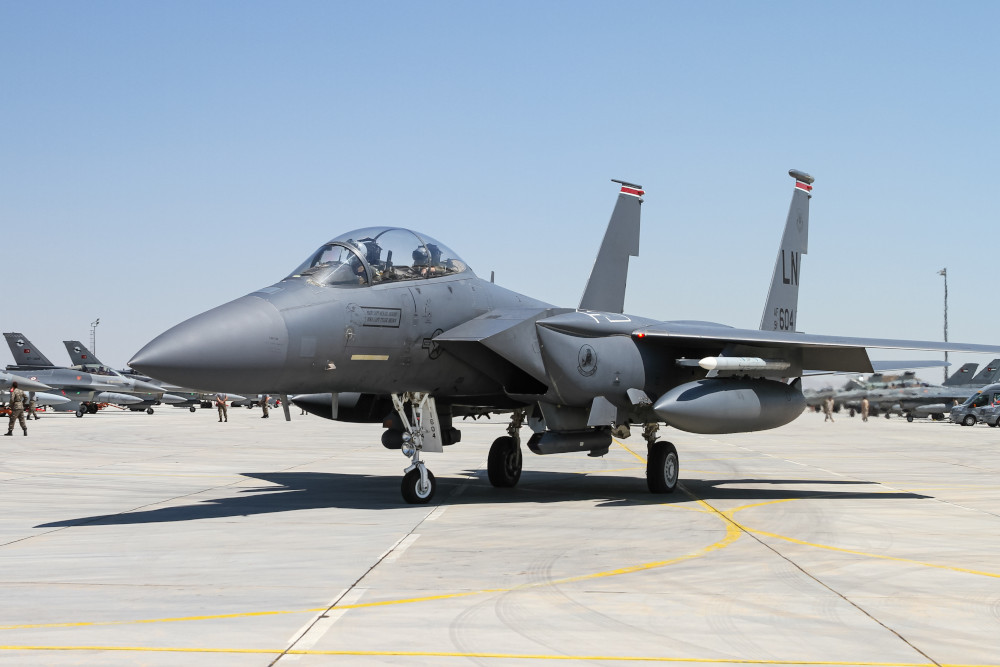
In the early hours of April 5, 2026, Eastern Time, U.S. President Donald Trump announced that the second crew member of an F-15E fighter jet lost in Iranian territory had been successfully rescued. According to U.S. media reports, the operation involved more than 100 special operations personnel and 155 aircraft.
The scale of the mission quickly drew international attention. But what stood out most was not only the size of the rescue effort. It was the principle behind it: the long-held U.S. military commitment to leave no one behind.
For many observers, the rescue was a reminder that military strength is not measured only by aircraft, missiles, and firepower. It is also measured by what a country is willing to do for its own people.
The logic behind ‘leave no one behind’
China affairs commentator Heng He, host of the Heng He Review program, said the spirit of “leave no one behind” is one of the core reasons the U.S. military remains strong.
Unlike countries that depend on compulsory military service, the United States relies mainly on volunteers. If a nation expects its soldiers to risk their lives willingly, Heng argued, it must give them something in return: the belief that if the worst happens, their country will not abandon them.
In his view, that promise is not merely emotional. It is a practical source of military cohesion and combat effectiveness. Soldiers are willing to carry out dangerous missions not only because they follow orders, but because they trust that the nation stands behind them. That trust becomes part of the military’s fighting strength.
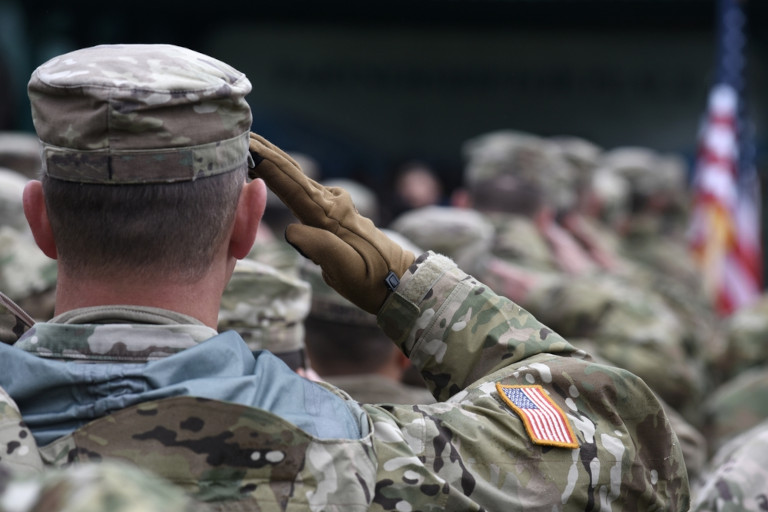
Heng pointed to the U.S. military’s long efforts to recover those lost in earlier wars. During World War II, many American pilots flew missions over China and along the Himalayan air route. Some crashed in remote areas and never returned home. Yet even decades later, after China opened up, the United States continued searching for their remains, sending teams into difficult mountain terrain and spending large sums to bring them back.
That attitude, Heng said, reflects a deeply rooted military tradition: if a service member is alive, bring the person home; if not, bring back the remains.
Leadership and morale matter as much as hardware
Heng also said the U.S. military’s strength does not rest on equipment alone. Jets can be rebuilt, and lost supplies can be replaced. But once the beliefs that hold a military together begin to collapse, restoring them is far more difficult.
That is why this rescue mattered. In his view, it showed once again that the U.S. advantage lies not only in hardware, but also in its values, traditions, and institutions.
He added that if a military is to recover its overall strength, the two factors that can change most quickly are leadership and morale. The success of this operation, he said, reflected both. It showed unity within the force and a willingness at the highest levels to take risks and make difficult decisions at a critical moment.
Such a rescue mission carries obvious danger. No one can know in advance whether it will succeed. If it fails, the cost may be even higher, and the criticism can be severe. Even so, the decision to commit major resources to saving a single missing crew member showed, in Heng’s view, a real respect for human life and a sense of responsibility on the part of military leadership.
He also argued that the mission drew its power from several forces working together: the individual’s will to survive, faith in God, the country’s promise to stand behind its service members, and respect for life itself. When those elements come together, he said, what seems impossible can sometimes become possible.
A stark contrast in military culture
Reaction in mainland China took a very different turn. Although Trump publicly announced that the missing crew member had been found and rescued, Chinese Communist Party state media continued quoting Iranian reports claiming that the U.S. rescue mission had failed and even suggesting that the Americans had tried to kill their own pilot. Those claims drew skepticism online.
Military analyst Shen Mingshi said what the CCP finds hardest to understand is precisely this: that the United States would spend so much to save a single crew member who had escaped by parachute.
In the CCP’s political culture and military education, Shen said, soldiers have often been treated as resources to be consumed in order to complete a mission, rather than as individuals to be protected at all costs.
For example, he pointed to the Battle of the Chosin Reservoir during the Korean War. Chinese troops, facing severe shortages in equipment, supplies, and winter clothing, were still sent into battle and expected to make up for weak firepower with manpower. The result was an enormous loss of life in pursuit of tactical goals.
By contrast, Shen said, the U.S. military’s approach is to reduce risk as much as possible through firepower and technology before sending forces forward, with the aim of minimizing casualties. In his view, this is not simply a tactical difference. It reflects two very different military cultures and two very different ways of valuing human life.
For that reason, the rescue was striking not only because it succeeded, but because it showed how far one country was willing to go to protect one of its own.
The shock of seeing two realities side by side
One of the most widely shared reactions came from an Iranian user on X, who wrote after the rescue that the Islamic Republic “simply does not care about human life.”
The user contrasted two systems: one willing to take enormous risks to save its own citizens, and another willing to sacrifice its own people to preserve power. Seeing those two realities side by side, the writer said, was deeply unsettling.
That may be the larger meaning of this rescue. It was not only a military operation. It was also a vivid demonstration of what a nation reveals about itself when one life is on the line.
Translated by Cecilia
Follow us on X, Facebook, or Pinterest
