
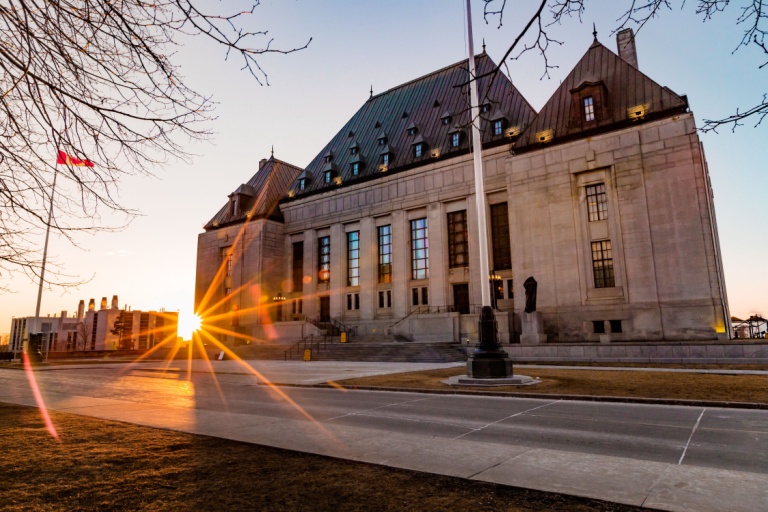
In a landmark decision on March 13, 2026, the Federal Court of Canada delivered a historic blow to the immigration prospects of high-ranking Chinese officials. The court rejected the permanent residency application of a former Deputy Director and first-class police supervisor from Shijiazhuang, Hebei Province. The court ruled that his 30-year career within the Chinese Communist Party’s (CCP) public security apparatus made him complicit in systematic torture and crimes against humanity.
Prominent political commentator Gongzi (Terence) Shen described the ruling as a “historic qualification” of the CCP’s security system by the West. The verdict establishes a firm precedent: those who enjoy the power and promotions offered by the Party-state must also bear the weight of its atrocities.
The landmark ruling: Systemic complicity
The case centers on the former head of the criminal investigation team and Deputy Director of the Yuhua Branch of the Shijiazhuang Public Security Bureau. Despite his claims that he “never mistreated suspects” and that he only ensured that interrogations complied with the law, the Federal Court in Saskatchewan upheld Immigration, Refugees and Citizenship Canada (IRCC)’s rejection.
The court’s reasoning was grounded in the CCP’s “object of governance” philosophy. From 2013 onward, the official managed between 120 and 150 officers and was directly responsible for investigation and detention. The court cited reports from international NGOs and official Chinese documents proving that torture is “widespread and systematic” in Hebei.

Falun Gong persecution
A 2014 report specifically linked the Yuhua District public security system to 73 cases of persecution, resulting in illegal imprisonments, forced labor, and at least one death. Judge Shirzad S. Ahmed ruled that it was “highly improbable” that a senior official in such a position was unaware of these violations. Under Canadian law, voluntary and informed participation in an organization that commits crimes constitutes conspiracy — even without evidence of the official personally wielding the instruments of torture.
Stripping the veil: The irony of the appeal
The official’s wife, Li Li, took the case to judicial review, a move that Gongzi Shen argues backfired spectacularly for the CCP’s image. By entering the judicial process, the family forced a Western court to publicly and legally categorize the Chinese public security interrogation department as an organization committed to crimes against humanity. “We should thank Li Li,” Shen remarked. “In her bid to immigrate to Canada, she inadvertently stripped bare the entire CCP public security system for the West to see.”
The judge dismissed the defense’s argument that detainees do not count as a “protected civilian population,” affirming that international law protects all individuals from systematic state violence. The court emphasized that “objective third-party reports are far more persuasive than the applicant’s personal statements.”
Iransnational repression: The UK connection
The Canadian ruling coincided with a high-profile espionage case in the United Kingdom, highlighting the CCP’s dual strategy of “retirement” for senior officials and “infiltration” for active assets. In London, Peter Wai Chi-leung (a dual national serving as a British Special Constable) and Yuan Zhongbiao (a former Hong Kong Police Superintendent) were charged under the UK’s National Security Act. They are alleged to have assisted Hong Kong intelligence in surveilling and threatening exiled pro-democracy activists on British soil.
Gongzi Shen contrasted the two cases: Canada rejected police officers who sought to live out a peaceful retirement. Britain arrested officers who continued to do the CCP’s “dirty work” after arriving. “This is not an isolated incident, but a systemic transnational repression,” Shen analyzed. He warned that the CCP’s comprehensive infiltration of Western law enforcement seeks to intimidate protesters and silence the voices of those who have already fled for their lives.

A warning to the system
Sheng Xue, Global Vice President of the Federation for a Civil Society, noted that this case signals a heightened vigilance in Canada regarding the human rights liabilities of foreign law enforcement. The path for those within the CCP system is becoming increasingly narrow.
The message to those still serving the Party-state is clear: the benefits of the system come with a permanent cost. “If you have served that system for 30 years and enjoyed the benefits it gave you, you must bear the consequences of its systemic atrocities,” Shen concluded. “Foreign police may not be able to bring you to justice, but they can prevent you from enjoying a peaceful retirement in a free country with blood on your hands.”
Translated by Patty Zhang and edited by Helen London
Follow us on X, Facebook, or Pinterest
