
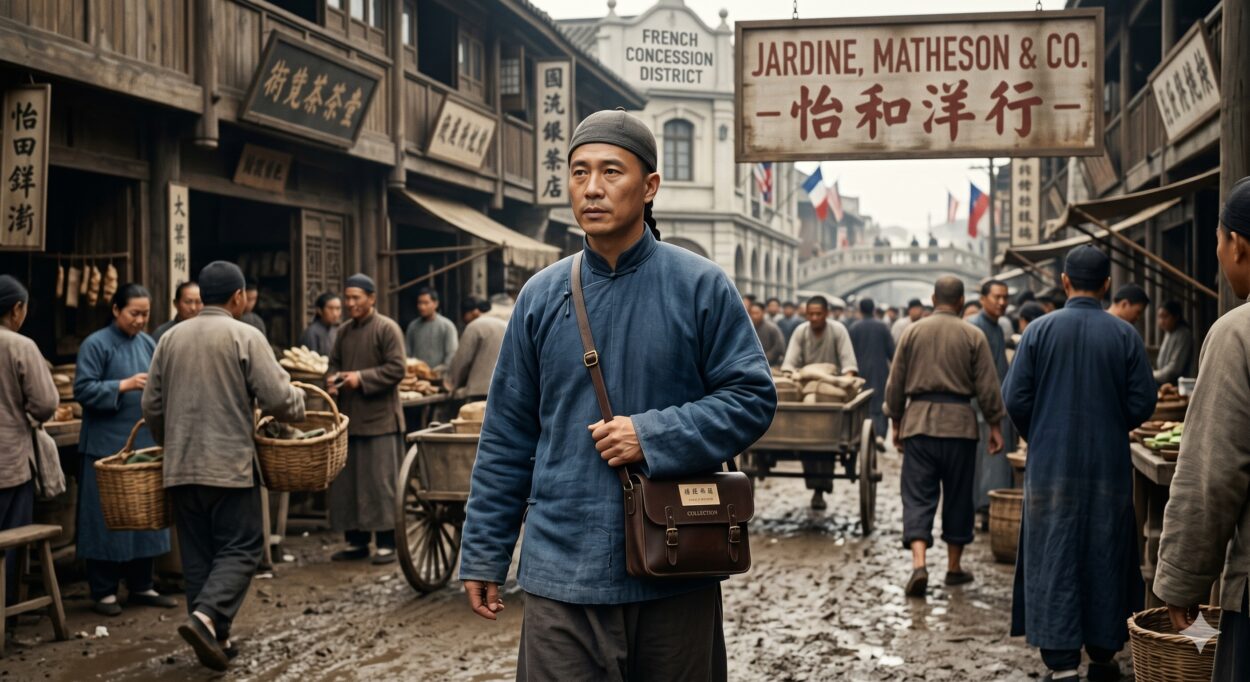
During the Guangxu era (1875-1908) of the Qing Dynasty, a man from Jiangsu Province, China, worked at a foreign-goods trading company in the Shanghai Concessions District. The company owner appreciated his honesty and trusted him. One day, the owner sent the Jiangsu man, carrying a small leather pouch, to the South Market to collect payments.
He started early and collected over 1,800 silver coins by noon. He was hungry and thirsty, and wanted to hurry back to work. So he stopped by Shiliupu Teahouse for a cup of tea before heading back to the company. After he returned to work, he realized he had left the leather pouch behind, but couldn’t recall how he lost it. The owner suspected him of embezzlement, scolded him harshly, and threatened to press charges if he didn’t return the money immediately. The man was at a loss for words and burst into tears.
Another man from Pudong, Shanghai, was a worker from another company in the concessions district. This Pundong man was feeling particularly dejected and disheartened that day and planned to cross the Huangpu River to return home. He arrived at Shiliupu Teahouse just after the Jiangsu man left, and drank tea while waiting for the boat to cross the river. The Pudong man saw a small leather pouch on the table. He opened it and found a large sum of money.
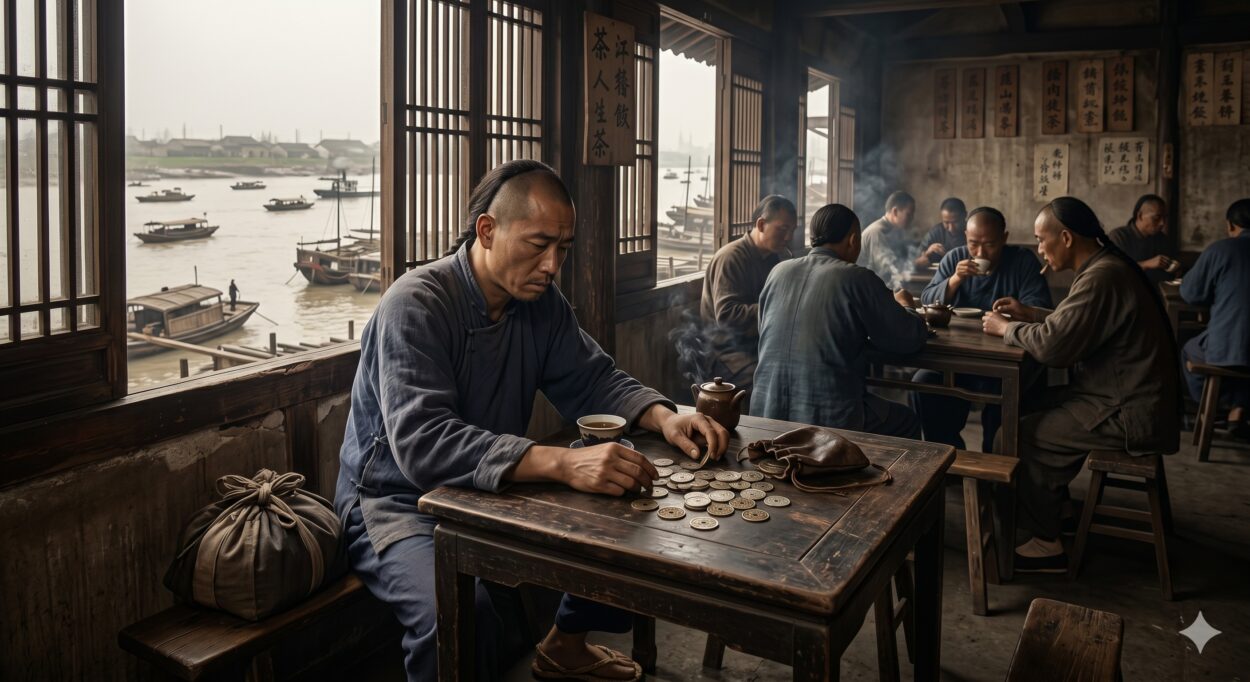
He was shocked and thought: “I can retire and live comfortably with this money. But someone must have lost it. How could I live with myself if the rightful owner loses his reputation or life over this money? Whether a person is rich or poor is predetermined by fate. Since I’m the one who found it, I should be responsible and wait for the owner to return.” It was around noon, and about eight or nine customers were at the tea house. The Pudong man looked at each patron’s facial expression, and none of them looked like they had lost a money pouch. He was hungry, and his stomach was growling, yet he didn’t move an inch.
The Pudong man sat at the tea house till dusk. As the sun cast its glow over the river and the lantern lit up the water, he watched as the patrons left the tea house one by one. His attention was drawn to a man with a pale face rushing into the tea house, followed by two men. The company owner feared the Jiangsu man would escape and forbade him from leaving. The man kept pleading, and the owner finally had two people accompany him to search for the money pouch.
The Pudong man thought they looked like the owners of the pouch, so he greeted them with a smile: “Did you lose a money pouch? I’ve been waiting for you for a long time.” He took out the pouch to show them. The Jiangsu man was moved to tears and said with gratitude: “Without your help, I would have been in big trouble tonight!”
They exchanged names, and the Jiangsu man offered the Pudong man one-fifth of the money in the pouch. The Pudong man declined the offer, and the Jiangsu man reduced it to one-tenth, but he still said no. The Jiangsu man reduced it even further, to one-hundredth of the money, and the Pudong man firmly declined his offer.
The Jiangsu man said: “Can I treat you to a shot of liquor?” And the Pudong man said no. Finally, the Jiangsu man said he would like to invite him to a modest meal the next morning at such-and-such a location and wouldn’t leave until he saw the Pudong man. He then left with the other two men.
The Pudong man showed up the next morning. The Jiangsu man was about to propose a toast to thank him, and the Pudong man interrupted him: “Thank goodness you lost the money pouch yesterday, or I would have lost my life! I was planning to take the boat to cross the Huangpu River at 1 o’clock yesterday afternoon. I was shocked to hear that the boat hit a rapid wave and capsized. Everyone on the boat drowned, all 23 of them!” The Pudong man’s act of kindness saved two people, the Jiangsu man and himself. Those who were present were amazed by the story and congratulated them.
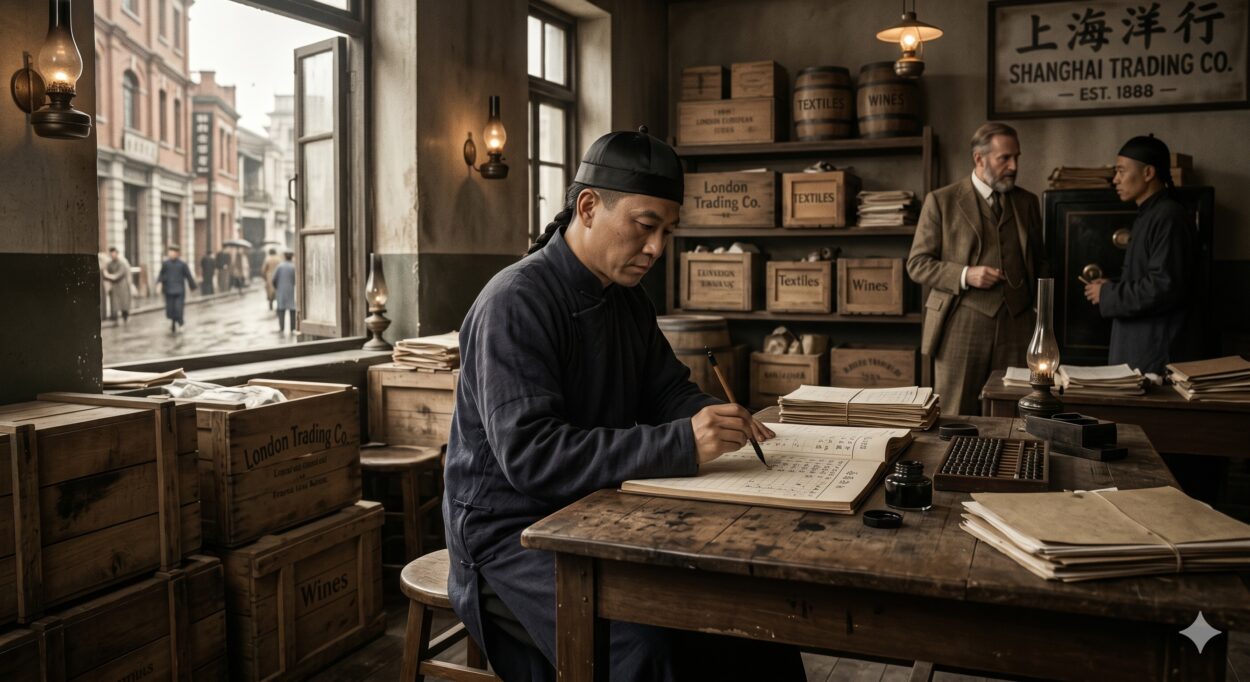
The Jiangsu man’s employer thought the Pudong man possessed the most valued quality — “integrity.” As a business owner, he prized this trait and needed it in running his business. He had a long conversation with the Pudong man and hired him to manage the ledger. The owner got along quite well with the Pudong man and a few months later asked him to marry his daughter. With the owner’s help, the Pudong man devoted himself to running the business. He made a fortune.
The ancient Chinese used to say: “Life and death are determined by fate. Wealth and honor are in the hands of Heaven,” and “A family that does good deeds will gain blessings. A family that does bad deeds will suffer misfortune.” Imagine what would have happened to the Pudong man had he acted out of self-interest and taken the money pouch? As he himself lamented, he would have boarded the boat at 1 o’clock and perished with the capsized boat. His kind thought, however, was aligned with the universal law of “good deeds shall be rewarded,” and thus changed his destiny. A benevolent thought at a critical moment could make a world of difference in one’s life and destiny.
Translated by Elaine and edited by Maria
Follow us on X, Facebook, or Pinterest
