

If you’ve ever experienced unrequited love, have you ever wondered why you encounter people who cause you such heart-wrenching pain? There’s a saying: “What we owe each other in this life stems from causes in a past life.” Those who bring you such searing pain may very well be the ones you agreed upon in a past life to come and guide you in this one.
A superficial sense of ‘understanding’
The first time you meet, you feel an inexplicable sense of familiarity. Every word you exchange clicks, as if you’ve known each other for years. Yet strangely, this closeness remains superficial. You can discuss literature and ideals, but you never truly touch each other’s innermost hearts.
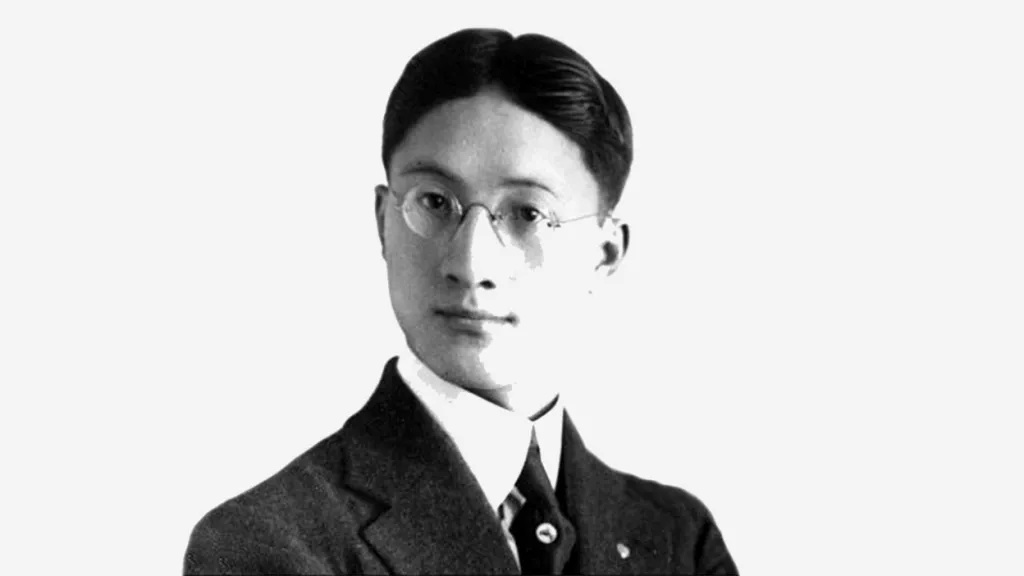
During the Republican era, Lin Huiyin, the first female architect in modern China, and the poet Xu Zhimo were exactly like this. Xu Zhimo wrote “Gently I Depart” at Cambridge University, and while Lin Huiyin admired his talent, she ultimately chose Liang Sicheng, the “father of modern Chinese architecture”, as her husband. That poetic resonance ultimately couldn’t compete with the mutual support found in the daily grind of life.
What you cherish is what ultimately hurts you. If you cling to this superficial compatibility and desperately search for someone who “understands” you, you’ll only sink deeper into emptiness. This ordeal teaches you: Don’t be too fixated on “understanding”; the peace of mind found in the ordinary is sometimes more valuable than any amount of pleasant conversation.
Fate intertwined yet misaligned
There are some people you think you’ll never see again in this lifetime. You delete their contact information and vow never to cross paths again. Yet fate has a way of playing tricks — at some corner, at some gathering, you bump into each other head-on.
Zhang Ailing and Hu Lancheng went through several cycles of breaking up and getting back together. In Half a Lifetime’s Affinity, she wrote: “Shijun, we can’t go back.” Yet in reality, whenever she saw Hu Lancheng, “she became very, very humble, humble enough to sink into the dust, but her heart was filled with joy.” This entanglement tormented her for half her life.
Master Hongyi once said: ”There is nothing in life that cannot be let go.” Those destined to reunite are often here to teach you the lesson of impermanence. Flowers bloom and wither; meetings and partings come in their own time — these are the laws of nature. When you truly realize that comings and goings are as fleeting as clouds and mist, your heart will no longer rise and fall with his arrival or departure.
A soul contract transcending time and space
Do you remember? On a moonlit night, you vowed to be together forever. But what happened afterward? The turbulent waves of life eventually swept you apart. The deeper the love, the more intense the pain. This kind of connection is like a double-edged sword: it lets you experience the deepest human emotions, yet also makes you realize that some promises aren’t fulfilled by staying together for a lifetime, but by letting go. When you’ve endured this heart-wrenching pain, you’ll actually come to understand what it means to let go.
Entangled karma, unpaid debts
There is a certain type of person who you know will hurt you, yet you still rush toward the flame like a moth. When you’re together, arguments outnumber sweet moments, and tears outnumber laughter. You break up and get back together, only to break up again — trapped in this cycle as if under a spell.
Buddhism speaks of “karmic debts.” What you owed them in a past life, or what they owed you, must be repaid in this lifetime through such experiences. Those arguments, misunderstandings, and heartbreaks may seem cruel, but they are actually helping you purify your karmic obstacles. When you learn to forgive and let go of resentment, this debt is settled, and your karmic connection comes to an end. “Let go of a single thought, and find boundless freedom.” You don’t have to pretend you’re not hurt; you just need to truly forgive from the bottom of your heart. Forgive the pain they caused, and forgive your own stubbornness.

The one inflicting the deepest pain came to save you
By now, you may have thought of a certain person — the one you loved to the very marrow of your bones, the one who caused you pain deep in your soul. Perhaps it is the name you repeat over and over as you gaze at the stars late at night; perhaps it is the one you thought you would grow old with, yet ended up worlds apart from. You don’t understand: why is it that the one you loved the most inflicted the deepest wounds upon you?
Nalan Xingde wrote: “If only life were like our first meeting, why would the autumn wind mourn the painted fan?” He married Lu Shi, and they were deeply in love, yet three years later, they were separated by death. For the rest of his life, he mourned his late wife in his poetry; it was that searing, unforgettable pain that made his verses move readers for centuries.
The person you love most in this life is the one who loved you most in your past life; everything that comes is a debt to be repaid. The reason they cause you such profound pain is that your bond from a past life was too deep. Only through this heart-wrenching experience can you be jolted awake: it is time to let go.
After going through heartbreak, many people suddenly realize that the relationship that nearly took up half their lives was actually meant to push them to grow. You thought he ruined you, but in reality, he used the most ruthless means to pull you out of your obsession; it was he who thoroughly shook “you” awake.
A Buddhist monk once put it perfectly: The more you cling to something, the more likely you are to lose it; the more you obsess over something, the more likely it is to slip away. Perhaps this is heaven using pain to awaken your slumbering soul. The Buddhist scriptures say: “All phenomena are illusory.”
The suffering you endure in relationships essentially stems from “attachment” — attachment to outcomes, attachment to possession, and attachment to the belief that “no one but you” will do. But have you ever considered this? Those who caused you heartbreak are actually mirrors. They reflect your inner fears, greed, and insecurities. You think you can’t let go of him, but actually, you can’t let go of your fantasy of perfect love.
We should realize that from “I love you,” to “I bless you,” and finally to “thank you,” there is growth within this. Thank you for appearing in my life and letting me experience the thrill of love; thank you for leaving, for forcing me to learn independence; thank you for the pain you brought, for finally teaching me that the most reliable person in this world is always myself.
Life is long; cherish yourself. Protect your inner energy and don’t let anyone drain it so easily. The next person you meet may no longer be a trial, but a true connection. Only by letting go can you achieve true freedom. After weathering countless storms, you still return a youth at heart.
Translated by Audrey Wang and edited by Maria
Follow us on X, Facebook, or Pinterest
