
Throughout history, both ancient and modern, many powerful officials have met untimely ends. Take Yue Fei of the Song Dynasty: Remembered for his tragic loyalty, his achievements were so immense that they threatened imperial authority, leading Emperor Gaozong to shamelessly execute him. There are countless examples of the “hero’s tragedy.”
Stoicism, foresight, and loyalty
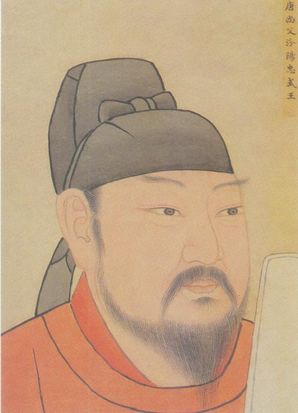
Yet Guo Ziyi (697-781), the renowned general who saved the Tang Dynasty during the devastating An Lushan Rebellion, stands as a miracle. He achieved what few “meritorious officials” ever could: he was indispensable, yet non-threatening. He served under four emperors — Xuanzong, Suzong, Daizong, and Dezong — and lived to the ripe age of 84.
After Emperor Dezong ascended the throne, he bestowed upon Guo Ziyi the honorific title of “Shangfu” (grand tutor). When Guo was on his deathbed, the Emperor even sent his own son, Prince Shu Li Yi, to inquire after him in person.
How many officials throughout history have longed for even a fraction of such grace? The key to his survival lay in his cautious nature, his mastery of the middle way, and his understanding of the unwritten rule: “Water that is too clear has no fish; a person who is too scrutinizing has no followers.”
The desecrated grave
In 767, during a period of high political tension, someone desecrated the grave of Guo Ziyi’s father. The thieves were never caught, but suspicion fell heavily on the court eunuch Yu Chaogen. Yu was notoriously jealous of Guo and had spent years slandering him to the Emperor. Many expected Guo Ziyi to erupt in fury — a move that could have sparked a military coup or a political scandal. Instead, when Emperor Daizong brought up the matter, Guo Ziyi wept and said:
“Your servant has long been in charge of military affairs, yet has failed to suppress the bandits. There have indeed been instances where soldiers desecrated others’ graves. This is a result of my own disloyalty and lack of filial piety, which has invited Heaven’s punishment — it is not the fault of the people.” By refusing to point fingers at his rivals, Guo prioritized national stability over personal vendetta. This display of radical accountability disarmed his enemies and filled the court with boundless admiration.
The case of the ‘ghost-faced’ official
Guo Ziyi famously kept an open house; when receiving officials, his concubines would often remain in the room, creating an atmosphere of familial trust. However, when the official Lu Qi visited, Guo Ziyi immediately ordered his concubines to withdraw. He sat upright and received the “ghost-faced, blue-skinned” official with solemnity.
When his family asked why, Guo Ziyi revealed his foresight — that Lu Qi’s physical appearance was his “trigger point,” saying: “Lu Qi is a man of hideous appearance who fears criticism above all else. If my concubines had seen him, they might have laughed. If he rose to power later, he would have destroyed the entire Guo family to avenge that slight.”
Guo was right. Lu Qi eventually became Chancellor and became a petty tyrant, ruining many. Yet, he never touched the Guo family. Guo Ziyi understood that protecting the dignity of a petty man is the ultimate form of long-term insurance.
The rejected appointment
One of the hardest lessons in power is understanding why leaders sometimes treat “troublemakers” better than “loyalists.” Once, Guo Ziyi’s request to appoint a minor official was flatly rejected by Emperor Daizong.
His subordinates were furious, noting that the Emperor routinely granted the demands of rebellious military governors. Guo Ziyi simply laughed: “The Emperor grants their demands because he fears they might rebel. He refuses mine because he knows I never will. He regards me as his own.” Guo Ziyi possessed a rare psychological security. He didn’t need the Emperor’s constant validation because he understood the underlying mechanics of trust.
The modern ‘grand tutor’
Guo Ziyi’s life serves as a timeless masterclass in strategic magnanimity. In a modern world where we are often encouraged to “speak truth to power” or “assert our worth,” Guo Ziyi offers a different path: the art of stepping back.
He proved that true greatness does not require a sharp edge. By mastering his ego, he turned his emperor’s suspicion into safety and his rivals’ jealousy into respect. He didn’t just survive four dynasties; he thrived because he realized that the ultimate victory isn’t found in defeating others, but in making oneself impossible to hate.
In our own careers and lives, we might do well to remember his example: sometimes, the widest horizon is opened not by pushing forward, but by taking a thoughtful step back.
Translated by Audrey Wang and edited by Helen London
Follow us on X, Facebook, or Pinterest
