

Katsunori and Kaori Osaka, a Japanese couple originally from Nagoya, were living in a cramped apartment when their first child was born. They initially tried raising their child in the city, but found the costs too high and childcare support too limited.
Decision to relocate
The couple eventually decided to relocate to Nagi Town in Okayama Prefecture. Here, the local government offers childcare subsidies as part of an effort to address the declining birth rate. The town’s birth rate has since been reported at roughly twice that of Tokyo.
Citing CNN, ETtoday reported that Katsunori had said: “When people are in their 20s and 30s, they really can’t afford larger living spaces in the city. We knew that if we wanted to have more children, we couldn’t do it there.”
Nagi Town, located in southern Japan, is a historically agricultural area with a population of about 6,000. Its quiet streets stand in stark contrast to the bustling atmosphere of Nagoya. Most importantly, the town provides child-rearing subsidies to support families with children.
Couples who have their first child in Nagi Town receive 100,000 yen, then 150,000 yen for their second child, all the way up to 400,000 yen for their fifth child.
Since 2004, the Nagi Town government has steadily expanded a range of subsidies aimed at boosting the local birth rate and addressing population aging. These measures include housing assistance, education allowances, free vaccinations, reduced daycare fees, and other forms of family support.

These policies appear to be having an effect. Between 2005 and 2014, Nagi Town’s fertility rate doubled from 1.4 to 2.8. It later declined slightly to 2.39, but still remains well above the national average of 1.46.
By comparison, Tokyo, Japan’s most populous city, has one of the lowest fertility rates in the country at just 1.17, which puts Nagi Town’s birth rate at roughly double that of the capital city.
Promising solution to the challenges of modern life
Hirokazu Kato, a professor of economics at Meiji University in Tokyo, points out that certain traditional policies make it difficult for people to balance work and family life, which leads to a decline in the fertility rate. In addition to Japan’s lack of childcare services, this trend is influenced by factors such as career demands, late marriage, and choosing to remain single.
He adds that another key factor is that many families live in small, expensive apartments, making it extremely difficult to raise children under such circumstances.
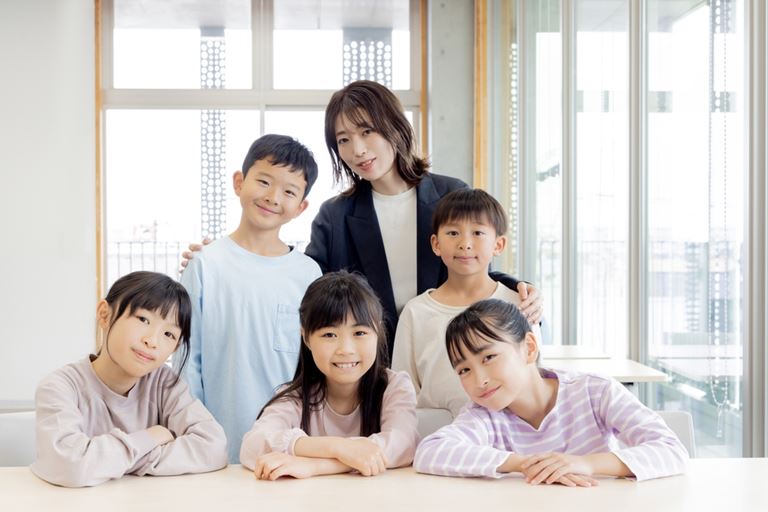
In Nagi Town, known for its Wagyu beef and small manufacturing centers, life remains relatively traditional. Local couples typically marry in their early twenties and start families soon after.
Women who move to the town are generally aware that high-paying job opportunities are limited. However, many say they value the community’s emphasis on balancing work and family life, which they see as a key advantage of living there.
In Nagi Town, long commutes and heavy workloads are not major concerns. Kozue Kobayashi, a mother in her 30s who moved there from Okayama City, says she has received significant support in raising her children.
“This is far better than staying at home, feeling lonely and overwhelmed,” she said. “If I had stayed in Okayama City, I wouldn’t have been able to access these services.”
Nagi Town’s experience has attracted attention as a contrast to Japan’s larger urban centers, where the high cost of living and limited support often discourage child-rearing. Its approach is increasingly cited as an example of how local policy, combined with a renewed appreciation for small-town living, can influence family decisions.
For some, it also highlights the value of raising children in a close-knit community with accessible local support systems, where daily life is less stressful and more family-centered.
Translated by Eva
Follow us on X, Facebook, or Pinterest
