
El Salvador has become one of the safest countries on earth, and the strangest part of that sentence is that it is now boring to say it. In 2015, the country recorded 6,656 homicides — a rate that earned it the title of murder capital of the world. In 2024, it recorded 114. In the first months of 2026, the daily homicide rate has stabilized at around 0.20, with more than a hundred days of the year passing without a single killing reported by the National Civil Police. A country that for 30 years was synonymous with death has, in less than a decade, become statistically safer than most U.S. states.
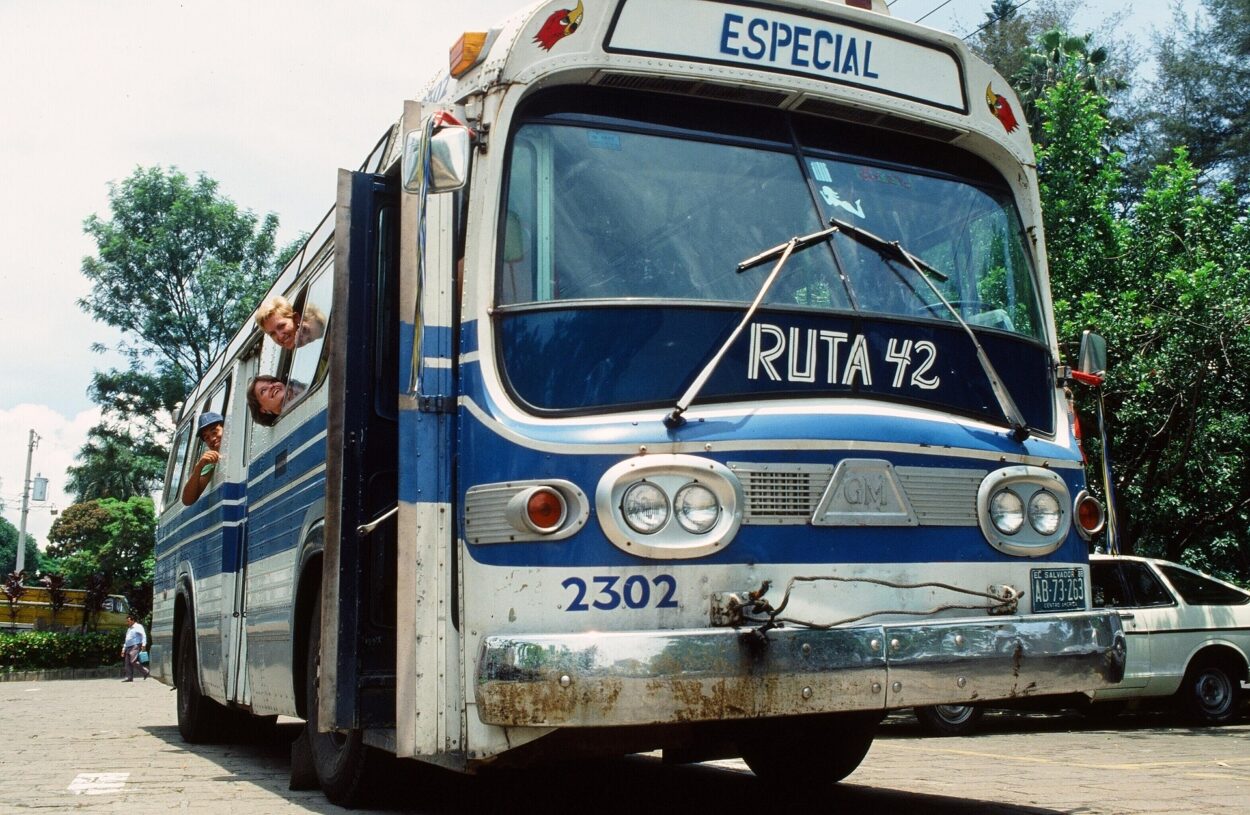
Numbers like these arrive without context and feel like propaganda. They are not. They are reported by the Salvadoran government, yes, but they are also reflected in U.S. State Department travel advisories, in the return of tourism to towns that were no-go zones five years ago, and in the simple fact that buses now run on routes where they were burned for refusing to pay extortion. Something real has happened. The harder question, the one that almost no one wants to sit inside long enough to answer, is how.
Because the how is not a single thing. It is three things, and only one of them is the official story.
The official mechanism: territorial control, then total exception
When Nayib Bukele took office in June 2019, the homicide rate was 38 per 100,000. By the end of his first year, it had fallen by roughly half, well before any of the dramatic measures the world now associates with his name. The instrument he used in that first phase was called the Territorial Control Plan, or PCT: a phased operation that flooded historically gang-dominated municipalities with police and soldiers, locked down prisons to sever communication between incarcerated leaders and street-level cliques, and pulled the state — symbolically and physically — back into neighborhoods where for decades it had been the gang, not the government, that decided who lived and who paid.
Then came March 2022. Over a single weekend, the MS-13 and Barrio 18 gangs killed 87 people in apparently coordinated bursts of violence. Within days, Bukele requested, and the Legislative Assembly approved, a régimen de excepción — a state of exception that suspended constitutional protections, including the right to legal counsel, the right of free association, and limits on detention without charge. The state of exception was supposed to last 30 days. It has been renewed 35 times. As of early 2025, the Salvadoran government reported more than 84,000 arrests under its provisions. That is roughly one out of every 75 Salvadorans.
The infrastructure that absorbs them is now famous. CECOT — the Centro de Confinamiento del Terrorismo — opened in February 2023 with a capacity for 40,000 inmates spread across a 23-hectare complex in Tecoluca. Aerial drone footage of shaved, tattooed men in white shorts being marched in tight formation past silent guards became, almost overnight, one of the most recognizable images of state power in the 21st century. El Salvador now has one of the highest incarceration rates in the world. It also has, by official measure, the lowest homicide rate in the Western Hemisphere.
What worked in El Salvador worked because every institution that might have slowed it down had already been removed from the equation.
What the official story about El Salvador leaves out
There are three pieces missing. They do not cancel the transformation. They complicate the export.
The first is the gang pact. Between 2019 and 2022, multiple independent investigations — by the Salvadoran investigative outlet El Faro, by the U.S. Treasury Department, by ProPublica drawing on a U.S. federal investigation — accumulated evidence that Bukele’s government conducted covert negotiations with imprisoned MS-13 leadership. The reported terms: improved prison conditions, protection from U.S. extradition, and political backing for the Nuevas Ideas party in exchange for suppressed homicide numbers. The U.S. Treasury sanctioned two senior Bukele advisers in 2021 for exactly this. The chief negotiator was named — Carlos Marroquín, head of a Justice Ministry program titled, with bleak irony, Reconstruction of the Social Fabric. The Salvadoran government denied all of it. The investigations have not been retracted. When the pact broke down — when, by most plausible reconstructions, the gangs demanded more than the government was willing to give — that was the weekend in March 2022 when 87 people died, and the state of exception followed within 72 hours. The crackdown the world admires was, in part, the cleanup of a deal that had soured.
The second piece is the cost of due process. Salvadoran human rights organizations, the Inter-American Commission on Human Rights, and reporting by Human Rights Watch and the Washington Office on Latin America have documented, by 2025, at least 354 deaths in state custody, thousands of credible cases of torture, and an unknown but substantial number of people detained on the basis of tattoos, neighborhood, anonymous tips, or what an officer thought a young man looked like. Bukele himself has publicly stated that around 8,000 innocent people have been released — which is also, read another way, an admission that 8,000 innocent people were arrested and held under conditions that the same human rights organizations have repeatedly classified as inhuman. Salvadoran prisons, including but not only CECOT, are functionally invisible to outside inspection.
The third piece is the political precondition. Bukele was not a strong-handed president imposing his will against a hostile system. By the time the state of exception was declared, his Nuevas Ideas party held a legislative supermajority. The Supreme Court had been replaced. The Attorney General’s office had been replaced. The legislative seat count had been reduced from 84 to 60, and the number of municipalities from 262 to 44 — both consolidations of executive reach. He had already, in February 2020, marched soldiers into the Legislative Assembly to coerce a vote. The crackdown of 2022 was not the action of a state under emergency. It was the action of a state in which every institution that might have constrained an emergency power had already been brought into alignment with the executive.
Other countries are not failing to replicate the Bukele model because they lack the will. They are failing because the model is not a policy. It is a precondition.
Why has no one else been able to copy it
Honduras tried. Ecuador tried. Peru has flirted with the language. Chile, Colombia, Costa Rica, and Guatemala have politicians campaigning explicitly on Bukele’s image. The pattern is consistent: initial declaration of emergency, brief drop in homicides, then a return to baseline or worse. Ecuador under Daniel Noboa declared an internal armed conflict in January 2024; by early 2025, homicides had risen 65% year-on-year, and January 2025 became the deadliest single month in the country’s history. Honduras under Xiomara Castro pursued the same playbook with similar disappointment.
Comparative researchers — Manuel Meléndez-Sánchez and Alberto Vergara, writing in the Journal of Democracy, the Atlas Institute, and the Washington Office on Latin America — converge on a small set of structural reasons. El Salvador, at the start of the crackdown, had 418 police officers per 100,000 residents; Honduras had 184. El Salvador’s gangs, despite their fearsome reputation, were horizontally networked groups dependent on prison-based command and control — once communications between incarcerated leaders and street cells were cut, coordination collapsed. The gangs of Ecuador and Mexico are transnational drug-trafficking organizations with vertical hierarchies, foreign supply chains, and revenues that dwarf anything MS-13 ever moved. El Salvador is geographically the size of a mid-sized Ecuadorian province; sealing it is feasible. Sealing Ecuador is not.
But the structural argument, accurate as it is, walks around the real one. The real reason other countries cannot replicate the model is that the model requires the prior dismantling of institutional resistance to the model. A divided legislature blocks indefinite emergency powers. An independent judiciary releases people held without charge. A free press surfaces the deaths in custody. An opposition party turns the next election into a referendum. Each of these is, in a functioning democracy, the system working. In El Salvador, each had been disabled before the state of exception was declared. The crackdown did not require authoritarianism. It required that authoritarianism already be in place.
Which is the part that should make other governments nervous. Because what the precedent actually demonstrates — to populations exhausted by violence, to politicians watching Bukele’s 80% approval rating, to anyone considering the trade — is that the rule of law is the binding constraint on the kind of safety that El Salvador now enjoys. And the question that follows from that, however much one would prefer not to ask it, is the question Hermann’s letter was pointing at: Are the handshakes in the dark — the prior arrangements between political elites and criminal organizations, the quiet understandings that keep certain enforcement actions from ever being taken — really preventing other governments from going as far as Bukele did? Or is it the opposite: are the institutions that prevent them from going that far the same institutions that, in El Salvador, were dismantled first?
Both can be true. They usually are. In many Latin American states, certain politicians have long-standing financial and electoral ties to criminal economies, and those ties do, demonstrably, foreclose the possibility of certain crackdowns. The Funes-era truce in El Salvador itself, the gang pacts uncovered in Honduras and Guatemala, the cartel-aligned political infrastructure in parts of Mexico — none of this is speculation. It is documented. At the same time, in the countries where those handshakes are weakest, the constraint that remains is not corruption but democracy itself: the courts, the press, the opposition, the assembly. To go as far as Bukele went, a government has to defeat both.
The precedent, plainly stated
What El Salvador has achieved is real. Streets that were killing fields are not killing fields. Children who would have been forcibly recruited at 12 are going to school. Women who paid extortion every Friday are not paying it. The bus drivers are alive. None of this should be dismissed, and the people who lived through the worst of it are right to feel what they feel.

But the precedent the world is being asked to study is not a precedent about policing. It is a precedent about the order in which institutions can be disassembled and what becomes possible when they are. The transformation works. The question is what else the same conditions make possible, and who decides when those other things begin.
El Salvador answered the question of whether a state can defeat its gangs. It did not answer the older question, the one every functioning democracy has asked since the 18th century, about what stops the state from becoming the next thing the population needs protection from. That question is still open. It will eventually be answered by the same institutions Bukele has spent six years removing — or by their absence.
Follow us on X, Facebook, or Pinterest
