
There is a saying: “If one’s fate is poor, even gold will turn to copper; if one’s fate is rich, even white paper will turn into cloth.” Achievements and wealth in life are predetermined by heaven, based on one’s karma. As the saying continues: “It is time, fortune, and fate!” What is meant to be yours will naturally not be lost. Today, I will share a story about how an “unlucky man” turned his fortune around to become a wealthy tycoon.
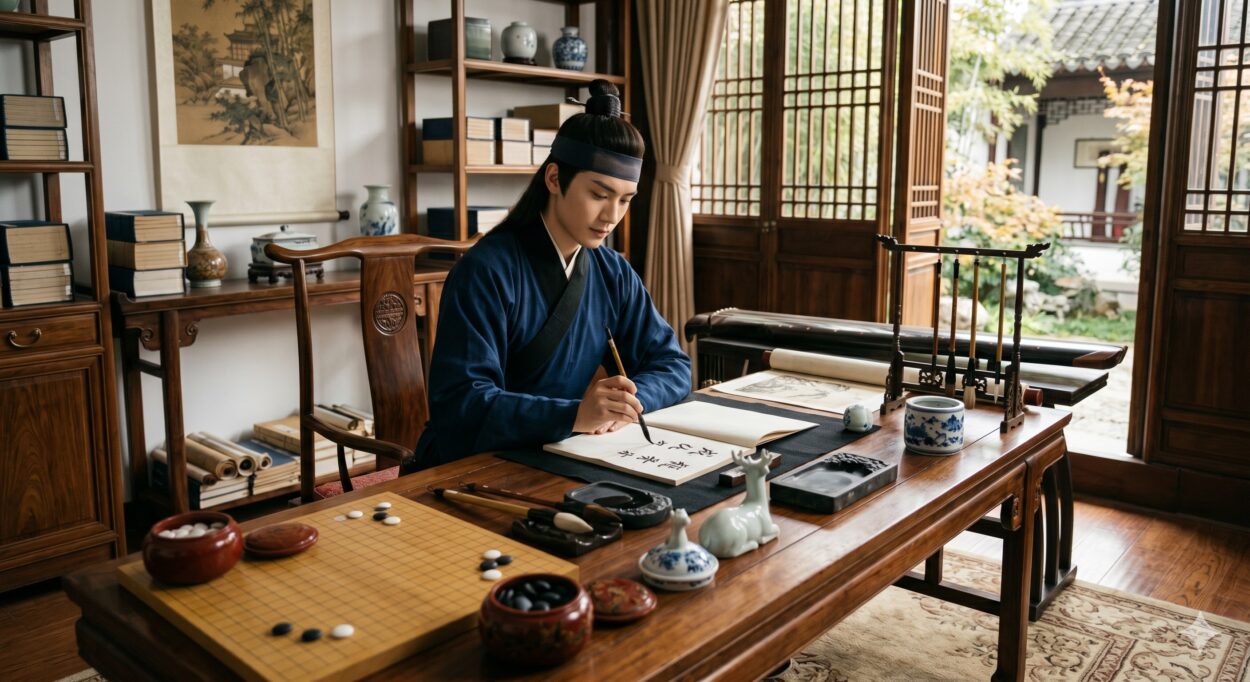
During the Chenghua period of the Ming Dynasty, a man named Wen Ruoxu lived in Suzhou. He was born intelligent and became proficient in music, chess, calligraphy, and painting at a young age, and his family was relatively well-off. In his childhood, someone predicted that he would become wealthy. However, due to his arrogance and talents, he did not think to manage his family’s business, leading to the depletion of their ancestral property. Eventually, he began to think about starting a business.
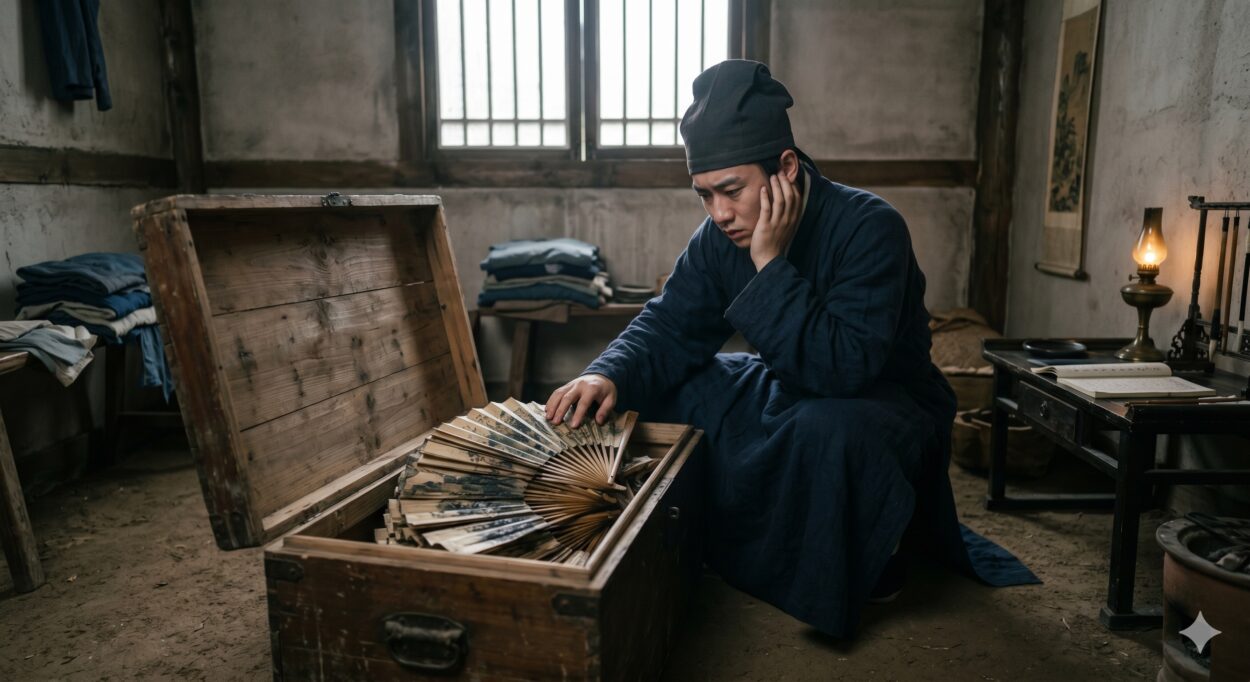
One day, Wen heard that folding fans were selling well in Beijing, so he bought a batch and set off for Beijing to sell them. However, since the beginning of summer, the weather in Beijing has been either rainy or overcast. By the time autumn arrived, the weather finally improved, but when he opened his box, he found that the dampness had caused the decorated fans to stick together. When he forced them apart, they broke. He could only sell some plain fans to raise enough money to return home, leaving him with nothing. For the next several years, Wen lost money with everything he did, and he never married, so his neighbors and friends nicknamed him “the unlucky man.”
One day, the “unlucky man” heard that a group of people was preparing to set sail to trade goods. He thought: “I am destitute and have no means of livelihood. I might as well join them on their voyage overseas; it wouldn’t be a waste of my life. Besides, they surely won’t turn me away, and I can avoid worrying about food and firewood at home.” So, Wen sought help from a familiar acquaintance, Zhang Chengyun, who readily agreed to assist him. Knowing he had no money, Zhang even gave him a couple of silver coins to buy some food for the journey. With this money, Wen bought over a hundred pounds of Dongting oranges. He thought of sharing some of them as a token of gratitude for the help he received. The merchants at sea laughed at him.
After sailing for an unknown period of time, they arrived at a place called the Jiling Kingdom. Their trade was barter-based, where goods worth one tael of silver could be exchanged for goods worth three taels of silver, which could then be sold for nine taels of silver at Yingkou Wharf.
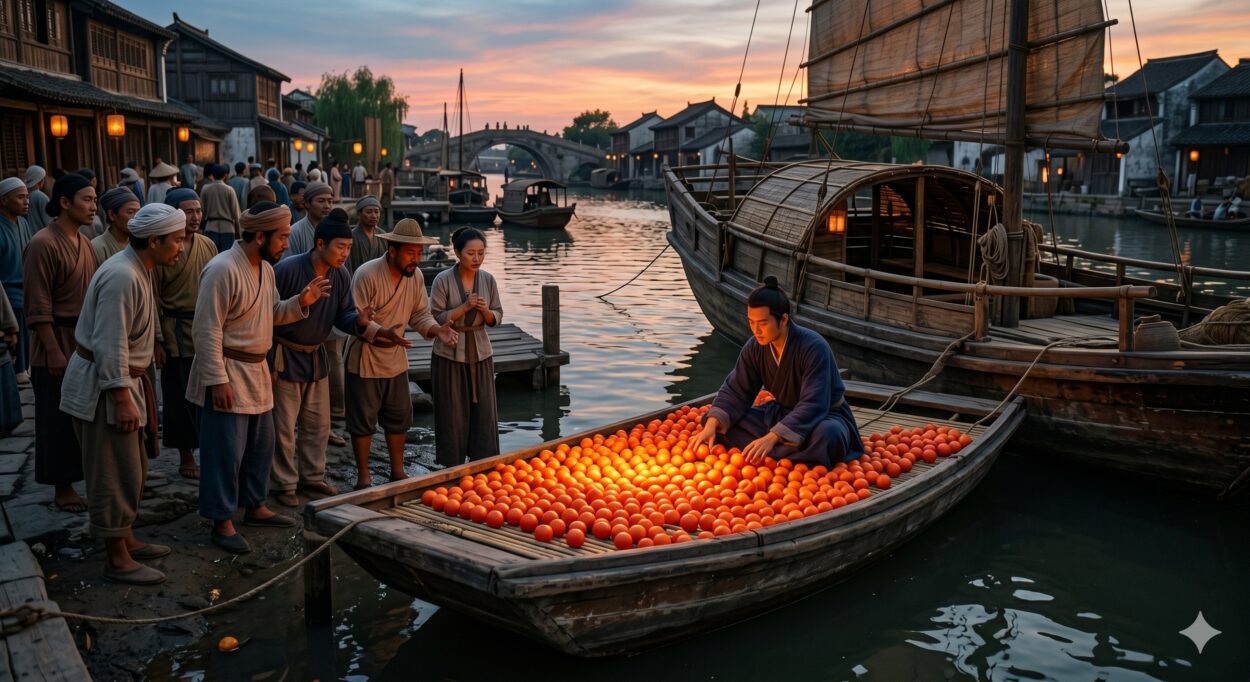
While the others went ashore to do business, Wen stayed on the ship to watch it, since he had no goods to trade. Bored, he suddenly remembered the oranges he had bought. Fearing they would spoil, he spread them out on a small boat to dry, and those bright red oranges looked like thousands of fireflies. The people from the Jiling Kingdom gathered on the shore and asked: “What is this good thing?” Wen couldn’t understand their language, so he just took an orange, peeled it, and ate it. Upon realizing it was edible, they asked how much it cost.
A crew member who spoke the Jiling language jokingly said it was one coin each. To Wen’s surprise, one of the Jiling people pulled out a silver coin to buy one. When Wen took it, he saw that the coin weighed almost one tael. After eating, the man exclaimed that it was delicious and pulled out ten coins to buy ten more. Seeing this, others also came to buy. Before long, all the oranges were sold, and he made about a thousand silver coins.
When the other merchants returned to the ship and learned of this, they were astonished and exclaimed: “How fortunate! We all came together, yet you, who had no capital, profited first!” Zhang also said: “People say he is unlucky, but it looks like he is no more!” He advised Wen to buy some goods to take back and earn more money. However, Wen replied: “I am the unlucky one; seeking wealth with capital has never worked out for me. Today, doing this business without any capital and unexpectedly gaining a fortune is truly a great stroke of luck. Why would I want to make a profit? What if I were to lose again like before? Would I find oranges as easy to sell as these Dongting oranges?”
The others insisted: “We need silver, and we have goods. If we work together, everyone benefits; what could be wrong with that?” Wen replied: “Once bitten by a snake, I feared the grass for three years. When it comes to goods, I lose my courage. I will guard this silver and return home.” Everyone clapped and said: “To let such a profitable opportunity pass is a pity! A pity!”
After leaving the Jiling Kingdom, the ship sailed for several more days. Suddenly, the weather changed, with strong winds and huge waves tossing them around for a long time, eventually drifting them to a small, deserted island. The ship dropped anchor to wait for the wind to calm down. Wen wanted to find someone to accompany him to the island, but no one would go, so he went alone.
On the island, Wen encountered a large turtle shell measuring 2 meters long and 1 meter wide. He struggled to drag the shell back to the ship. The people on the ship mocked him, saying: “Are you going to sell this too?” Wen replied: “This is a great item! Remove the lid, and it can be used as a bed; close the lid, and it can be used as a box.”
Once the wind calmed down, they set sail again. A few days later, they arrived in Fujian. The group traded goods with a Persian merchant named Maboha. When Maboha boarded the ship, he immediately took a liking to Wen’s turtle shell and bought it for fifty thousand taels of silver. Everyone was stunned.
Maboha laughed and said: “You gentlemen are foolishly struggling to make a living at sea, yet you don’t recognize this? Have you not heard that a dragon has nine sons? One of them is the ‘Tuo Long,’ which can live for ages. When it sheds its shell, it becomes a dragon. This shell has twenty-four ribs, and each rib contains a large pearl. There are also those caught alive, but they can only drum the skin and have nothing inside. This item, even if we know about it, who knows when it will shed its shell? Who will guard it and wait? The shell itself is worthless, but its pearls glow at night and are priceless; just one of them is worth the price I paid.”
After Maboha left, someone said: “It’s just a pity that this time the price was low; Mr. Wen should have asked him for more money.” Wen replied: “Don’t be greedy. Look at me, an unlucky man, who was about to incur losses. Fortune has smiled on me, and I have unexpectedly gained this wealth. It shows that life is predetermined, and there is no need to force it. If it weren’t for the owner recognizing its value, we would have seen it only as waste. Fortunately, he pointed it out; how could I argue about it with a clear conscience?”
Everyone agreed, saying: “What Mr. Wen says is true. He has a sincere heart, which is why he deserves this treasure.” From then on, this “unlucky man” became fortunate, established a family, had descendants, and lived a prosperous life.
Translated by Joseph Wu and edited by Laura Cozzolino
Follow us on X, Facebook, or Pinterest
