
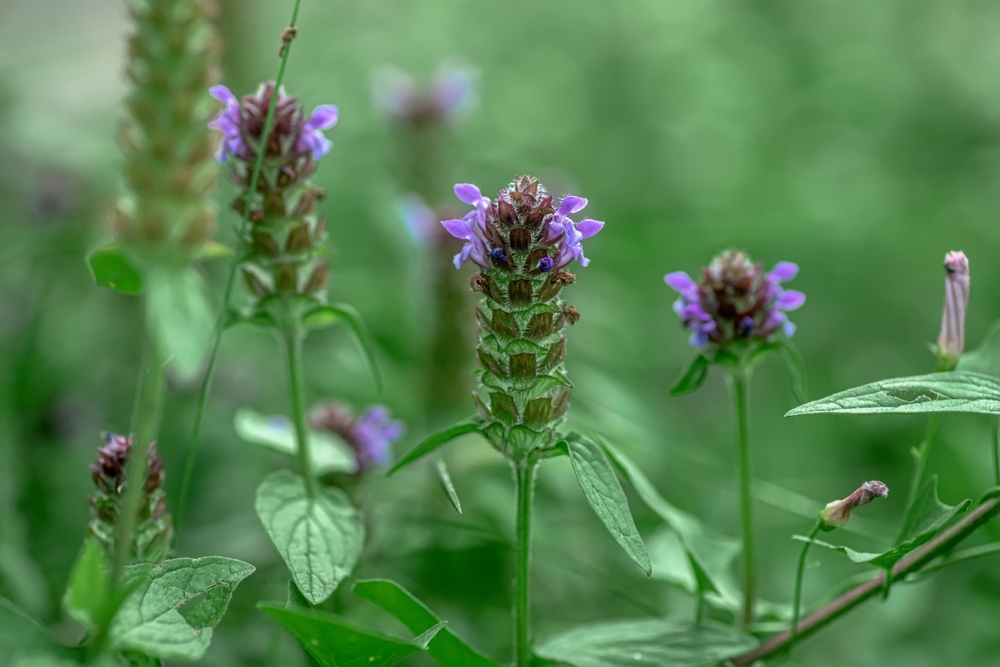
In early summer, as nature’s energy shifts from birth to growth, vegetation flourishes. In fields and along roadsides, a modest little plant quietly appears, producing small purple-blue flowers. By high summer, its flower spikes begin to dry and fade.
This plant is Prunella vulgaris, known in Chinese as xiakucao, or “summer-withered herb.”
According to the Compendium of Materia Medica, also known as Bencao Gangmu, the plant “withers after the summer solstice, hence its name.” The Chinese name reflects the plant’s seasonal rhythm: it grows as yang energy rises in spring, then begins to wither when that energy reaches its peak around the summer solstice.
In traditional Chinese thought, this pattern was seen as more than a botanical detail. Spring corresponds to the wood element and the liver, a season associated with upward movement and the rising of liver qi. Because xiakucao grows during this rising phase and then withdraws when yang is at its peak, ancient practitioners believed it had a special ability to clear liver fire and calm excessive liver yang.
Traditional uses in Chinese medicine
Prunella vulgaris is a perennial herb in the mint family. In traditional Chinese medicine, it is considered cold in nature, bitter and slightly acrid in taste, and associated mainly with the liver and gallbladder meridians.
The part most often used medicinally is the flower spike, or fruiting spike. These segmented spikes resemble small pagodas. As they mature, they darken and dry, which is traditionally considered the time when the plant’s medicinal qualities are most concentrated.
Many heat-clearing herbs are used for patterns associated with Stomach fire or Lung fire. Xiakucao is more specifically associated with liver fire. In TCM, excessive liver fire may be linked with symptoms such as red or swollen eyes, a feeling of pressure or pain in the head, irritability, a bitter taste in the mouth, or a dry throat. In this context, xiakucao is traditionally used to help bring down the excessive upward movement of liver qi.

Another important traditional use is dissipating nodules and reducing swelling. Both the Shennong Bencao Jing, or Divine Farmer’s Classic of Materia Medica, and the Compendium of Materia Medica mention xiakucao in connection with “dissipating goiter nodules and stagnant qi.” In TCM, palpable lumps, nodules, swelling, and enlarged lymph nodes may be interpreted through patterns such as qi stagnation and accumulated heat. Xiakucao has therefore been used as an adjunct in traditional formulas for these types of patterns.
Self-heal in Western herbal tradition
In English, Prunella vulgaris is commonly known as self-heal. The name reflects its long history in European folk medicine, where the plant was valued for its hardiness and its association with ordinary household care.
In Western herbal traditions, self-heal was commonly used for minor wounds, sore throats, and mouth ulcers. Historical herbal texts describe its use for cuts, ulcers, bleeding, poultices, and gargles. Soldiers were said to use it for simple wound care, while rural families used it as an accessible herb for cuts and abrasions.
Although Chinese and Western traditions developed different explanations for the plant, both gave self-heal a similar place: a small, common herb used to help the body return to balance.
Food therapy and summer teas
In southern China, especially in Guangdong and Hong Kong, xiakucao is a familiar ingredient in summer herbal teas. The hot, humid climate of the region is traditionally believed to make internal heat more likely to accumulate. Because xiakucao is associated with clearing liver heat, brightening the eyes, and reducing internal heat, it is often used in cooling drinks.
It is commonly paired with chrysanthemum, honeysuckle, monk fruit, or other ingredients used in summer herbal teas. These combinations are traditionally recommended for people with red or tired eyes, those who spend long hours using their eyes, those who feel stressed, or those who tend to develop heat-related discomfort when emotions become pent up.
Xiakucao can also be used in soups. When combined with ingredients that nourish the body, it becomes a gentler form of seasonal dietary therapy rather than a strong medicinal preparation.
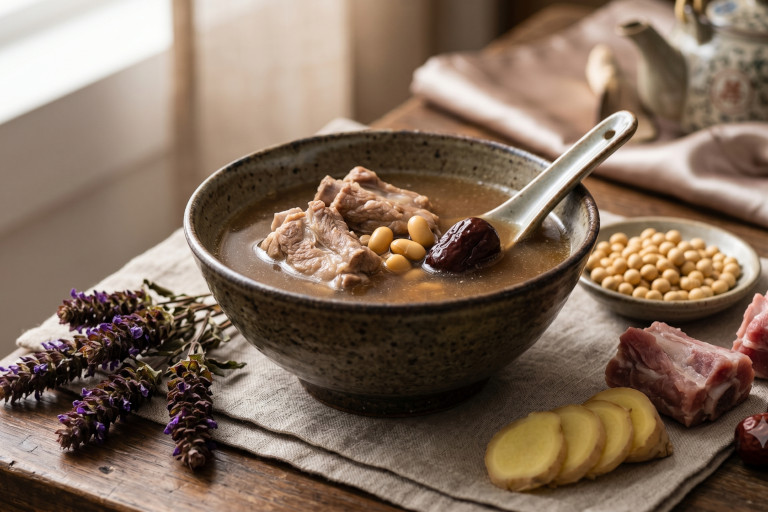
Prunella vulgaris, soybean, and pork bone soup
This home-style soup serves 3 to 4 people.
Ingredients:
15 grams Prunella vulgaris
250 grams pork bones
50 grams soybeans
2 candied dates or honey dates
3 slices fresh ginger
Instructions:
Soak the soybeans for at least 2 hours.
Blanch the pork bones in cold water to remove impurities.
Rinse the Prunella vulgaris and place it in a cheesecloth bag.
Place all the ingredients in a pot and add 2,500 milliliters of water. Bring to a boil over high heat, skim off any foam, then reduce the heat and simmer for 90 minutes. Do not simmer for more than 2 hours, as the soup may become overly bitter and too cold in nature according to TCM.
Add a little salt to taste. Remove the herb bag, then drink the broth and eat the soup ingredients.
In traditional dietary therapy, this soup is used to clear liver fire while the soybeans and pork bones provide nourishment. It is traditionally recommended for people whose symptoms are interpreted as excessive liver fire, such as headaches, dizziness, irritability, or heat-related discomfort.
Prunella vulgaris and chicken feet soup
This soup serves 2 to 3 people.
Ingredients:
15 grams Prunella vulgaris
6 to 8 chicken feet
3 slices fresh ginger
3 red dates, pitted
1 piece dried tangerine peel
Instructions:
Trim the claws from the chicken feet, then blanch them in cold water to remove impurities.
Place the Prunella vulgaris in a cheesecloth bag and rinse briefly.
Place all the ingredients in a pot and add 1,200 milliliters of water. Bring to a boil over high heat, then reduce the heat and simmer for 90 minutes. Do not simmer for more than 2 hours, as the soup may become overly bitter and too cold in nature according to TCM.
Add a little salt to taste. Remove the herb bag, then drink the broth and eat the soup ingredients.
This soup combines heat-clearing and nourishing qualities. In traditional dietary therapy, it is used for mild health maintenance, especially for people who tend to stay up late, develop internal heat, or have a somewhat deficient constitution.
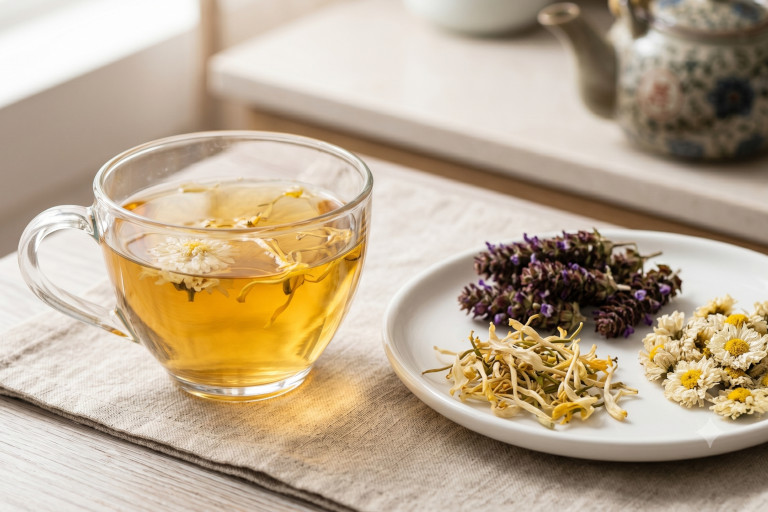
Prunella vulgaris and chrysanthemum tea
For daily use, a simple tea may be enough.
Ingredients:
3 grams Prunella vulgaris
3 grams honeysuckle flowers
2 grams chrysanthemum flowers
Instructions:
Simmer the ingredients for 10 minutes, or steep them in boiling water for 15 minutes. Drink as a tea.
In traditional use, this tea is associated with relieving red eyes and headaches caused by staying up late or overusing the eyes.
Prunella vulgaris and rose tea
Ingredients:
5 grams Prunella vulgaris
3 grams rosebuds
Rock sugar to taste, optional
Instructions:
Simmer the Prunella vulgaris for 10 minutes, then add the rosebuds and steep for another 5 minutes. Alternatively, steep the ingredients in boiling water for about 15 minutes. Drink as a tea.
In TCM dietary therapy, this tea is used to clear liver heat, soothe liver qi, and relieve stagnation. It is also traditionally associated with supporting clearer skin and easing discomfort, such as headaches or dizziness.
Because Prunella vulgaris is considered cold in nature, people with what TCM describes as Spleen and Stomach deficiency, a tendency toward diarrhea, or sensitivity to cold should avoid long-term or excessive use. The amount may be reduced, or warming ingredients such as ginger and red dates may be added to balance the tea.
This article describes traditional uses of Prunella vulgaris in Chinese and Western herbal traditions and is not medical advice. People who are pregnant, taking medication, managing a chronic illness, or dealing with unexplained lumps, swollen lymph nodes, high blood pressure, persistent pain, or other ongoing symptoms should consult a qualified health professional.
Translated by Patty Zhang
Follow us on X, Facebook, or Pinterest
