
In Part Two, we explored the stories of the mothers of Tao Kan and Yue Fei, whose steadfast guidance helped shape two men who would leave a lasting mark on Chinese history. Across Chinese tradition, it has long been understood that a child’s earliest environment quietly shapes the direction of an entire life, and that a mother’s guidance often becomes the unseen force behind enduring character and destiny.
In Part 3, we turn to the mothers of Ouyang Xiu, Xu Shu, and the matriarch of the Yang Family Generals — figures whose guidance, resolve, and moral strength shaped sons who would go on to define scholarship, strategy, and loyalty in their respective eras.
Ouyang Xiu’s mother: Teaching with reed stalks and reason
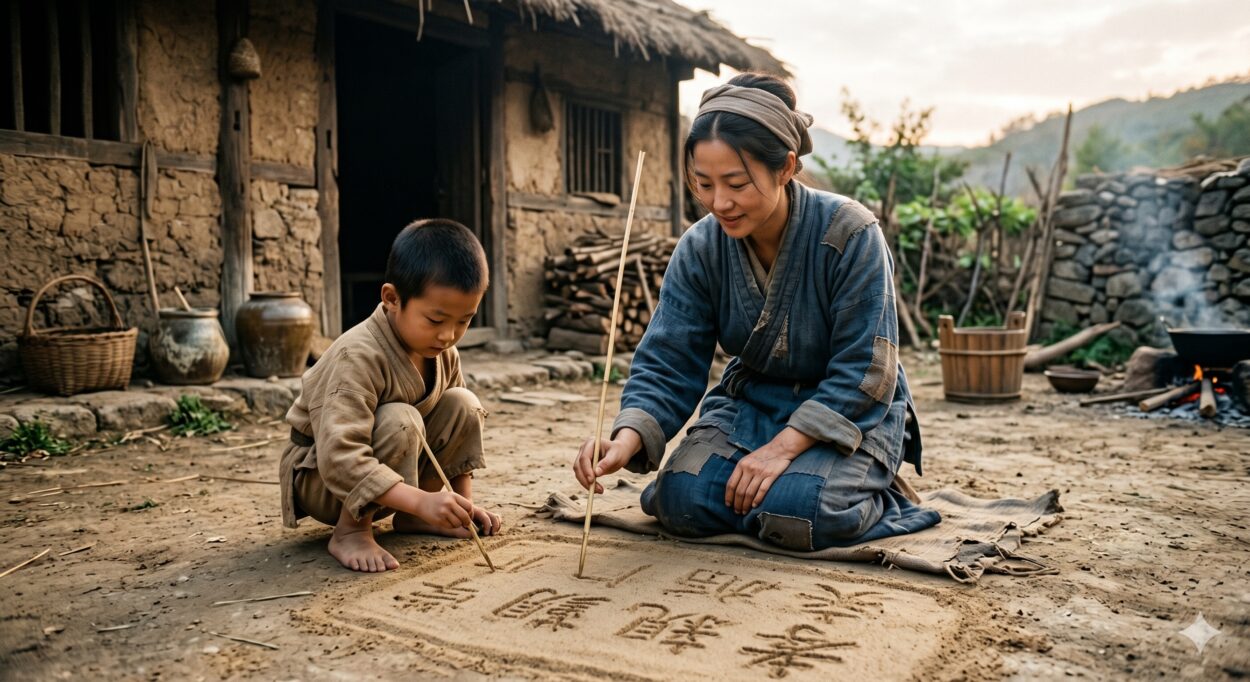
Lady Zheng, the mother of Ouyang Xiu, endured the sorrow of losing her husband while her son was still very young. Left alone to raise him, she faced poverty and hardship, yet never wavered in her commitment to his education.
The family was so poor that they could not afford brushes, ink, or paper. Undeterred, Lady Zheng gathered reed stalks and used them to trace characters in the sand, teaching her son to read and write. This touching practice later gave rise to the well-known idiom of “teaching a child by writing with reeds.” Yet her instruction extended far beyond literacy.
She encouraged Ouyang Xiu to think independently, resist blindly following convention, and uphold moral principles regardless of circumstances. What made her especially remarkable was her strength of character. Recently widowed, she did not surrender to grief or despair. Instead, she chose to preserve for her son the memory of his father as a man of integrity and honor.
Ouyang Xiu’s father had been an upright and incorruptible official who left behind little material wealth. Lady Zheng, however, understood that his true legacy was not property but character. She carefully carried that inheritance forward, shaping it into the foundation of her son’s upbringing. Her efforts bore extraordinary fruit.
Ouyang Xiu became one of the greatest literary figures in Chinese history and was later honored as one of the “Eight Great Prose Masters of the Tang and Song Dynasties.” He also rose to high office as a scholar-official and played an important role in political reform during the Northern Song Dynasty. Without his mother’s tireless devotion, it is difficult to imagine him becoming such a distinguished writer, historian, and statesman.
Her influence extended far beyond his early education. Known for his integrity and unwillingness to flatter the powerful, Ouyang Xiu was demoted three times during his official career. Yet he consistently met adversity with resilience and composure, finding meaning — and at times even contentment — amid hardship. This inner strength reflected the values patiently instilled in him from childhood, shaped by his mother’s quiet example of perseverance, reason, and moral clarity.
She Taijun: The heroic matriarch of the Yang family
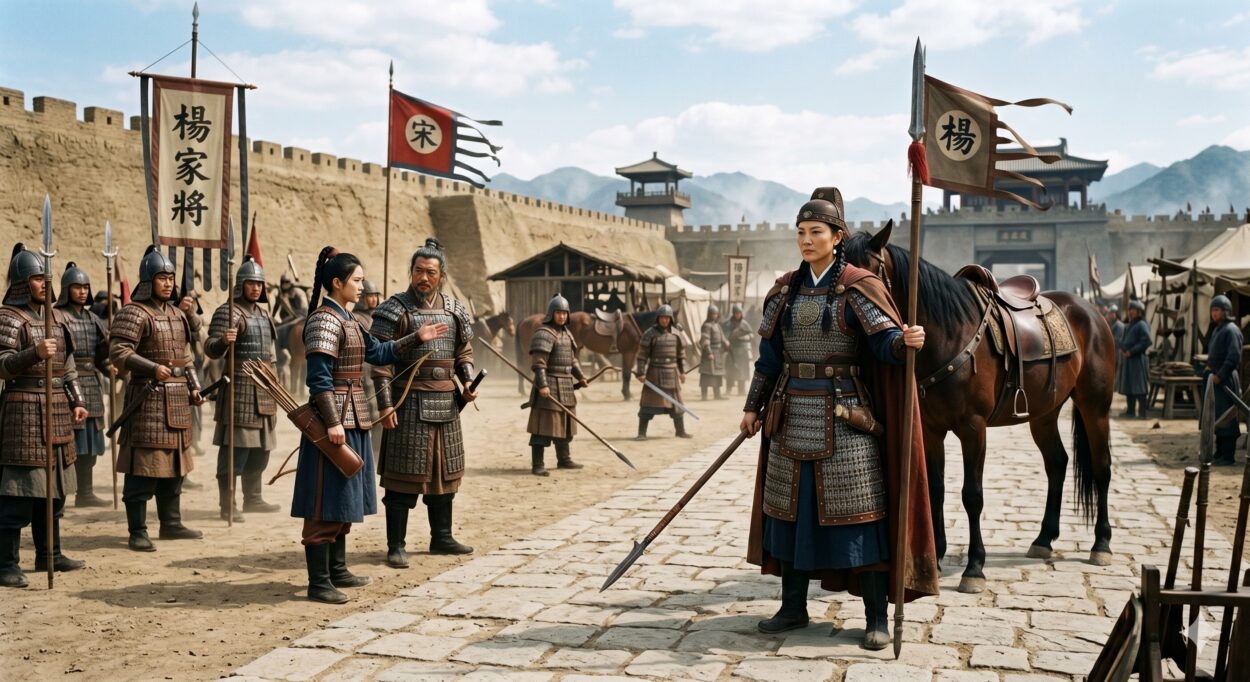
Among the most cherished legends of Chinese history are the stories of the Yang Family Generals of the Northern Song Dynasty. At the center of these accounts stands She Taijun, a woman whose courage, discipline, and patriotism have inspired generations.
From an early age, She Taijun trained in martial arts and grew into a capable, intelligent woman skilled in horsemanship, archery, military strategy, and leadership. She assisted her father and brothers in training troops and overseeing military affairs, gaining firsthand experience in the discipline of command.
As a young woman, she is said to have won her marriage through a martial arts contest and later fought alongside her husband, the renowned General Yang Ye. Yet despite the family’s strength and honor, tragedy repeatedly struck the Yang household.
During the reign of Emperor Taizong, Yang Ye became trapped behind enemy lines during a campaign against the Liao forces. Refusing to surrender, he fought until he was wounded and captured, ultimately choosing death over dishonor in service to his country. His son, Yang Yanyu, likewise sacrificed his life in defense of the nation. The next generation continued the struggle.
Yang Yanzhao inherited his father’s legacy, repeatedly distinguished himself in battle, and spent decades defending the empire’s northern frontier. He later died of illness after a lifetime of military service. During Emperor Renzong’s reign, Western Xia forces launched large-scale invasions. Yang Wenguang, son of Yang Yanzhao, also took up the family’s duty. He fought with courage in increasingly desperate conditions, but ultimately perished in battle.
Generation after generation, the men of the Yang family gave their lives in defense of their homeland. In time, all of the male heirs of the Yang line had fallen in war, leaving behind only widows and daughters to carry the family legacy. At this point, the story enters its most legendary chapter.
It is said that She Taijun — already nearing 100 years of age — appeared before the imperial court and volunteered to lead an expedition herself. She organized the famed “Twelve Yang Widows” and marched west to confront the invading forces. Each of the 12 women was said to have taken command of troops and to have defended 12 strategic positions. Together, they fought with determination against overwhelming odds. In the end, their forces were said to have repelled the Western Xia army, preserving the stability of the Song Empire.
She Taijun was indeed a historical figure, though “Taijun” was not her personal name. During the Song Dynasty, it was an honorific title bestowed upon the mothers and wives of high-ranking officials. Because her son held an important position in the court, she was respectfully addressed as “She Taijun.” As the matriarch of a legendary military family, she came to symbolize loyalty, courage, perseverance, and devotion to country — qualities that have made her name endure through the centuries.
Xu Shu’s mother: Choosing righteousness above life itself
Xu Shu was a gifted strategist who served under Liu Bei during the Three Kingdoms period. Known for both intelligence and loyalty, he helped secure several important victories and quickly earned a reputation as one of Liu Bei’s most capable military advisers. His talents did not go unnoticed.
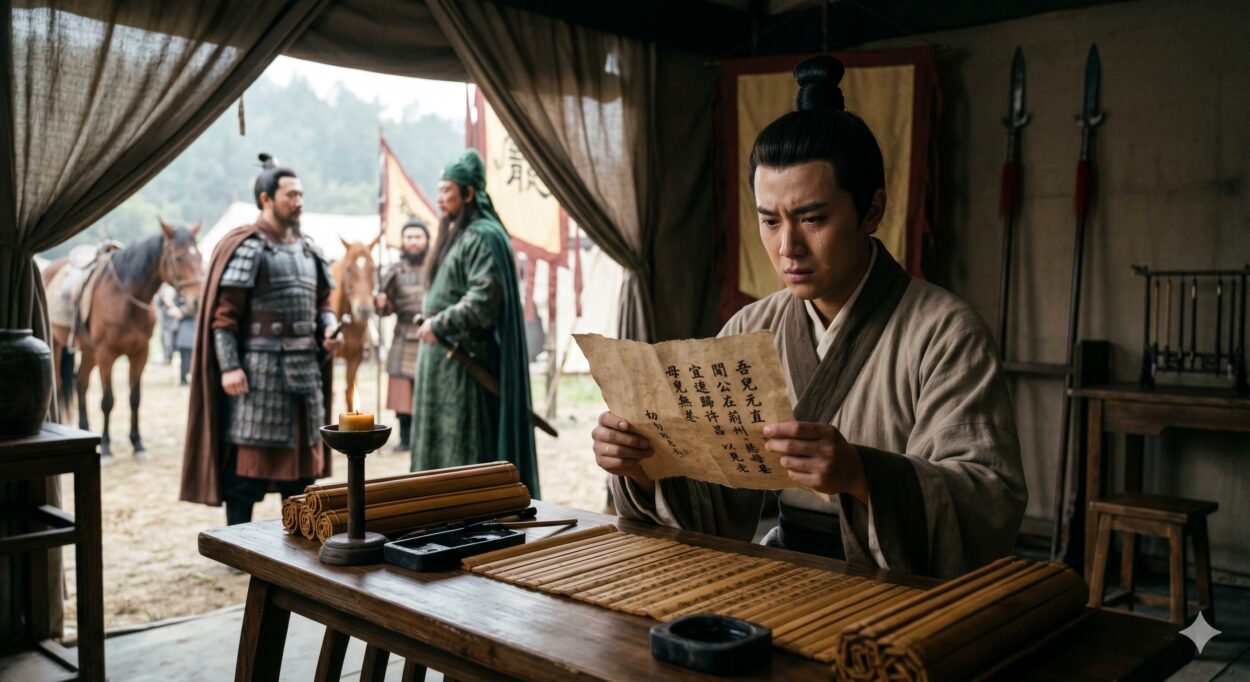
The ambitious warlord Cao Cao sought to recruit him and devised a plan that exploited Xu Shu’s well-known devotion to his mother. Cao Cao’s agents brought Xu Shu’s mother to Xuchang and forged a letter in her name, summoning her son. What followed is recorded in historical sources, including the Book of Shu (with biographies of Zhuge Liang and Dong He).
When Xu Shu learned that his mother had been taken, he was confronted with a painful dilemma. In the Confucian tradition, filial piety is regarded as one of the highest virtues. Unable to abandon his mother, he reluctantly left Liu Bei’s service. Before departing, he recommended Zhuge Liang as his successor and then traveled alone to Cao Cao’s camp. The conflict tore at his heart: How could he remain loyal to his lord while also fulfilling his duty as a son?
His mother understood his anguish. She recognized that her son was caught between two sacred obligations — loyalty to his ruler and devotion to his mother. Rather than allow him to remain imprisoned by this impossible choice, she made a decision of extraordinary resolve.
According to traditional accounts, she ultimately chose to end her own life. In doing so, she removed the burden that bound her son to an impossible dilemma. When Xu Shu learned of her death, he was overcome with grief and lamented: “I long to serve my country, yet I lack the power to change my fate. Failing both loyalty and filial duty, how can I call myself a worthy servant to my lord?”
From that day forward, although he remained in Cao Cao’s camp, he refused to offer military advice or strategic counsel. This gave rise to the well-known saying: “Xu Shu entered Cao Cao’s camp, but did not offer a single strategic plan.” Through her final act, Xu Shu’s mother conveyed a profound message: integrity is not a matter of convenience, but a principle that may demand sacrifice even at the highest cost.
At the same time, her decision also reflects the depth of a mother’s love. Seeing her son trapped in an unbearable moral conflict, she chose to bear the ultimate sacrifice herself rather than watch him suffer between two irreconcilable duties. Her story remains one of the most poignant examples in Chinese tradition of the tension between loyalty, righteousness, and filial devotion.
In Part 4, we will turn to two final figures: the mother of Huineng, the Sixth Patriarch of Chan Buddhism, and the extraordinary story of the daughter of the Mengyang family. Her account — preserved in the Biographies of Exemplary Women — challenges common assumptions about family bonds and reveals how love and moral responsibility can extend far beyond biology itself.
See Part 1 here
See Part 2 here
Translated by Katy Liu and edited by Tatiana Denning
Follow us on X, Facebook, or Pinterest
