
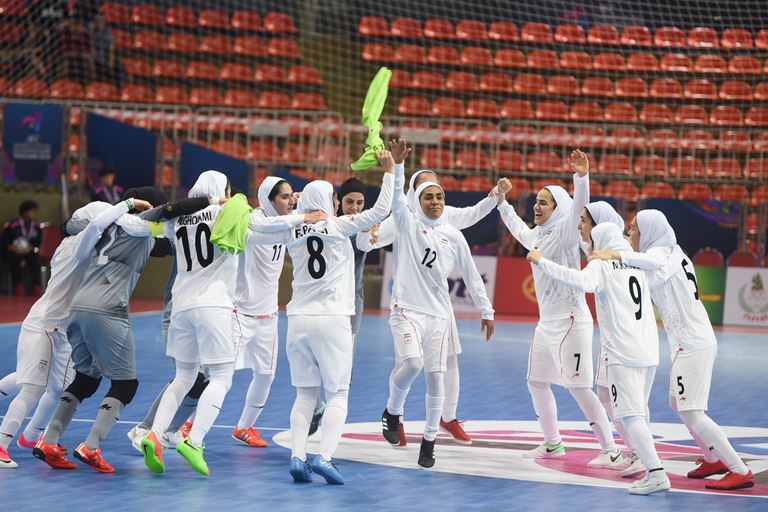
The ‘return’ of the Iranian Women’s National Football Team
Seven members of the Iranian women’s national football team sought asylum in Australia out of fear for their future. However, after their applications were approved, most of them chose to abandon the asylum and return to Iran, again out of fear. At present, only two players remain in Australia.
In 1936, American author Dale Carnegie published his famous classic How to Win Friends and Influence People. In it, he wrote: “Fear mostly stems from ignorance and uncertainty.” In light of the above asylum incident, this statement is rather poignant.
Many people feel a deep sense of pity for the five female soccer players who gave up their freedom to return to bondage. Although they have not publicly stated the real reasons, it is imaginable that the fear lurking deep within their hearts is something bystanders cannot truly comprehend, let alone endure.
People who live in free societies often find it difficult to comprehend the operational logic of totalitarian regimes. A distinctive feature of such regimes is that they treat ordinary citizens as “bargaining chips” to be used at any time. They resort to using the safety of family members as the price to force individuals into submission.
This kind of scenario is all too familiar in film and television. No matter how brave someone is, once a criminal holds a knife to their loved one’s throat, they have no choice but to succumb. When unable to predict the consequences, individuals will often choose to compromise themselves in exchange for a glimmer of hope for their loved one’s survival. For those players who once sought asylum in Australia but ultimately chose to return home, they may currently find themselves trapped in a similar predicament.
Some public opinion suggests that Australia’s high-profile handling has led to this regrettable outcome. However, for a malicious regime with mature operations and sophisticated tactics, taking countermeasures is not complicated. No matter how secure the external environment is, it is difficult to completely withstand cross-border deterrence originating from one’s home country.
According to relevant reports, among the asylum seekers, a logistics staff member was identified as an “information messenger” for the authorities. Her presence enabled threats to be delivered precisely. While in the so-called “safe house,” several players received chilling messages such as: “Your family is missing, and we don’t know what happened to them.” One sentence was enough to shatter their psychological defenses.
Australia provided a safe space, yet it could not eliminate this fear that transcends borders. When some players received the messages, they immediately told the Australian side they wanted to leave. Behind this choice are emotions and responsibilities that are difficult to measure rationally.
Contemporary Iranian society possesses a unique national character. As the inheritor of Persian civilization, this nation boasts profound historical and cultural traditions. Influenced by Shia ethics and family values, kinship and responsibility carry an almost irresistible moral binding force. When personal freedom and family safety clash, many people choose the latter.
In the era of the internet, Iran is caught in a fierce collision between modern ideas and traditional structures. Freedom-seeking individuals hope to break through restrictions on the one hand, yet find it difficult to let go of their responsibilities to their families on the other. This psychological tension has become a precise tool for authorities to maintain control.
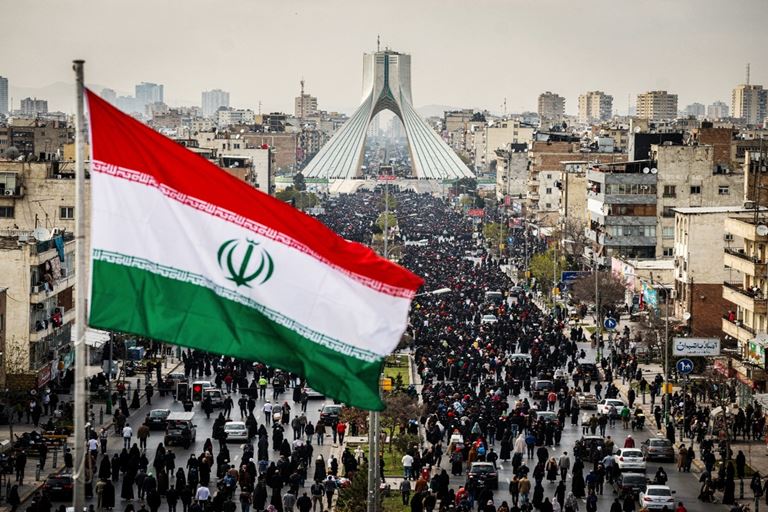
On March 19, some Iranian women’s football players returned home. They received a symbolic “welcome” in public. They wore garlands, walked over the American and Israeli flags that had been laid on the ground, and were surrounded by a cheering crowd. This scene was both a political show and a public ceremony of reaffiliation.
However, in such a system, destiny is often unpredictable. Today’s “heroes,” after losing the spotlight in the future, may face a completely different fate. The probability of being imprisoned or secretly executed is extremely high, as they will be viewed as unstable social elements.
Chinese defector faces harsh reality
This type of operation, which leverages family ties, has long been a common practice within the Chinese Communist Party (CCP) system. In 2005, Chen Yonglin, a defected former Chinese diplomat, exposed a shocking insider secret to the Australian media.
Lan Fu, former Vice Mayor of Xiamen, deeply embroiled in the Yuanhua smuggling case, arrived in Australia with his wife and children in December 1999 and refused to return to China. In response, the CCP Ministry of Public Security abducted Lan Fu’s son in Australia and put him on a Chinese cargo ship anchored in international waters. Then they called Lan Fu, threatening that his son would undoubtedly be killed if he did not return to China. To save his son, Lan Fu ultimately agreed to return to China. One year later, Lan Fu was sentenced to death.
In an environment lacking institutional constraints and transparent mechanisms, individual rights are often extremely vulnerable. When “hostage logic” becomes a practical tool, individual choices are no longer expressions of free will but forced trade-offs.
The choices made by the Iranian female football players should not be simply reduced to “giving up freedom,” but rather viewed as a difficult compromise between fear and responsibility. When living for oneself comes at the cost of one’s family, freedom itself loses its true meaning.
What truly deserves to be questioned is not why they turned back, but rather, in a world like this, how many people have never truly had the right to choose?
Translated by: Chua BC
Follow us on X, Facebook, or Pinterest
