
A flattering message, a paid flight, and a pre-booked photographer can look like the start of a career. A growing list of cases suggests it is worth slowing down long enough to ask who is really paying, and what the law will do if the trip goes wrong. — Kreativ Rohr, June 28, 2026
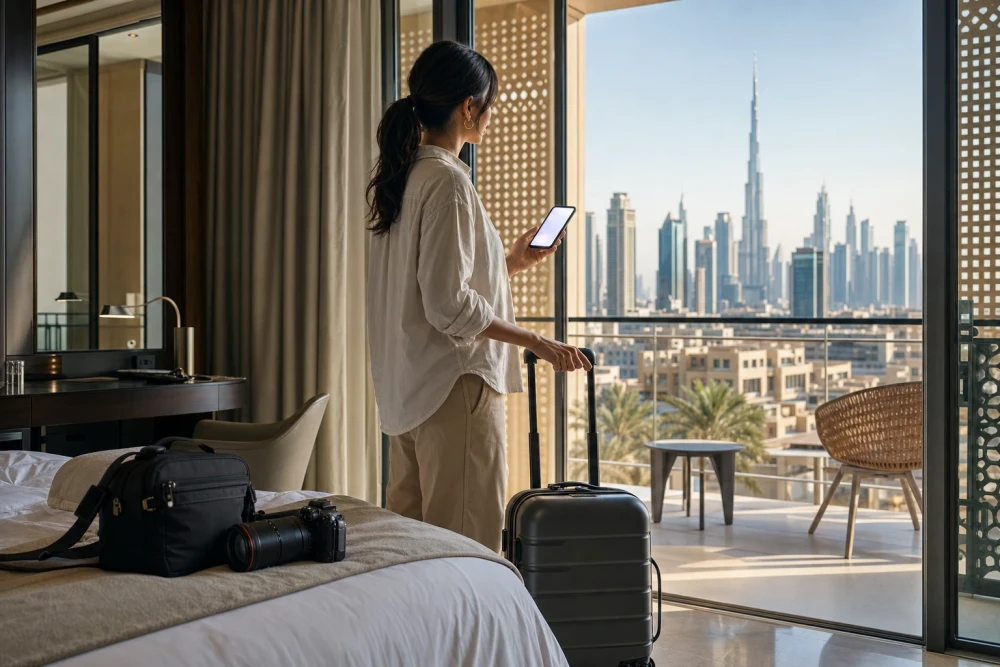
All-inclusive trips to Dubai arrive in the inboxes of young female influencers almost daily: flights covered, a suite booked, a photographer arranged, perhaps a fee on top, all in exchange for a handful of flattering posts. Most of these all-inclusive trips to Dubai are exactly what they seem: a city with a real tourism economy paying for the content that sells it. But a small, recurring set of cases makes it worth pausing before accepting, because when one of these trips goes wrong, the woman who accepted it can find the legal ground beneath her is nothing like the ground she left at home.
The most recent of those cases is still unfolding, and it is severe enough to pull the whole pattern back into view.
The case that put the question back on the table
In late June 2026, the advocacy group Detained in Dubai announced it was assisting Brooke George, a 23-year-old former retail worker and TikTok user from Gravesend in Kent, who had been charged with the murder of a 26-year-old British man she had met online. According to the account her family and the group have given, George met the man on Facebook, developed an online relationship, and traveled to Dubai to meet him. By her own description, the first visit was joyful. The second was not.
On the return trip, the group says his behavior changed: he became controlling, she discovered she had been booked only a one-way ticket, and after a night out he allegedly assaulted her. George maintains that when she returned to the apartment to recover her passport, she was attacked again, and that she reached for a kitchen knife and acted in self-defense. She was arrested in the early hours, visibly injured, and charged with premeditated murder — a charge that, if it stands, can carry the death penalty in the UAE.
It is important to be precise about what is and is not established here. These are allegations and a charge, not a verdict. George has not been tried; the man cannot give his account; and the claims her family makes about his conduct — the one-way ticket, a photo shoot arranged on the first visit, disturbing material they say she found — are their claims, advanced by a group that campaigns specifically against the UAE justice system. What is not in dispute is that a young woman flew to Dubai to meet someone she knew mainly through a screen, and is now in a cell facing the gravest charge a legal system can bring. That much is enough to make the rest of this worth reading carefully.
A young woman flew to Dubai to meet someone she knew mainly through a screen, and is now in a cell facing the gravest charge a legal system can bring.

Maria Kovalchuk, and the ten days no one can fully account for
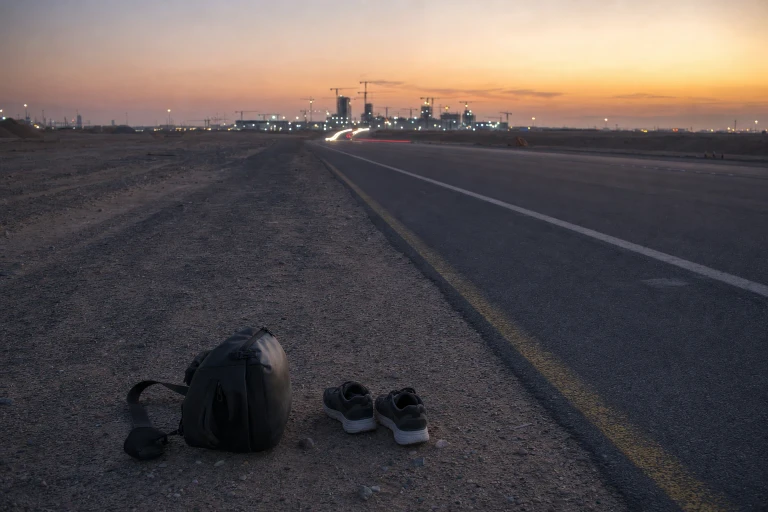
George’s case did not appear out of nowhere. A year earlier, in March 2025, a 20-year-old Ukrainian content creator named Maria Kovalchuk vanished in Dubai for roughly 10 days before being found beside a road with a broken spine, broken limbs, and severe head injuries. She had reportedly left with two men who introduced themselves as representatives of a modeling business. Dubai police attributed the injuries to a fall from a height at a construction site. Her family did not accept that explanation, and Ukrainian authorities opened a human-trafficking investigation.
After months of surgery and rehabilitation, Kovalchuk relearned how to walk and to speak, relocated to Norway, and began describing what she remembered: a party with wealthy young men, an attempt to escape onto a balcony, being dragged back, and then a gap where the violence itself should be. The men she named have denied wrongdoing and filed defamation suits across several countries; one claims she injured herself. Reporting noted that key CCTV footage was said to have been erased before investigators reached it. Almost no one has been held responsible. The case sits, unresolved, as exactly the kind of story that is impossible to close and impossible to ignore — which is the point.
Tori Towey, and the law that can turn a victim into a defendant
The third case is the most clearly documented, because it ended with a government statement. In 2024, Tori Towey, a 28-year-old Irish cabin-crew member based in Dubai, was hospitalized after an alleged assault by her husband. Rather than being treated solely as a victim, she was charged with attempted suicide and alcohol consumption — both historically criminal acts in the UAE — had her passport destroyed, and was placed under a travel ban. Her case was raised in the Irish parliament, the Taoiseach intervened, and the charges were dropped; Dubai’s media office framed the resolution as a mutual reconciliation between the couple. She flew home.
Towey’s ordeal matters here less for its outcome than for the mechanism it exposed. A woman who had been beaten reported for help and was herself charged. The lawyer who assisted her, Radha Stirling of Detained in Dubai, has made the same observation across many of these cases: The system has historically prosecuted rape complainants for sex outside marriage, and has charged abuse victims with offenses arising from their own attempts to survive. It is an advocacy organization with a clear position, and its framing should be read as advocacy. But the legal exposure it describes is real, written into the statute book, not invented for a press release.
IV. Why all-inclusive trips to Dubai are rarely as simple as they look
Set the three cases side by side, and the same shape appears each time. Someone else’s money brings a woman to Dubai — a partner, an agency, a host. Her means of leaving are quietly controlled: a one-way ticket in one case, a destroyed passport in another, a travel ban in the third. The relationship that brought her there changes once she arrives and the door closes behind her. And when she tries to get out, the institutions she would turn to at home — the police, the courts — become a second source of danger rather than a refuge.
This is the part that is genuinely difficult for a Western audience to internalize. The instinct, when something goes wrong abroad, is to call the authorities. In several of these accounts, calling the authorities is precisely how a victim became a defendant. The asymmetry is structural: foreigners carry a heavier burden of proof, alcohol and “public decency” offenses are readily attached to anyone who has come to police attention, and — increasingly — cybercrime and defamation laws make it risky even to describe what happened publicly. The UAE’s own media cannot freely report incidents deemed damaging to the country’s image, which is why so many of these stories surface first through a foreign advocacy group rather than a Dubai newsroom.
The darker version of the offer
A more extreme strand runs beneath the influencer-trip economy, and it has to be described carefully because it mixes documented fact with circulating rumor. Since around 2021, an online subculture has been discussed under the label “porta-potty” parties: private gatherings in Dubai penthouses and on yachts where women are reportedly paid large sums to submit to degrading and sometimes violent acts. Much of what circulates about these parties is anonymous, unverifiable, and sensationalized, and it should be treated with the skepticism that anonymous viral content always deserves.
What lifts part of it out of pure rumor is a 2025 BBC investigation that documented a real prostitution and coercion operation in Dubai, in which women who had arrived expecting legitimate work were told on landing that they owed money for flights, visas, and lodging, and that sex work was the only way to clear the debt. That is the textbook structure of trafficking: recruitment under a false pretext, an imposed debt, confiscated documents, and a victim with no local recourse. The point is not that every paid trip is this. The overwhelming majority are not. The point is that the legitimate version and the predatory version use the same opening line — a flattering message and a free flight — and from the outside, on day one, they can look identical.
The legitimate version and the predatory version use the same opening line. From the outside, on day one, they can look identical.
The machine that manufactures the glamour
None of this happens despite Dubai’s image. It is happening alongside a deliberate, well-funded effort to maintain that image, and influencers are central to it. The emirate has launched dedicated programs to court content creators — a creators’ hub, a long-term “Golden Visa” aimed at digital personalities, and a training academy for travel creators — all of which produce a steady stream of luxury content associating the city with safety and aspiration. Critics, including Detained in Dubai, describe this as a paid influencer apparatus whose job is to drown out the cases above with curated sunshine.
The mechanism is self-reinforcing, and that is what makes it worth naming. Glamour content lowers a newcomer’s guard; a lowered guard makes her easier to recruit; her own posts, if the trip goes well, become more glamour content for the next person. The same survey culture that crowned Dubai a creator paradise also, by late 2025, ranked influencers the country’s least-trusted profession — a sign that audiences had begun to sense the managed quality of the message. A travel image that has to be this heavily produced is itself a small piece of evidence worth weighing.
The red flags worth taking seriously
Stripped of drama, the cases share a set of concrete warning signs. None of them, on its own, proves bad intent; a legitimate brand trip can innocently involve one or two. But they recur in the cases that went wrong, and any of them is a reason to slow down, verify independently, and keep your exit in your own hands.
- Someone else controls how you leave: A one-way ticket, a flight booked in another person’s name, or any suggestion that your passport be held “for safekeeping” by a host, driver, or agency. Your passport and your return ticket should never leave your possession.
- Someone you met online arranges a shoot before you arrive: Particularly, swimwear or “test” shoots set up by a new romantic contact or an unverified “representative.” Legitimate agencies have a checkable trading history, a real address, and prior talent who will speak to you.
- The money makes no sense for the work: Fees, gifts, or all-expenses luxury wildly disproportionate to a few posts aren’t a compliment; they are a price for something that hasn’t been named yet.
- Private parties with the phones collected at the door: Penthouse or yacht events where they take devices, produce NDAs, and you cannot tell anyone where you are. No professional engagement requires you to be uncontactable.
- You are being isolated: Plans that change at the last minute, pressure not to involve friends or family, a host who discourages outside contact. Tell at least two people your full itinerary and agree on a check-in schedule before you fly.
- The only proof it is safe is other influencers saying so: Testimonial-as-evidence is the weakest kind of assurance, especially in a place that pays for testimonials. Read your government’s travel and legal guidance, not the brand deck.
- You do not actually know who is paying: If the funding traces back to a private individual or a company you cannot verify, you are accepting hospitality on terms you have not seen. Find out, in writing, before you commit.
What the law will, and will not, do for you
It is worth being fair to the other side. The UAE is a destination for millions of visitors a year, the overwhelming majority of whom have entirely unremarkable trips, and in June 2026 the UK Foreign Office removed its elevated advisory against non-essential travel after regional tensions eased. Dubai’s authorities maintain that they investigate allegations under due process and that resolutions — as in the Towey case — follow the law. A reader should hold that genuinely, not as a throat-clearing formality.
But “mostly fine” is a statement about averages, and the cases here are about what happens at the edges, to a specific kind of traveler, when something has already gone wrong. The relevant legal facts are not hidden: it is illegal to be drunk in public; sex outside marriage and “public decency” offenses remain on the books and have historically been turned against complainants; the burden of proof in sexual-assault cases falls heavily on the accuser, especially where alcohol was involved; and cybercrime laws can criminalize the act of posting about a bad experience. British and other embassies have at times advised assault victims not to report, because reporting risked their own prosecution. A woman weighing a free trip should assume that if a dispute arises with a powerful local host, the legal system won’t take her word at face value.
Reading the offer clearly
The advice that comes out of all this is unglamorous, which is probably why it doesn’t travel as well as the trips do. Verify who is paying and meet them on neutral ground. Keep your passport and a return ticket you booked yourself. Tell people where you are and when you will check in. Read the actual laws of the place, not its marketing. And treat any offer that depends on you not asking these questions as having answered them already.
Brooke George’s case will run its course in a system that does not work the way the one she grew up in does, and whatever its outcome, it will not be the last of its kind, because the offer that begins it is going out again right now, to someone’s phone, worded to sound like the best thing that ever happened to her. The work is not to refuse every such message. The work is to read it as carefully as the people who send it wrote it — and to remember that a trip is only all-inclusive until the part nobody listed in the brochure begins.
This article discusses domestic abuse, sexual exploitation and self-harm. Anyone affected by these issues, or in danger abroad, can contact their national embassy or a domestic-violence and trafficking helpline in their country for confidential support.
Follow us on X, Facebook, or Pinterest
