
For 21 years, Jiang Wen worked as a chef in Yantai, a coastal city in China’s Shandong Province, and expected to spend the rest of his life there. That changed in 2020, when local authorities demolished his family’s home. His subsequent attempts to seek justice led to detention and alleged torture, eventually prompting him to leave China. Now living in Canada, Jiang has become an outspoken critic of the Chinese Communist Party (CCP). “If that house were still standing, I probably would never have left Yantai,” he told Vision Times reporter Meng Hao in an interview.
The demolition of his family home
The house, built in the 1960s, had been home to three generations of Jiang’s family. Covering more than 3,200 square feet, it represented decades of family history and was where Jiang had grown up. In March 2020, local authorities demolished the property without reaching a compensation agreement or obtaining the family’s signatures, according to Jiang. He recalled that more than 50 police officers and unidentified plainclothes personnel blocked off the street while he and his elderly parents were forcibly removed from the building.
“They didn’t have any legal documents. They simply dragged my elderly parents and me out as though we were livestock,” Jiang said. He watched as excavators began tearing down the house, leaving him unable to protect either the building or the family’s possessions. Although workers removed a few large appliances, including a television and refrigerator, most of the family’s belongings remained inside. Valuable mahogany furniture, family photographs, and years of accumulated possessions were buried beneath the rubble.
Jiang said the property’s estimated market value was 1.5 million yuan (US$225,000), but the authorities offered only 200,000 yuan (US$30,000) in compensation. Beyond the considerable financial loss, he felt the demolition was a profound violation of his family’s rights and dignity. He described his despair at the time with the Chinese expression “天塌了,” meaning that it felt as though the sky had fallen.
Seeking justice leads to detention and abuse
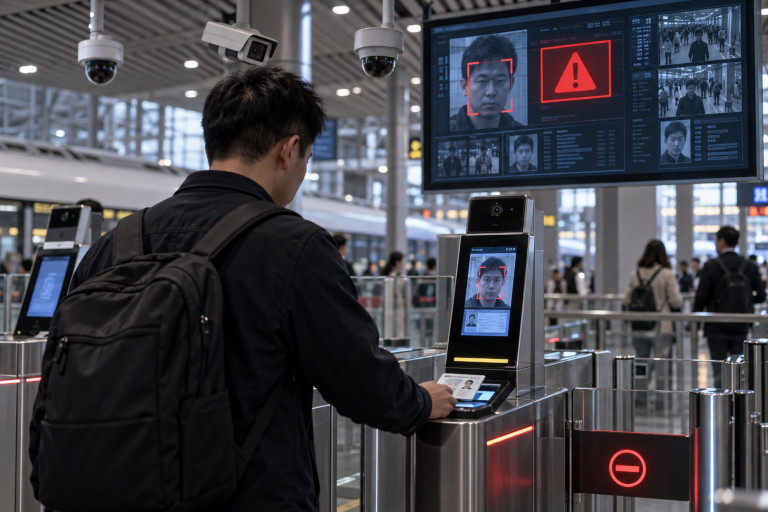
Determined to challenge the demolition, Jiang and his father turned to China’s petitioning system, which allows citizens to appeal grievances to higher levels of government. They attempted to travel by train to Jinan, the provincial capital of Shandong, to seek intervention. However, authorities intercepted them aboard the train before they reached their destination. Jiang believes that his identification card had triggered an alert in a government surveillance system, allowing officials to track his movements and prevent him from filing a complaint.
After being returned to their hometown, Jiang and his father were detained for approximately a week in what he described as a “black jail,” an unofficial place of detention operating outside normal legal procedures. During his detention, Jiang said he was subjected to both physical and psychological abuse. Bright lights flashed continuously throughout the day and night, depriving him of sleep, while officers allegedly struck his abdomen and other soft areas of his body to avoid leaving visible injuries.
Jiang also described being handcuffed to a specially designed restraint device that forced him to remain standing for more than 10 hours without being able to sit or squat. The prolonged restraint caused severe swelling in his legs and left him physically exhausted. According to Jiang, the officers deliberately employed methods intended to make the abuse difficult to document. “When they beat you, they would say: ‘We have plenty of ways to make sure you can’t prove you were injured,'” he recalled.
The experience fundamentally changed Jiang’s understanding of the Chinese authorities. He had sought a legal remedy for the destruction of his family’s home but instead encountered detention and mistreatment. “At that moment, I realized that the so-called ‘serving the people’ was just a slogan pasted on the wall,” he said. “The reality was a brutal dictatorship.”
Leaving China and learning about the CCP’s abuses
Following the demolition and his unsuccessful efforts to obtain justice, Jiang continued to face harassment and threats. He eventually decided to leave China, traveling first to Singapore and New Zealand in search of a place to rebuild his life. However, he said some Chinese community groups in New Zealand ostracized him because of his criticism of the CCP, which he attributed to the influence of the Party’s overseas propaganda. “Even overseas, the shadow of that fear still hangs over many people,” he said. “But I’ve already experienced the worst. I no longer want to live in lies.”
Jiang eventually settled in Canada, where he resumed working as a chef and began exploring information that had been censored or suppressed in China. Through YouTube and other online platforms, he watched documentary footage of the 1989 Tiananmen Square crackdown, when Chinese troops used force against pro-democracy demonstrators in Beijing. He also encountered investigative reports alleging that the Chinese authorities had been involved in forced organ harvesting, including allegations concerning prisoners of conscience.
Of particular concern to Jiang were accounts of missing children and students, along with allegations that some disappearances could be connected to the organ transplant industry. These reports disturbed him deeply, especially because he was concerned about his own son’s future in China. “When I learned about young children and students mysteriously disappearing, and that this might be connected to the organ transplant industry involving powerful people, I couldn’t sleep for nights,” he said. “As a father, I cannot even imagine how terrifying it would be for my son to live in such an environment.”

Speaking out for freedom in Canada
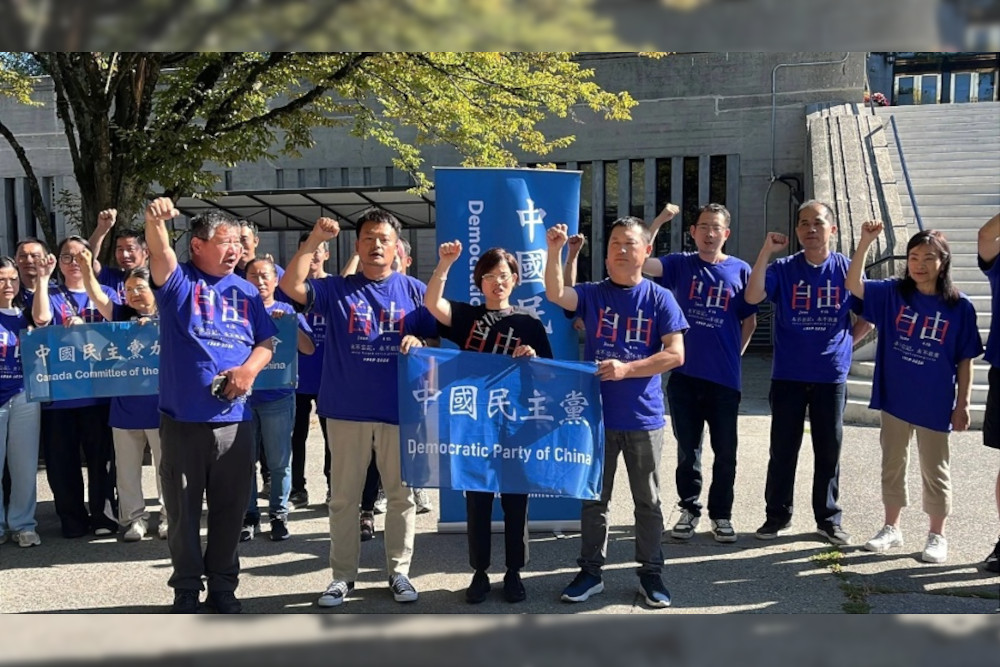
Jiang’s experiences in China and the information he encountered abroad strengthened his determination to speak out against the CCP. He joined the China Democracy Party and became a regular participant in Vancouver’s Jasmine Action demonstrations, which call for democracy and political change in China. According to Jiang, he now participates in weekly protests outside the Chinese Consulate, holding banners and calling for a free China. For someone who had once expected to spend his life working quietly as a chef in Yantai, openly criticizing the CCP represented a major change.
Jiang said that Chinese authorities have continued to show an interest in his activities even after his departure. Shortly before the 2026 Chinese New Year, police in China were reportedly still harassing his relatives in an effort to learn about his movements abroad. Nevertheless, he said these threats have not discouraged him from participating in demonstrations or speaking publicly about his experiences.
Jiang has also formally renounced his former affiliations with the Communist Youth League and the Young Pioneers through the Global Service Center for Quitting the CCP. His declaration was part of the “Three Withdrawals” movement, which encourages Chinese people to withdraw from the CCP and its two affiliated youth organizations, including by symbolically renouncing past memberships. Jiang described the decision as more than a political statement, regarding it as a personal rejection of the system he once lived under. “Although I’m just an ordinary chef, I no longer want to be part of that demonic system,” he said.
Although some people question whether demonstrations outside Chinese diplomatic missions can bring about meaningful change, Jiang believes that publicly opposing the CCP can encourage others to overcome their fear. “Many people ask me, ‘Will the CCP collapse just because you shout a few slogans outside the Chinese Consulate?'” he said. “I tell them, a single spark can start a prairie fire.” He explained that demonstrators hoped to show others that people were willing to speak openly against the Party, adding that if enough people did the same, the system would eventually collapse.
For now, Jiang’s personal priority is to continue working in Canada and bring his 19-year-old son to join him. He hopes his son will be able to live without having to petition the government to protect his property, fear punishment for expressing his opinions, or undergo the political indoctrination that Jiang associates with life under the CCP. Despite everything that has happened, Jiang maintains a strong attachment to his homeland and distinguishes his love for China from his opposition to the Communist Party.
“I love my hometown. I love the China that gave me life and raised me,” he said. “But I hate the party that rides over the people. Only when that evil party disappears will the real China return.”
Translated by Chua BC
Follow us on X, Facebook, or Pinterest
