

In recent years, stories have quietly circulated about China’s vast surveillance capabilities, its tight grip on dissent, and the troubling number of children and teenagers who disappear without a trace. But one man, a former insider, is sounding the alarm. His revelations hint at a chilling nexus between mass surveillance, political suppression, and the dark trade of forced organ harvesting.
Inside the system: A whistleblower speaks out
Eric My, once a privileged “second-generation official” (the child of a Chinese Communist Party cadre) from a small city in Jiangsu Province, chose to walk away from a life within the Chinese bureaucracy. Though he was groomed to serve the state, he could not stomach the role of enforcing authoritarian rule. Today, Eric stands as a rare voice from within, revealing the harsh realities of China’s local political ecosystem — and the fate of many missing Chinese youths.
Big Brother’s gaze: The reality of total surveillance
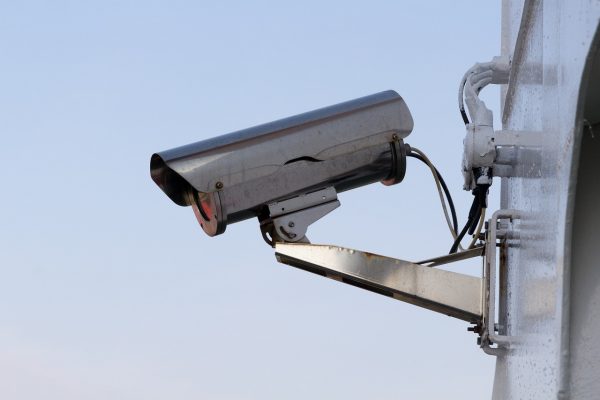
Eric recalls working in a government investigations center outfitted with what he describes as a massive digital wall of surveillance. These weren’t just for passive monitoring — this network processed real-time data from millions of citizens, flagged “sensitive” conversations on platforms like WeChat, and triggered law enforcement action in seconds.
“If someone discussed politics, their phone number turned red on our system,” he explains. “The legal office would be alerted immediately to detain them.”
He describes an environment where Android phones could be remotely controlled, while Apple devices, once considered safer, have reportedly become just as penetrable with the installation of government-backed software. Citizens who downloaded official anti-fraud apps unknowingly handed over full access to their photo galleries, messages, and contact lists. In Eric’s words: “In China, there is no such thing as privacy. Everyone is a transparent person.”
Advanced facial and gait recognition systems enable authorities to identify individuals even when they are wearing face masks or helmets, analyzing unique physical behaviors such as whether someone lifts their left foot or right hand first while walking.
How missing teens and organ trafficking intertwine
Despite the government’s vast surveillance network — boasting tens of millions of high-resolution cameras — it remains shockingly ineffective at locating missing children. But Eric insists the real reason is not technical, but political.
“There’s no way actually to lose track of someone in China,” he says. “With one photo or a name, the system can pinpoint someone’s location in under five seconds. So if children can’t be found, it’s because the authorities don’t want to find them.”
Eric claims that requests to use the “Sky Eye” surveillance system to track missing children are routinely denied by superiors. Why? He says the uncomfortable truth is that some of these children may have already become victims of organ harvesting — an operation he asserts is orchestrated at the highest levels of government.
“The most valuable organs come from young people — healthy, strong, and often taken without consent,” he says. “The orders not to investigate come from the top. If you try to dig, you’ll be held accountable.”
Living under an AI-powered police state
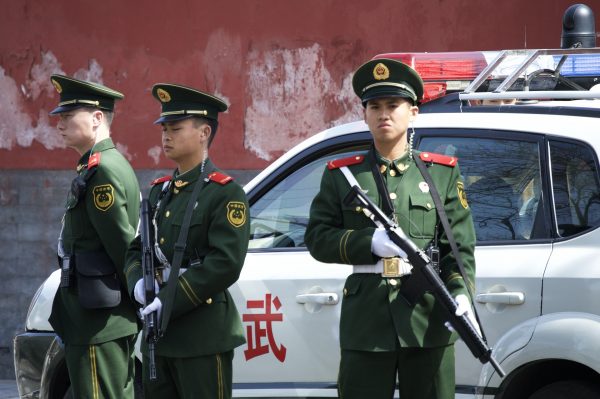
The suppression of truth extends well beyond the case of missing children. According to Eric, in economically developed regions like Jiangsu, Zhejiang, and Shanghai, the lion’s share of government funding doesn’t go into wages or infrastructure — it goes into surveillance, stability maintenance, and AI-driven control mechanisms.
He describes a government-run real estate company that constructed a towering 40-story building, rivaled in height only by Suning Plaza. Meanwhile, salaries for public workers are increasingly delayed. “By the end of June, we only received two months’ pay,” he shares. “The courts still owe five months of salaries. But if you’re high enough in rank, your pay comes on time.”
Annual bonuses and shopping cards, once handed out during the holidays, have now been replaced by sacks of rice and cooking oil. Yet even those are distributed through government-run fairs where prices are artificially inflated, ensuring the state profits once again from the same money.
A society losing its moral compass over organ harvesting
Eric paints a bleak picture of a society where routine procedures like organ transplants have become disturbingly efficient. “Ten years ago, you had to apply and wait. Now, if you need an organ in the morning, it can be available by afternoon — fresh and recently extracted.”
He suspects some “medical mishaps” may be deliberate. “Sometimes, a hospital suddenly kills a patient, and the family’s protests are crushed without investigation. Why? Because there may have been a demand for organs that day. It’s all covered up.”
Erasing truth, one policy at a time
As public scrutiny over missing children grows, Eric says the regime is working harder than ever to silence any form of awareness. Posters about missing children have been banned from public spaces. Information is choked at its source.
“Under the Communist Party, one life means nothing,” he says. “They care only about maintaining stability. If we don’t expose this now, we may never get another chance.”
The final plea: hope for a normal society
Eric’s plea isn’t for democracy per se, but for basic human decency. “I’m not asking for China to become the West,” he explains. “But we need to become a normal society. A place where life has value. Where forced organ harvesting stops. Where people are allowed to speak, to remember, and to care.”
In a country where even history is being rewritten — where generations grow up not knowing about events like the Tiananmen Square massacre or the Cultural Revolution — Eric believes the only hope lies in collective action.
“Share the truth,” he urges. “Not to destroy China, but to save what humanity still exists within it.”
Follow us on X, Facebook, or Pinterest
