
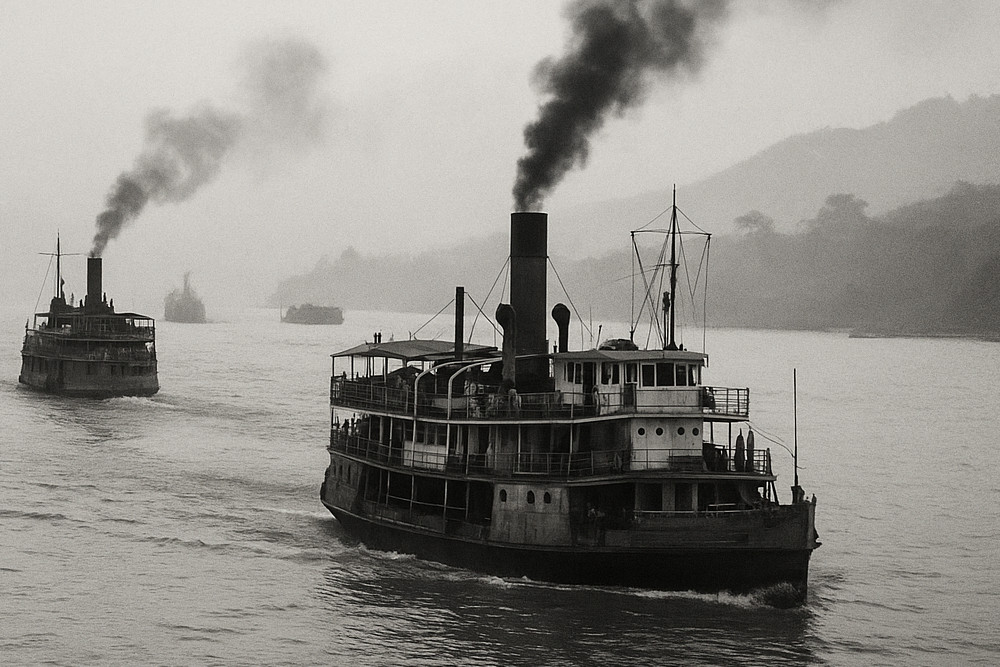
Despite Lu Zuofu’s efforts to keep Minsheng Company alive, the years following his return to the mainland brought mounting challenges. Accidents, political campaigns, and betrayals soon pushed him to his breaking point, setting the stage for one of the most tragic chapters in his life.
A wave of marine disasters
After returning to Chongqing, Lu Zuofu faced a grim new reality. Political campaigns persisted, and Minsheng’s middle- and high-level managers were repeatedly targeted. Even during peacetime, the company experienced an alarming series of accidents.
Between 1950 and August 1952, Minsheng suffered 502 marine incidents — an average of one every two days — resulting in 232 deaths. In February 1952, the company’s flagship Minduo struck a reef near Fengdu and sank. Many suspected that the incident was more than an unfortunate accident, but the truth remains buried beneath the river.
Lu Zuofu’s tragic end
On January 26, 1952, the CCP launched the “Five Anti” campaign — a mass political movement targeting private business owners with accusations of bribery, tax evasion, fraud, theft of state property, and theft of state economic information. It was not merely an audit but a campaign of intimidation. Business leaders were publicly shamed, denounced by employees and colleagues, and pressured to make humiliating “self-criticisms” confessing to real or fabricated crimes.
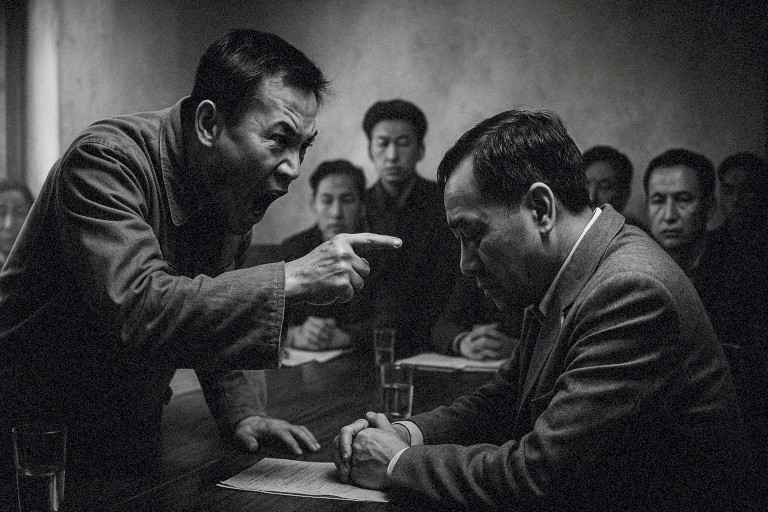
On February 6, Lu Zuofu was summoned to a study group meeting for Minsheng’s management. For the first time in his life, he stood before his peers and publicly criticized himself, breaking down in tears.
Two days later, the pressure escalated when he was required to attend a company-wide “confession and reporting” meeting. These gatherings were often highly charged, with loud denunciations and demands for confession. At this meeting, the government-appointed representative Zhang Xianglin took the floor and “confessed” that Lu Zuofu had treated him to meals and entertainment on a business trip to Beijing — implying that such hospitality was an attempt to corrupt him with “sugar-coated bullets,” a Party term for bourgeois temptation.
Even Lu Zuofu’s personal correspondent, who had once lived in his home and benefited from his generosity, cooperated by denouncing him for paying for everyday expenses like meals and haircuts — acts that had come from Lu Zuofu’s own salary. These gestures of goodwill were twisted into proof of corruption, turning kindness into a crime and leaving him publicly shamed and powerless to defend himself.
For a man who had dedicated his life to building up China’s industry and had always acted with integrity, these public humiliations were unbearable. The campaign made him feel branded as a criminal, stripped of dignity, and with no hope of clearing his name. That night, crushed by despair and seeing no way out, Lu Zuofu swallowed sleeping pills and ended his life.
After Lu Zuofu’s death, almost all of the deputy managers and key ship captains of Minsheng were imprisoned for “investigation,” with two of them executed.
The meaning behind Lu Zuofu’s will
In his final hours, Lu Zuofu seemed to understand with painful clarity what the CCP truly wanted: not just Minsheng’s assets, but total submission — and they would not hesitate to punish his loved ones if he left them anything that could be called “private wealth.” To shield his wife and children from future persecution, he wrote a will designed to remove every possible pretext for the regime to accuse them.
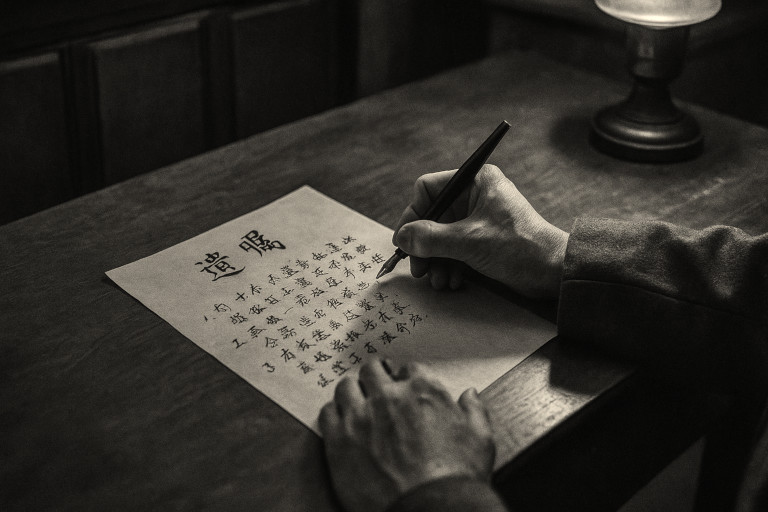
In it, he instructed that the furniture borrowed from Minsheng Company be returned, that Minsheng’s stock be handed over to the government, that his wife depend on their children for her future support rather than the state, and that his official badge from the Southwest Military and Political Committee be returned.
This was not merely practical housekeeping. It was Lu Zuofu’s final act of protection — a desperate attempt to keep his family safe even as he prepared to end his own life.
The mystery of the 100 billion-yuan loan
After Lu Zuofu’s death, a strange story circulated that the CCP had approved a massive loan of 100 billion yuan (in old currency, roughly 10 million yuan today, or US$1.4 million) to rescue Minsheng Company — but the telegram conveying this decision was never shown to Lu Zuofu.
No archival record of such a loan has ever been found, and given the CCP’s pattern of only approving small, short-term loans under harsh conditions, such a generous offer seems improbable.
Six months later, after Minsheng was formally nationalized under a public-private partnership, the company finally received a 10 million-yuan loan and was held up as a model enterprise praised by Mao Zedong — but by then, Lu Zuofu was gone.
See Part 1 here
Translated by Joseph Wu
Follow us on X, Facebook, or Pinterest
