

Japanese fatherhood is undergoing one of the most dramatic cultural shifts in the country’s modern history. As more men increasingly take up caregiving roles once reserved for mothers, they are confronting rising pressure, workplace resistance, and unexpected mental-health challenges. As Japanese males step deeper into child-rearing, hospitals and clinics are quietly reporting something unexpected: rising burnout, hidden postpartum depression in men, and a whole generation struggling to reconcile new responsibilities with old expectations.
This article examines the forces reshaping Japan’s fathers, the pressures building within homes and workplaces, and why the country’s most dedicated men are becoming some of its most vulnerable. The big question we need to ask to get to the root of this new social and mental state in Japan is: what if a lack of desire for children doesn’t cause Japan’s demographic crisis, but a system that breaks the very men trying hardest to hold it together? We’ll examine this hypothesis through cultural history, social data, and real stories of fathers navigating a change Japan has never fully admitted it needed.
How Japanese fatherhood is being reshaped by cultural and economic pressure
The foundations of the pressures facing today’s Japanese fathers are stable yet shifting — and they emerge from a collision of culture, economy, policy, and expectations.
The salaryman legacy and the ghost of endless work
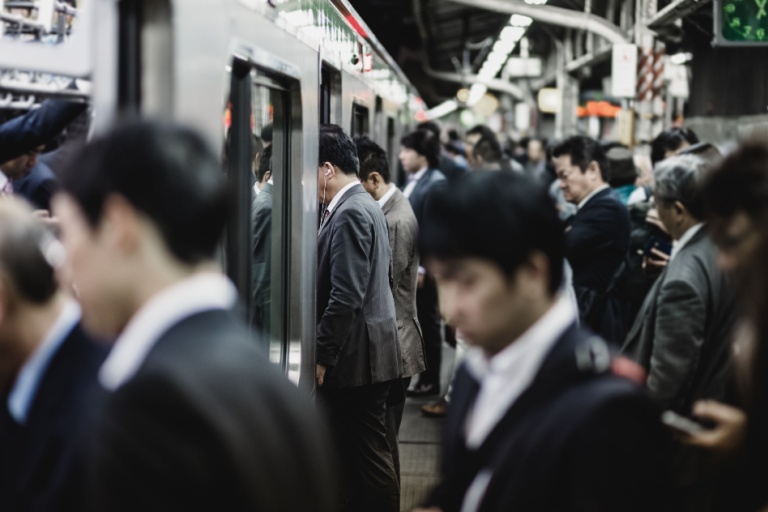
In postwar Japan, the image of the father was virtually synonymous with the “salaryman” — long hours, company loyalty, and a minimal domestic presence. That model carved out a social script: fathers prove themselves through work, while childcare is left to mothers. Today, men who attempt to participate more in home life still have one foot anchored in that earlier model of total devotion to work.
The ‘good mother’ ideology that locked men out of caregiving
Parallel to the salaryman norm was the deeply rooted belief: “Women raise children; men earn money.” This paired domestic and workplace gender division meant men had few caregiving skills, little cultural permission to display emotional vulnerability, and minimal practice handling daily childcare responsibilities.
A collapsing birth rate that turned parenting into a national issue
Japan’s fertility rate remains among the lowest in the world. According to demographic reports, Japan’s total fertility rate is well below the 2.1 replacement level. In response, the government and society began treating family formation and parenting as a demographic imperative — and fathers were suddenly drawn into a conversation they had been largely excluded from before.
Legal reforms that moved faster than workplace culture
The Organisation for Economic Co‑operation and Development (OECD) notes that Japan offers very extensive paid father-specific entitlements. Yet in practice, corporate norms, peer pressure, and workplace expectations lag behind policy. One study found that only about 2 percent of Japanese fathers took paternity leave despite legal rights. Thus, the expectation to participate more didn’t align with the support within everyday work culture.
The economic squeeze is forcing dual-income households
Younger Japanese families face wage stagnation, uncertain jobs, and rising living costs. Many households require both partners to work. Fathers simultaneously face the legacy expectation to provide and the growing expectation to care, creating what some describe as “double burden.”
Recognition of male postpartum depression and father mental health
Historically, postpartum depression (PPD) was treated as a mother’s issue. But recent Japanese studies show that at about 4 months postpartum, around 13.6 percent of Japanese fathers show significant depressive symptoms. That burden sits alongside sleeplessness, economic anxiety, relationship strain — all part of the new father’s daily reality.
The shift toward shared parenting with no structural support
Japan is seeing more dual-income families, more fathers wanting to be present, and more mothers expecting co-parenting. Yet the workplaces, welfare systems, and cultural scripts haven’t fully adapted. That mismatch is a key part of the strain. Each of these forces alone could cause friction. Together, they create a pressure cooker environment for modern Japanese fathers. But how and where is this pressure leaking into society? The following section shows the visible change points.
Where the new pressure is triggering visible change
As these forces play out, the effects are showing up in several concrete domains — from masculinity and corporate culture to marriage dynamics and mental-health systems.
Masculinity under renegotiation
Modern Japanese men find themselves caught between being strong breadwinners and present fathers. The cultural script telling men “You must be strong; you can’t show weakness” still lingers. Many fathers feel enormous internal pressure to succeed in both spheres. When one side falters, they think they’ve failed both socially and personally. This internal conflict fuels stress, quiet shame, and ultimately mental-health vulnerability.
Corporate culture fractures
Some Japanese companies still penalize men who take leave or reduce hours, implicitly or explicitly. For example, one supervisor told a male employee: “If you leave work for things like that [childcare], I can’t give you more responsibilities.” Such a message undermines the possibility of genuine work-family balance and forces some fathers to switch jobs — not because they don’t want to work, but because the work system demands that they choose between career and family. This indicates the workplace’s resistance to changing norms of fatherhood.
Marriages shifting
With more fathers wanting to play a meaningful role, and more mothers expecting partnership rather than solo caregiving, the domestic dynamic is shifting. But shifting expectations creates tension: when one partner still lives in yesterday’s model, and the other tries to live in today’s, friction arises. Marriages become sites of renegotiation — sometimes smoothly, often with strain and unmet expectations.
Mental health surfacing
Clinics in Japan dedicated to postpartum support are now seeing male fathers as well as mothers. The fact that these services are emerging signals that fathers’ mental-health issues are no longer invisible. It also signals a cultural opening: What was once quietly ignored is now entering public awareness.
A new social script is forming
Young fathers today are redefining what fatherhood means in Japan. They want to do daycare pickup, doctor visits, and household chores — not just on weekends. Their generation is less willing to accept the old ‘father absent at home’ norm. In turn, their children, partners, and workplaces are catching up — slowly, but catching up. Yet the script is not yet entirely written. This visible change is promising — but it also raises the next central question: What comes next? What are the longer-term benefits if this transition succeeds — and what additional hardships might still lie ahead?
The future — hardships and hope in Japan’s fatherhood revolution
Japan’s new fatherhood landscape is full of possibilities… but also danger. Without proper support, the transition could strain both families and businesses. With care and reform, it could deliver a healthier, more equitable future.
Potential hardships
- Burnout remains a serious risk. Men taking on dual expectations — heavy work + greater home involvement — without workplace reform and societal support may collapse under the weight.
- Resistance from older generations and management entrenched in old norms. Progress may stall or backslide.
- Mental-health fallout. If fathers don’t receive mental-health support tuned to their unique stressors, higher rates of depression, absenteeism, or relationship breakdown may follow. The velocity of cultural change could leave behind those who cannot adapt quickly.
- Marriage and family strain. If partners expect equality, but one side cannot deliver (due to work or health), this can lead to resentment, breakdown, or a decline in family formation — ironically undermining the demographic goals the reforms were intended to serve.
Potential benefits
- More balanced households. When fathers truly contribute, both partners can withstand the pressures of work and parenting more equitably.
- There is a higher likelihood that couples will have children. If the parenting burden becomes shared, parenthood becomes a less daunting prospect. Some analysts suggest this may help support Japan’s fertility recovery.
- Improved mental health for both parents. Emotional presence and shared support can reduce strain on mothers and fathers alike.
- Modernising companies. As younger fathers demand change, companies may evolve work styles, introduce greater flexibility, adopt digital tools, and foster more humane cultures — benefiting families and businesses.
- A gentler, more sustainable model of masculinity. Younger men may grow up with a father model who works but also cares, who balances life rather than sacrifices it — and thus a generational shift in expectations may emerge.
In many ways, this is Japan at a cultural inflection point. The fatherhood model is changing, not only because of policy, but also because men, women, institutions, and families are all moving — often with discomfort, sometimes with resistance, but inevitably with momentum.

Conclusion: Returning to the hypothesis
Recall our opening question: Is Japan’s demographic crisis less about declining desire for children — and more about a system that overwhelms the men trying hardest to embrace change? Our investigation suggests: yes, absolutely — to a large extent. Japan’s fathers are not failing — they are evolving faster than the society around them. Their struggle is not merely personal; it is cultural, economic, and institutional. They are front-line agents of change.
What the evidence shows:
- Fathers in Japan increasingly want to be involved, and policy is nudging them to take that role (for example, paternity leave uptake jumped from 17.1 percent in 2022 to 30.1 percent in 2023).
- Fathers show rates of depression, strain, and conflict when their role changes, but their environment does not (Japanese study: 13.6 percent of fathers at four months postpartum had depressive symptoms).
- The workplace, despite policy, still demands long hours and limited flexibility and subtly discourages fathers from fully engaging at home, leaving the transformation incomplete.
If Japan wants families to thrive — and its demographic future to stabilize — it must support the fathers who are finally stepping into the light. Because when fathers are healthy, present, and supported, the whole household benefits. When they are broken, the risk echoes far beyond individual families. In other words: a more equitable future is not guaranteed — but the quiet revolution of these men may be one of Japan’s most hopeful starting points.
Follow us on X, Facebook, or Pinterest
