
In Part 3, we explored the mothers of Ouyang Xiu, Xu Shu, the Yang family lineage, and a stepmother whose compassion transcended blood ties — each revealing a different expression of maternal influence in Chinese history. In this final part of the series, we turn to two remarkable figures: the mother of Huineng, the Sixth Patriarch of Zen Buddhism, and the extraordinary story of the daughter of the Mengyang family. Though their circumstances were vastly different, both accounts highlight how a mother’s guidance can shape not only individual lives but also the deeper moral and spiritual traditions that follow.
The mother of Huineng: A humble plum blossom whose virtue moved heaven and earth
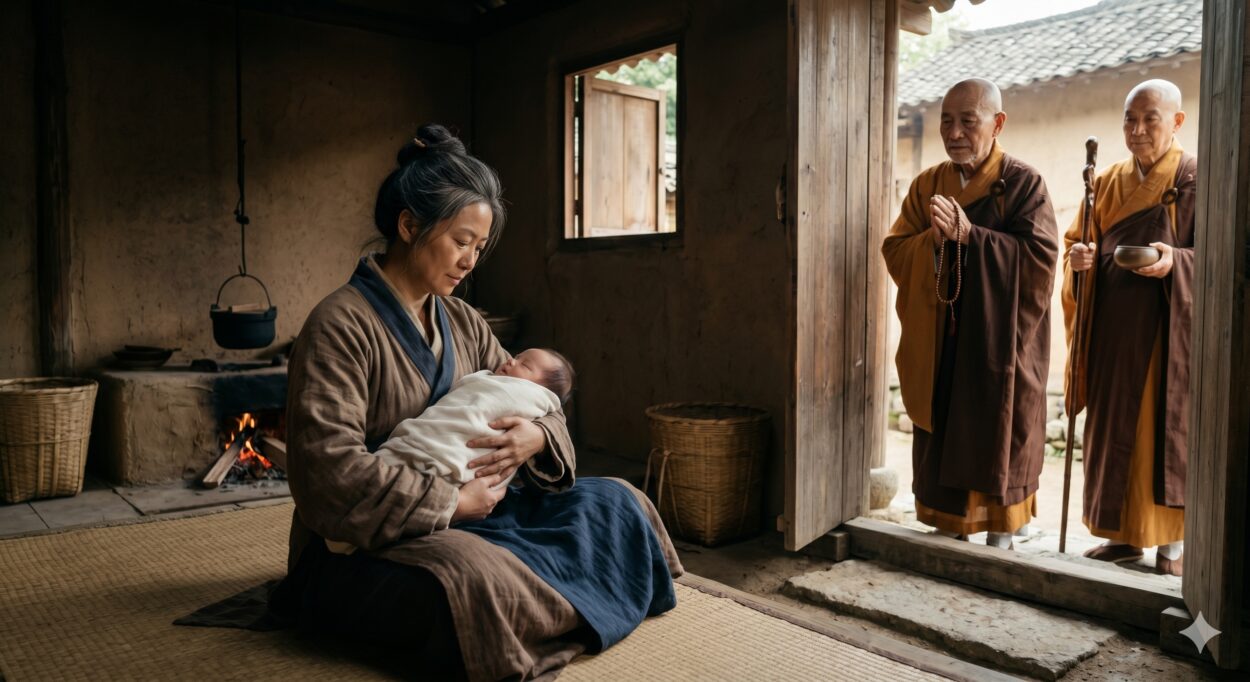
According to tradition, Li Meiying, the mother of Huineng — the Sixth Patriarch of Chan (Zen) Buddhism — did not give birth to her son until she was forty years old. It is said that on the morning after Huineng’s birth, two elderly monks unexpectedly arrived at her home. They looked upon the child and said, “This child should be called Huineng. ‘Hui’ means wisdom that benefits and enlightens living beings. ‘Neng’ means the ability to accomplish the work of the Buddha.” This account is recorded in the Platform Sutra, one of the foundational texts of Zen Buddhism.
Li Meiying often brought the young Huineng to temples to pay respects to the Buddha. She taught him sincerity in faith, compassion toward others, and steadiness in all circumstances. When Huineng was only three years old, his father passed away. According to legend, his mother’s grief was so profound that her hair turned white overnight. From that moment onward, mother and son depended entirely upon one another.
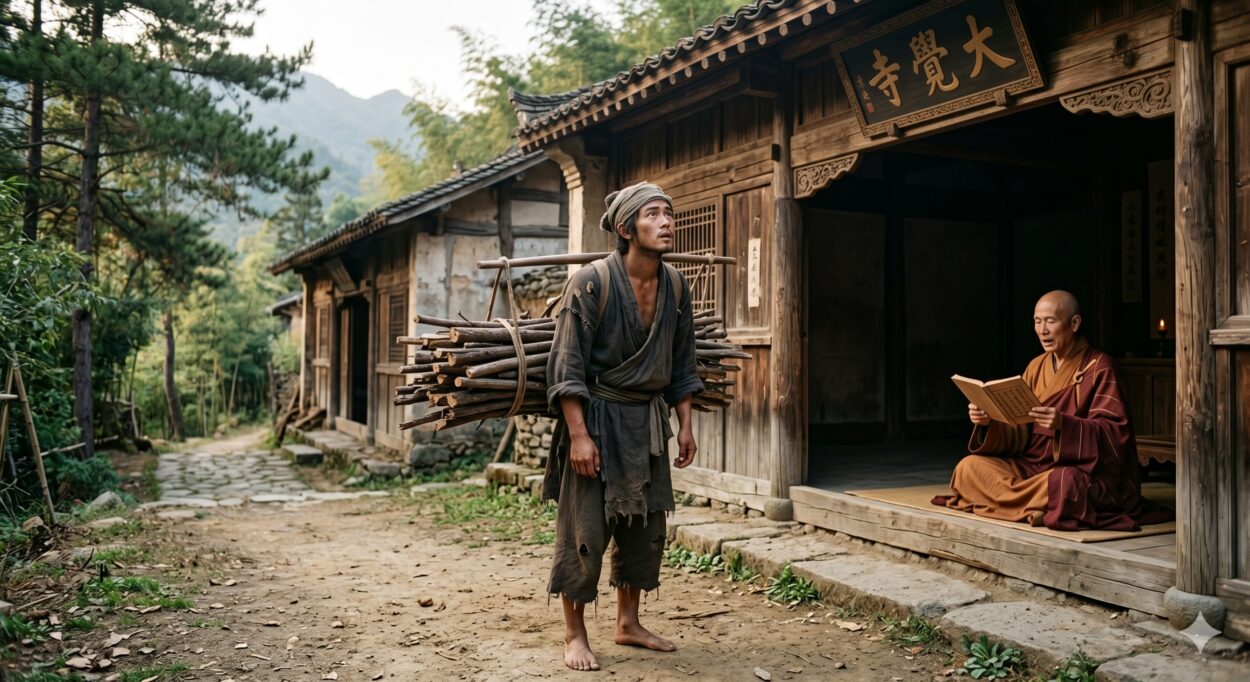
By the age of ten, Huineng was already gathering firewood in the mountains to support the household and care for his mother. The hardships of his childhood cultivated resilience, humility, and unwavering endurance in him. Although Huineng never received a formal education and remained illiterate throughout his life, his destiny would change through a single encounter while selling firewood.
One day, as Huineng passed by a temple, he heard a monk reciting the Diamond Sutra. The words stirred something deep within him, awakening a profound spiritual insight. Inspired by this experience, he resolved to travel to Huangmei in Guangdong Province to seek instruction from the Fifth Patriarch, Hongren.
The family was extremely poor and could scarcely afford the journey. Nevertheless, his mother supported his decision wholeheartedly. Some relatives objected, believing it unwise to let him leave home. Yet Huineng’s determination remained firm. According to legend, he knelt in the village square and refused to rise. On the seventh day, thunderclouds gathered overhead, and a powerful bolt of lightning split a large stone in two.
To those who witnessed it, the event appeared as a sign that Heaven itself had acknowledged his sincerity. At last, his relatives relented, and he was allowed to pursue his spiritual calling. Upon arriving at the monastery, Huineng began at the most humble level, working in the kitchen and performing manual labor.
The Fifth Patriarch soon recognized Huineng’s extraordinary spiritual insight and secretly transmitted to him the teachings and symbols of succession. Huineng later became the founder of the Southern School of Zen Buddhism and spent thirty-seven years teaching at Baolin Temple. His disciples compiled his teachings into the Platform Sutra, the only major Buddhist scripture originally composed in China rather than translated from India. His influence on Chinese spirituality has endured for more than a millennium.
After his mother’s passing, Huineng laid her to rest on Dragon Mountain. According to tradition, people witnessed two swallows flying side by side above the mountain peak, heading westward toward the Pure Lands. Whether understood literally or symbolically, the image beautifully reflects a mother’s enduring love and spiritual bond with her child. Without the selfless devotion of Li Meiying, the humble woodcutter of Lingnan might never have become one of the most influential spiritual teachers in Chinese history.
Daughter of the Mengyang family: Great love beyond blood ties
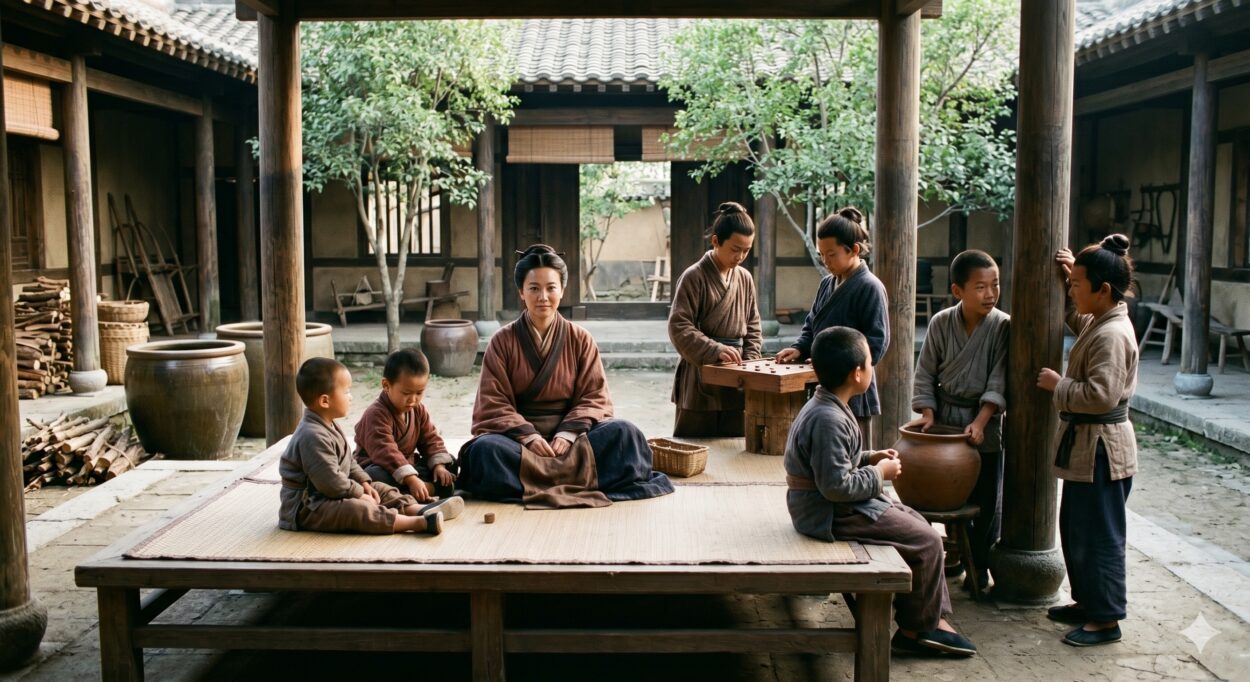
The final story comes from the Biographies of Exemplary Women. It tells of an extraordinary stepmother whose compassion transcended family boundaries. During the Zhou Dynasty, in the State of Wei, there lived a woman known as the daughter of the Mengyang family. She became the second wife of Mang Mao. She eventually bore three sons of her own, while her husband’s first wife had left behind four sons.
The stepchildren viewed her with suspicion and resentment, often treating her disrespectfully and speaking to her harshly. Yet she loved them as though they were her own children. She even advised her biological sons not to quarrel with their older half-brothers.
One day, the third son of the first wife violated the laws of the State of Wei and was sentenced to death. The stepmother was devastated. She rushed tirelessly from place to place, pleading for mercy and seeking every possible means to save him. Many people were puzzled. Why would she exert such effort for a stepson who had never shown her affection? Her answer revealed the depth of her character.
She said, “Their father feared that his children would be left motherless, so he married me to care for them. A stepmother is also a mother. If I do not love and protect these children, how can I be called compassionate? If I care only for my own sons while neglecting the children of the first wife, how can I be called righteous? Without compassion and righteousness, how could I face the world with a clear conscience?” She continued, “Although they may not love me, I am still their mother. How could I abandon my duty and forget what is right?”
Her words eventually reached the ears of King Anxi of Wei. The king was deeply moved. Known for valuing moral cultivation and traditional virtues, he remarked: “If a stepmother can understand righteousness so well, what reason do we have not to show mercy to her son?” He immediately pardoned the young man and allowed him to return home. The transformation that followed was remarkable.
The sons of the first wife were profoundly moved by her selfless devotion. They began to call her “the mother who gave us life a second time.” From that day forward, they treated her with genuine love and respect. Harmony returned to the household, and all children grew into capable and honorable individuals.
Throughout history and across cultures, stepmothers have often been portrayed unfairly as figures of jealousy, favoritism, or cruelty. Lady Mengyang shattered that stereotype. Her generosity of spirit rose above blood ties. She demonstrated that true motherhood is not defined solely by biology, but by love, responsibility, and moral character.
In showing compassion where resentment might have been expected, she transformed hearts and softened long-held prejudices. Her example remains a powerful reminder that genuine kindness can transcend even the deepest divisions. For this reason, she is remembered as one of the most exemplary mothers in Chinese tradition.
Conclusion
A mother’s love is one of humanity’s most enduring sources of strength. It is as deep as the sea, as radiant as sunlight, and as nourishing as gentle rain. Through a mother’s selfless devotion and thoughtful guidance, life is sustained, character is shaped, and virtue is passed from one generation to the next.
The stories of these exemplary mothers remind us that while empires rise and fall, and fame eventually fades, the influence of a virtuous and devoted mother continues to echo across the centuries. Their children became sages, generals, poets, statesmen, and spiritual teachers — but behind each one stood a mother whose quiet wisdom helped illuminate the path forward. And perhaps this is one of history’s most enduring lessons: the greatest lives are often nurtured by unseen hands and loving hearts.
See Part 1 here
See Part 2 here
See Part 3 here
Translated by Katy Liu and edited by Tatiana Denning
Follow us on X, Facebook, or Pinterest
