

A heavy pomelo sits at the center of a Mid-Autumn table, its thick rind giving way under a careful knife to reveal pale, perfumed segments. In another season, a small bowl of fresh cherries arrives at a Beijing breakfast in early summer, deep red and impossibly sweet. For generations, both fruits have moved through Chinese kitchens not just as treats, but as quiet medicine.
Many newly diagnosed diabetics hear a single word about fruit: no. Whole-food sweetness gets swept aside with the sugar bowl, and one of life’s small pleasures begins to feel forbidden. Yet traditional Chinese medicine (TCM) and modern research are beginning to agree on a gentler truth. Some fruits, in the right amount and at the right time, may help rather than hurt. Two of the clearest examples are pomelo (柚子, you zi) and cherries.
This article looks at what 2,000 years of Chinese food therapy and current studies say about these two fruits for diabetics, how to enjoy them safely, and why they make a quietly complementary pair on a diabetic’s plate.
A 2,000-year conversation about diabetes
Long before insulin and continuous glucose monitors, Chinese physicians described what we now call diabetes as Xiao-ke (消渴), the “wasting and thirsting” syndrome. Classical texts noted the constant thirst, frequent urination, and slow weight loss that today belong to a type 2 diabetes diagnosis. Treatment was holistic from the start: herbs, acupuncture, daily movement, and food.
Food was rarely an afterthought. In TCM, every ingredient carries a thermal nature (cool, neutral, or warm) and a flavor that targets specific organ systems. A diabetic-friendly diet was less a list of bans than a search for balance: cool foods to clear heat, gentle bitters to dry damp, and fruits chosen for their effect on the spleen and stomach.
Modern medicine reframed Xiao-ke through bloodwork and HbA1c, but the underlying intuition has held up surprisingly well. Research published in evidence-based medical journals now treats Chinese herbal and dietary approaches as a serious complement to standard care for type 2 diabetes. Pomelo and cherries sit comfortably at this intersection of old and new.
Pomelo (柚子, you zi): A cooling citrus with insulin-friendly compounds
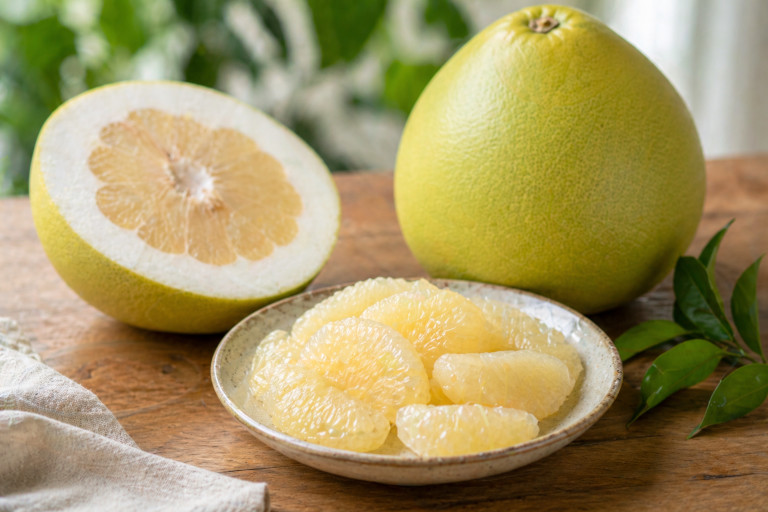
Pomelo is the gentle giant of the citrus family. Sweeter and less sharp than grapefruit, with thick rind and pale segments, it has been part of Chinese feast tables for centuries, especially around the Mid-Autumn Festival.
Pomelo in traditional Chinese medicine
In the TCM materia medica, pomelo is described as cool in nature and sweet-and-sour in flavor. It enters the lung, spleen, and stomach channels. Traditional uses include transforming phlegm, stopping coughs, easing stagnant qi in the chest, and resolving alcohol toxins after a heavy meal. For a person with Xiao-ke, this matters: pomelo’s cooling, gently drying effect aligns with the TCM goal of clearing internal heat and supporting an overworked spleen.
Chinese mothers have long peeled pomelo for family members who feel sluggish or “too heated,” not because they were treating diabetes specifically, but because the fruit suits a recovering body well.
What modern research shows
Current studies tell a careful, encouraging story.
- Glycemic load is the key number. A 2017 study of pomelo in patients with type 2 diabetes found a glycemic index of 72-78. That sounds high, but glycemic index alone is misleading. The glycemic load, a more useful figure that accounts for serving size, was only about 4.23 for a 100-gram portion. The same study reported that pomelo did not cause significant glucose fluctuations in hospitalized type 2 diabetes patients (PubMed 29058284).
- Insulin-friendly compounds. Pomelo contains naringenin and other flavonoids that show mild inhibition of α-amylase and α-glucosidase, the enzymes that break starch into sugar. Slowing these enzymes can soften post-meal blood sugar spikes.
- Anti-glycation activity. A 2016 study found pomelo extract may help protect proteins from fructose-mediated glycation, an oxidative process that contributes to diabetic complications and aging.
- Vitamin C and fiber. A single cup of pomelo segments delivers about 1.9 grams of fiber and a generous dose of vitamin C, with only 71 calories.
How to eat pomelo if you have diabetes
A few practical notes:
- Choose fresh segments, not bottled juice. Juice strips out fiber and concentrates sugar.
- Stick to about 150 grams (roughly one cup of segments) per serving.
- Pair with protein, such as a small handful of walnuts or a spoonful of plain Greek yogurt, to further flatten the blood sugar curve.
- Talk to your doctor first if you take statins, certain blood pressure medications, or metformin. Pomelo, like grapefruit, can interact with how the liver metabolizes some drugs. This is a real caution, not a deal-breaker, and a five-minute conversation with a pharmacist usually clears it up.
Cherries: A warming fruit that tonifies qi and blood
Where pomelo is autumn and winter, cherries belong to late spring. In Chinese orchards, the harvest is brief and treasured, and the fruit’s deep red color was never lost on classical physicians.
Cherries in traditional Chinese medicine
In TCM, cherries are warming in nature and sweet in flavor. They are considered to tonify both qi (vital energy) and blood, invigorate the heart, and improve circulation. The traditional reading runs through the doctrine of signatures: a deep red fruit suggests a remedy for blood, and centuries of clinical use seemed to confirm the idea.
For someone with Xiao-ke, gentle warming foods can be useful when fatigue and poor circulation begin to set in, especially in older adults. Cherries are a small, nourishing way to support that picture without overloading the system with sugar.

What modern research shows
The science of the last two decades has been kind to cherries.
- Low glycemic index. Cherries sit at roughly 22 on the glycemic index scale, well into the “low” range, with a low glycemic load to match.
- Anthocyanins and insulin. Cherries are rich in anthocyanins, the deep-red pigments that also color blueberries and blackberries. Early laboratory studies reported that anthocyanins from tart cherries boosted insulin production by 50% in pancreatic cells.
- Human evidence is building. A 2024 review in Nutrients concluded that anthocyanin intake has a regulatory effect on fasting blood glucose, glycated hemoglobin, and other diabetes-related markers, with higher doses showing more favorable effects.
- Anti-inflammatory bonus. Cherries also contain quercetin, melatonin, and vitamin C, each of which helps reduce inflammation, a quiet driver of insulin resistance.
How to eat cherries if you have diabetes
Cherries are easy to enjoy with a few simple guidelines:
- About 12 to 15 fresh cherries per serving is a sensible portion.
- Choose fresh or unsweetened frozen fruit. Skip maraschino cherries and canned cherries packed in syrup.
- Tart varieties, such as Montmorency, contain less sugar than sweet Bing cherries and have the strongest anthocyanin research behind them.
- As with pomelo, pair with a small protein source to keep blood sugar steady.
Why pomelo and cherries make a complementary pair
This is where the Chinese medicine lens becomes most useful. Pomelo and cherries seldom appear in the same Western “best fruits for diabetes” list, but a TCM-trained eye sees them as natural partners.
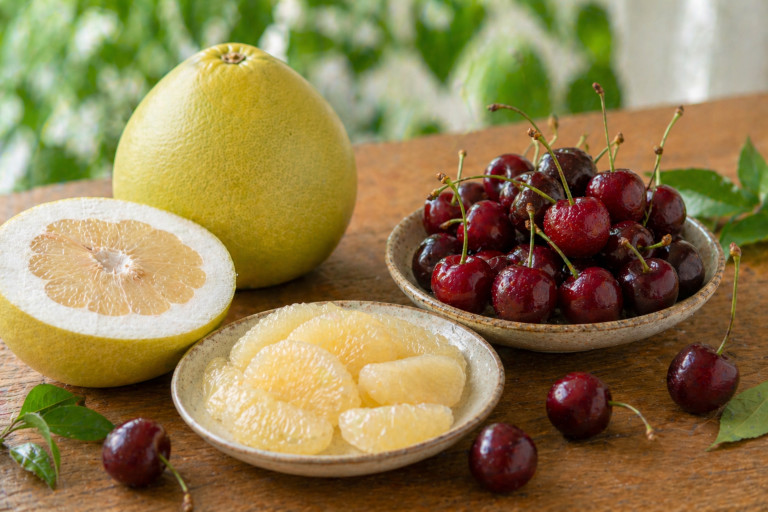
Pomelo cools. Cherries warm. Pomelo clears heat and helps the spleen recover from rich, heavy eating. Cherries gently tonify qi and blood, supporting circulation and energy in winter-weakened bodies.
A simple seasonal rotation might look like this:
- Late autumn through winter. When pomelos appear in markets, enjoy a portion of fresh segments two or three times a week alongside protein.
- Late spring and early summer. When cherries arrive, swap in small bowls of fresh fruit, again paired with a steady source of protein or fat.
This is the kind of no-cost wellness habit rooted in Chinese tradition that costs nothing extra and asks only for a little attention to the seasons. It is also fully compatible with whatever modern diabetes plan a doctor has prescribed.
For readers exploring related Chinese food wisdom, the health benefits of goji berries offer another time-tested ally, and Nspirement’s broader coverage of traditional Chinese health practices gathers more practical food-as-medicine pieces in one place.
Practical guidelines for eating fruit with diabetes
Whatever fruit you choose, a few principles hold across the board:
- Choose whole fruit over juice. Juice removes fiber and concentrates sugar, and is one of the fastest ways to spike blood glucose.
- Watch glycemic load, not just glycemic index. A high-GI fruit eaten in a small portion may be gentler on blood sugar than a moderate-GI fruit in a large one.
- Pair fruit with protein, fat, or fiber. A few nuts, a spoon of yogurt, or a slice of cheese slows digestion and softens the curve.
- Stick to one or two servings of low-GL fruit a day. Spread them across meals rather than stacking them.
- Test your own response. If you use a glucose meter or continuous monitor, check your reading at the 1- and 2-hour mark after a new fruit. Bodies vary, and your data is the most honest answer.
These habits dovetail with broader after-meal habits that affect blood sugar, where small choices add up to steadier readings over time.
A note on safety: nothing in this article replaces medical care. If you take insulin, sulfonylureas, metformin, statins, or blood pressure medication, talk with your doctor or pharmacist before changing your fruit habits, especially with citrus relatives like pomelo. The American Diabetes Association and Harvard Health both offer reliable starting points for personalized guidance.
Frequently asked questions
Are pomelos and cherries good for diabetics?
Yes, both can fit a diabetic-friendly diet when eaten in moderation. Pomelo has a low glycemic load of about 4.23 per 100 grams and contains compounds that mildly slow starch digestion. Cherries have a low glycemic index of around 22 and are rich in anthocyanins, which research links to healthier blood sugar regulation.
How many cherries can a diabetic eat per day?
Most guidance points to 12 to 15 fresh cherries per serving, eaten as part of a balanced meal. That portion delivers anthocyanins and vitamin C without overloading carbohydrate intake. Fresh or unsweetened frozen cherries are best.
Is pomelo safe for type 2 diabetes?
For most people with type 2 diabetes, fresh pomelo segments in modest portions are safe and may even support stable blood sugar. The exception is anyone taking medications that interact with citrus, including some statins and certain blood pressure drugs. Check with your doctor before adding pomelo regularly.
Are tart cherries better than sweet cherries for blood sugar?
Tart cherries, such as Montmorency, typically contain less sugar and higher anthocyanin levels than sweet bing cherries, and they have stronger research support for inflammation and insulin sensitivity. Both can fit a diabetic-friendly diet, but tart cherries have the edge if you can find them.
What does Chinese medicine say about diabetes?
Chinese medicine has described diabetes for over 2,000 years as Xiao-ke (消渴), or “wasting and thirsting” syndrome. Treatment combines herbs, acupuncture, exercise, and food therapy. Cool, fiber-rich fruits like pomelo and warming, blood-tonifying fruits like cherries are common dietary recommendations.
A final thought
A diabetes diagnosis often arrives with a list of losses. Bread is suspect, dessert feels treacherous, and fruit gets mixed into the same forbidden pile. Yet the deeper tradition, both Chinese and modern, is more forgiving than that.
Pomelo cools and clears. Cherries warm and nourish. Eaten in modest portions, paired thoughtfully with the rest of a meal, both fruits offer real nutritional support and a small but meaningful pleasure. They are reminders that the body is not a problem to be controlled, but a system to be cared for, season by season.
A diabetic’s plate does not have to be a place of subtraction. With the right fruit at the right time, sweetness still has a quiet seat at the table.
Translated by Audrey Wang.
Follow us on X, Facebook, or Pinterest
