
The riddles and wisdom of a child
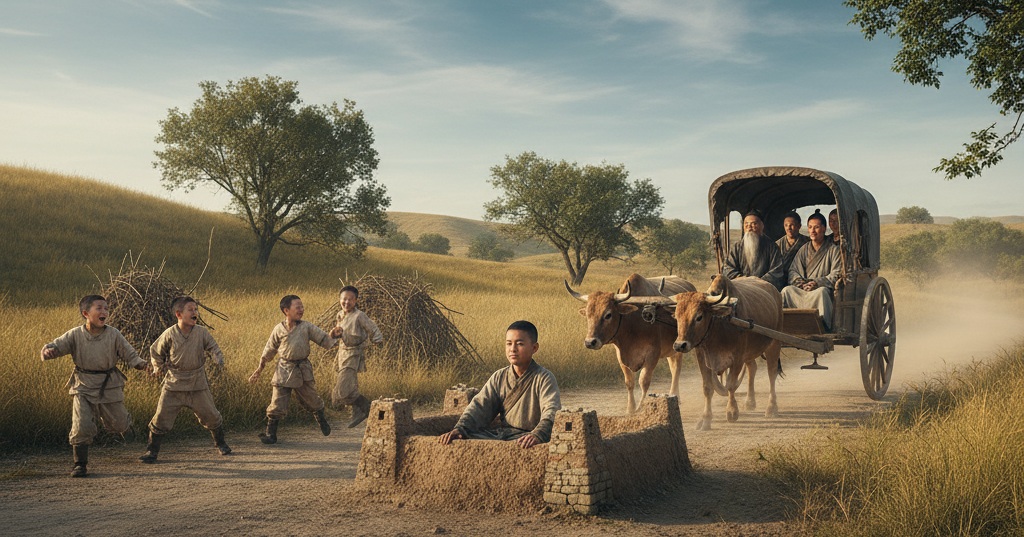
During the Spring and Autumn period, Confucius traveled with his disciples in a carriage along a country road. Nearby, children played, laughing as they built tiny castles and walls from earth and stones. As the carriage approached, all the children scattered, except one boy — Xiang Tuo — who remained calmly seated within his little earthen fortress, seemingly undisturbed by the approaching vehicle.
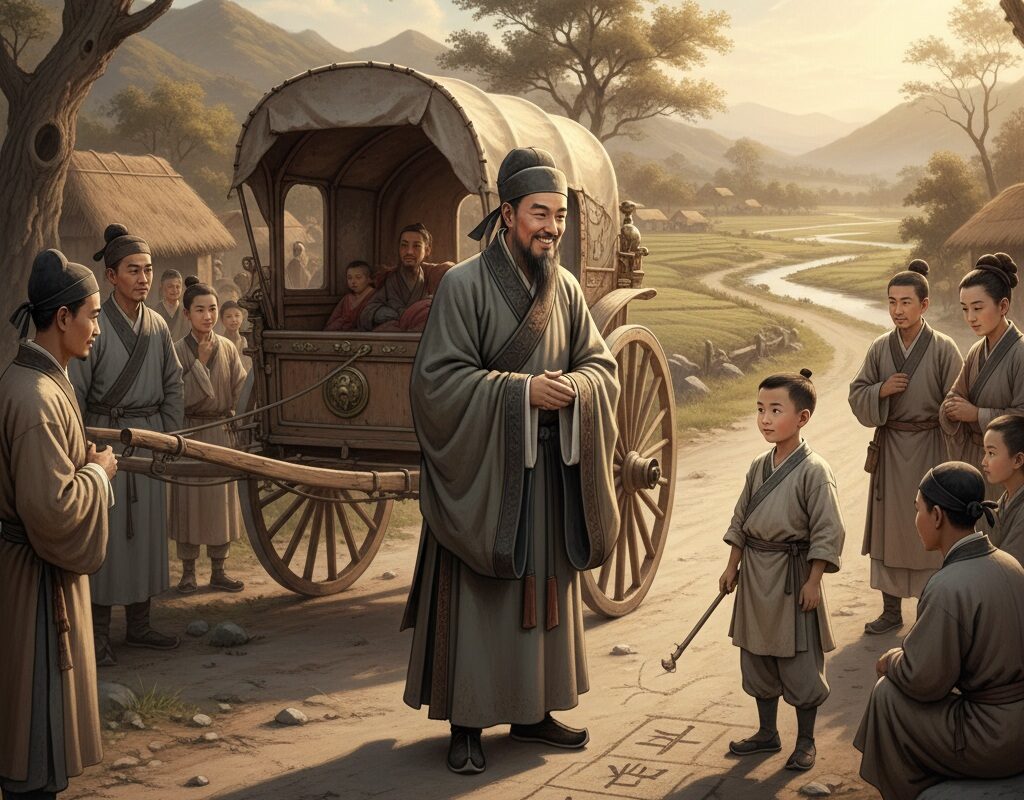
Curious, Confucius halted the carriage and stepped down. He asked gently: “Why do you not move aside for the carriage?” The boy looked up serenely and replied: “I have always heard that a carriage gives way to a city wall. Never have I heard that one must tear down the city wall to let the carriage pass.” Intrigued, Confucius decided to test the boy’s wisdom with a series of riddles: “What hill bears no rocks? What waters contain no fish? What carriage has no wheels? What ox never calves? What horse never foals? What fire produces no smoke? What man has no wife? What woman has no husband? What days are too short? What days are too long? What tree bears no branches? What city has no officials?”
Without hesitation, Xiang Tuo answered, his voice calm and confident: “A mound of earth bears no rocks. The water in a well holds no fish. A sedan chair carried on men’s shoulders has no wheels. A clay ox never calves. A wooden horse never foals. The fire of a firefly makes no smoke. An immortal has no wife. A celestial maiden has no husband. The winter days are too short. The summer days are too long. A withered tree bears no branches. An empty city has no officials.”
Confucius smiled, impressed by the boy’s clarity and creativity. In each answer, Xiang Tuo revealed a mind able to think beyond the obvious — to see the hidden wisdom beneath appearances, and the poetic truth behind every riddle.
Hua Tuo heals without medicine
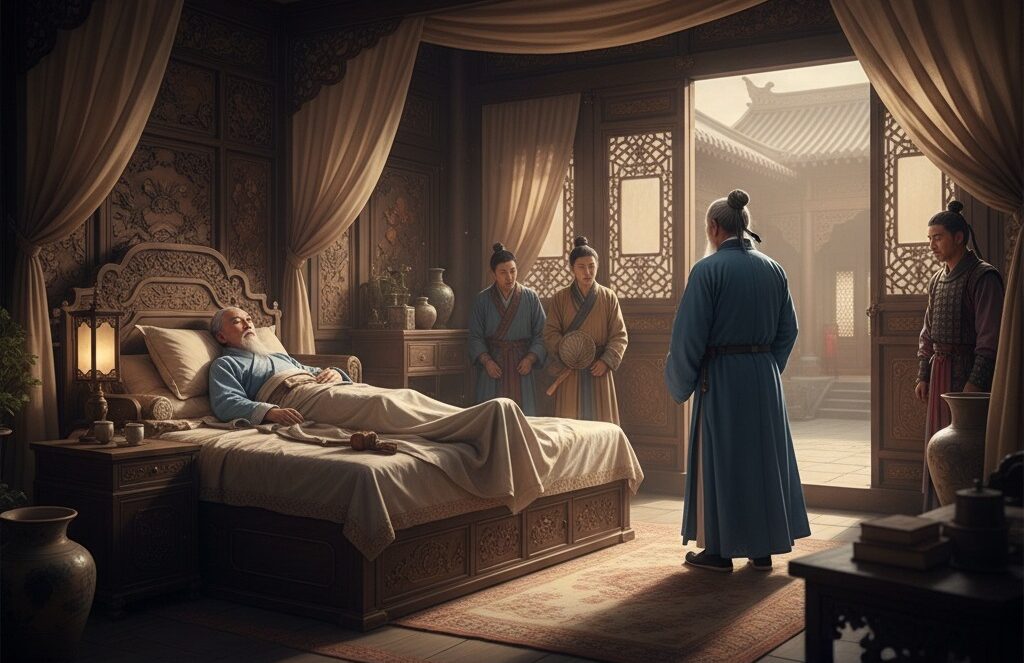
At the end of the Eastern Han Dynasty, a governor fell gravely ill. He could eat nothing, his body weakened, and he summoned the famed physician Hua Tuo to treat him. Hua Tuo arrived, took the governor’s pulse, and then did something unexpected: Using his wisdom, he wrote no prescription, gave no acupuncture, and quietly departed. The governor, unsure of the doctor’s intentions, sent lavish gifts and held banquets to honor Hua Tuo. The physician accepted the offerings without protest — but still prescribed no medicine.
Ten days passed. The governor’s condition worsened, and in desperation, he sent his son to plead for the doctor’s help. But Hua Tuo was gone, leaving only a sharply worded letter: “Shameless governor! You live in vain upon this earth!” Enraged, the governor bellowed: “Seize him! Execute him at once!”
Soldiers scattered to find Hua Tuo, searching for hours, but returned empty-handed. The governor’s fury grew, his breath short, chest heaving in anger. Then, suddenly, he coughed violently and expelled a large mass of dark, clotted blood. Instantly, his body felt lighter, his spirit unburdened.
The next day, Hua Tuo returned the gifts and said calmly: “Your illness has been cured.” No herbs, no needles — only wisdom. Hua Tuo understood that the governor’s sickness was rooted not in physical imbalance, but in stagnation within his body and spirit. Only a surge of righteous anger could force the release of what had long festered. Healing, in this case, came not from medicine, but from using his wisdom to awaken the body’s natural processes.
Lessons across time
Both Xiang Tuo and Hua Tuo reveal that true wisdom often lies beyond what is immediately visible. One demonstrates that a keen mind can see the hidden logic in riddles and the poetry beneath everyday things; the other shows that insight into the human body and spirit can heal in ways no medicine can.
Across centuries, these tales remind us that intelligence and understanding are not measured solely by rote knowledge or conventional methods. Whether through the clever reasoning of a child or the profound perception of a healer, the greatest lessons often come from observing, reflecting deeply, and recognizing truths that others might overlook.
In the end, both stories invite us to look more closely at the world around us, to trust the subtle currents of insight, and to remember that wisdom — whether in thought or action — can transform lives in ways that are both extraordinary and timeless.
Translated by Katy Liu and edited by Tatiana Denning
Follow us on X, Facebook, or Pinterest
