
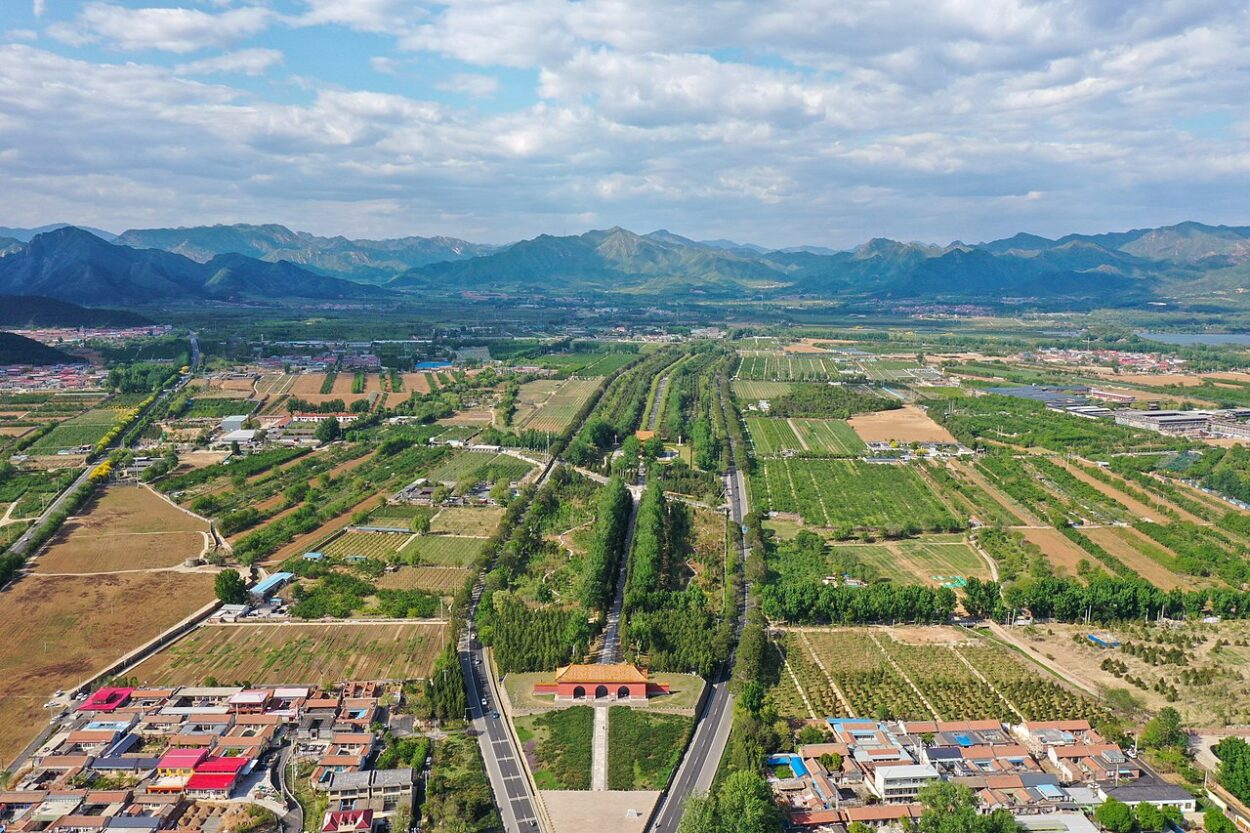
For centuries, the Ming Tombs endured storms and invasions, remaining majestic and largely untouched. Until 1955, on October 9th, Beijing’s Vice Mayor Wu Han, an expert on Ming history, led a group of cultural figures — including Guo Moruo, then President of the Chinese Academy of Sciences — on a tour of the Ming Tombs.
No one could have foreseen that this visit to the Ming Tombs would ignite a great catastrophe. The truth was grim: The excavation of Dingling became one of the greatest disasters in Chinese archaeological history. Countless artifacts from the Ming Tombs were ruined; the coffins, once opened, decayed instantly from oxidation. Some scholars even denounced the act as nothing more than “legalized tomb robbery.”
On September 6, 1958, the Chinese Communist authorities announced shocking news to the world: the Dingling Mausoleum, one of the Ming Dynasty’s Thirteen Tombs, had been opened. It was the first and only time in history that the underground palace of a Ming emperor had been fully excavated.
During the dig, the group rested in a persimmon orchard east of Changling. As they sat and talked, someone remarked that Changling was the burial place of Zhu Di, the Yongle Emperor, whose reign was filled with outstanding achievements.
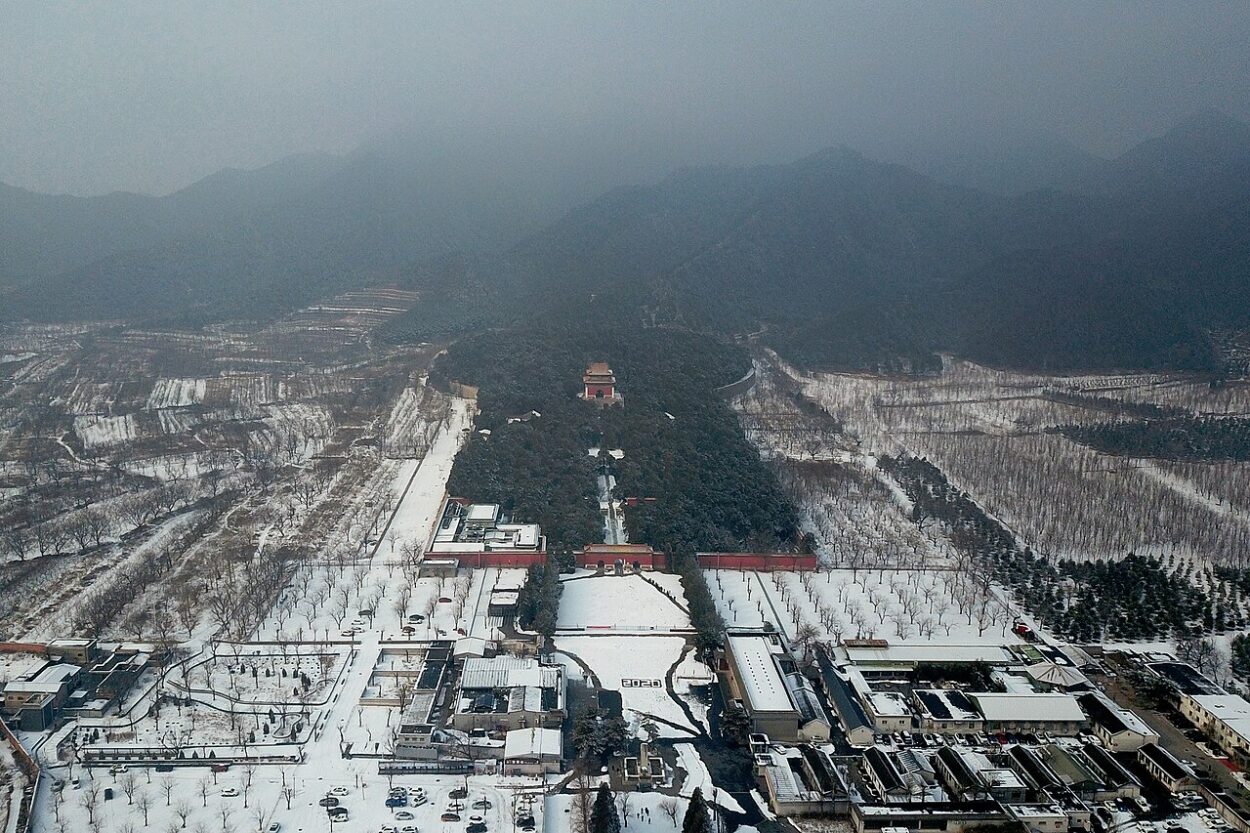
As the very first and grandest of the Ming Tombs, it must contain treasures far surpassing the others. And since Changling had never been looted, who knew what priceless relics might lie within, perhaps even lost volumes of the legendary Yongle Encyclopedia!
Hearing this, Guo Moruo’s eyes lit up. Sensing a chance for personal glory, he quickly found common cause with Wu Han. Together, they resolved to petition for the excavation of Changling, driven by a lust for glory, targeting the tombs of emperors, starting with the Ming Tombs.
But their proposal met with fierce opposition. Zheng Zhenduo, head of the Cultural Relics Bureau, and Xia Nai, deputy director of the Archaeological Research Institute, were both alarmed. They argued passionately that China at the time lacked the proper archaeological techniques, preservation methods, and restoration skills to undertake such a colossal and delicate task. To disturb the resting place of emperors, they warned, would invite irreparable loss.
Their concerns prove tragically prophetic
A record of the list of the so-called “equipment” used to open the underground palace shows clearly just how ill-prepared the excavation was: wooden boxes, pickaxes, miners’ helmets, candles, rope, rubber gloves, a few masks, some cotton, screws, wire, drawing boards, photographic gear, and other miscellaneous items.
With such inadequate tools more suited for a workshop than a sacred tomb, how could the treasures of an empire be safeguarded? Is this merely a fantasy or a case of pure ignorance? Guo Moruo and Wu Han were also considered cultural figures; did they really not know that even the slightest carelessness during excavation could cause irreversible damage to cultural relics?
Yet driven by greed for hidden relics and swept up in the era’s obsession with grand gestures, Guo Moruo and Wu Han pressed forward. Rallying other cultural figures to their cause, they submitted a formal petition to the State Council. Mao Zedong gave his nod, and Zhou Enlai scrawled his approval: “Agree to excavation.” And so, in December 1955, Guo Moruo led his archaeological team in a grand march toward the Ming Tombs.
They began with Changling, the most magnificent and complex of the mausoleums. But after a month of digging, no passageway was found. It was simply too vast and too complex. They turned to the neighboring Xianling, but again, no success. Finally, they shifted to Dingling. There, at last, they uncovered the entrance to the underground palace. Wu Han and Guo Moruo immediately reported to Zhou Enlai, and excavation began without delay.
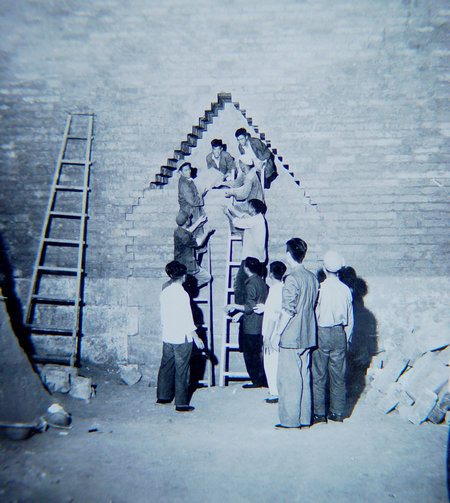
Opening the gate of the underworld — omens in the sky
For centuries, the Chinese have held sacred the principle that the dead must be honored. From the Han Dynasty onward, tomb robbers and grave desecrators, if caught, were sentenced to death. The Huainanzi records: “He who disturbs a tomb shall be executed.” The Old Book of Tang placed tomb-robbery alongside the gravest of crimes: deliberate murder, arson, rebellion. To violate ancestral graves was believed to invite a curse upon oneself and one’s descendants.
And indeed, once Dingling was formally opened, strange phenomena began to unfold. Many of the laborers fell ill. In surrounding villages, many women suddenly became afflicted with madness, as if possessed, crying out warnings that the emperor’s tomb must not be disturbed. Fear spread among the workers. But the leaders dismissed it all as superstition, insisting: “We do not fear the evil spirits.”
Yet as the digging continued, ominous signs multiplied. In May 1956, under a cloudless sky, thunder cracked without warning. A bolt of lightning struck with terrifying force, splitting apart the stone guardian beast sitting on the roof of the Ming Tower. The villagers trembled. “The emperor’s spirit has shown itself! That beast was meant to guard the tomb. After guarding for hundreds of years, now it has fallen, struck down in anger. Is this not a warning from the emperor himself?”
Whispers grew louder: “A royal tomb is not to be plundered. Perhaps we should reconsider. Perhaps this is the emperor’s judgment.” But before they could reflect further, darker news came. One laborer, a security guard surnamed Gu, was struck dead by lightning. Another, called Zhang, was struck and grievously wounded. Despite this, the excavation of the Ming Tombs pressed on.
Translated by Katy Liu
Follow us on X, Facebook, or Pinterest
