
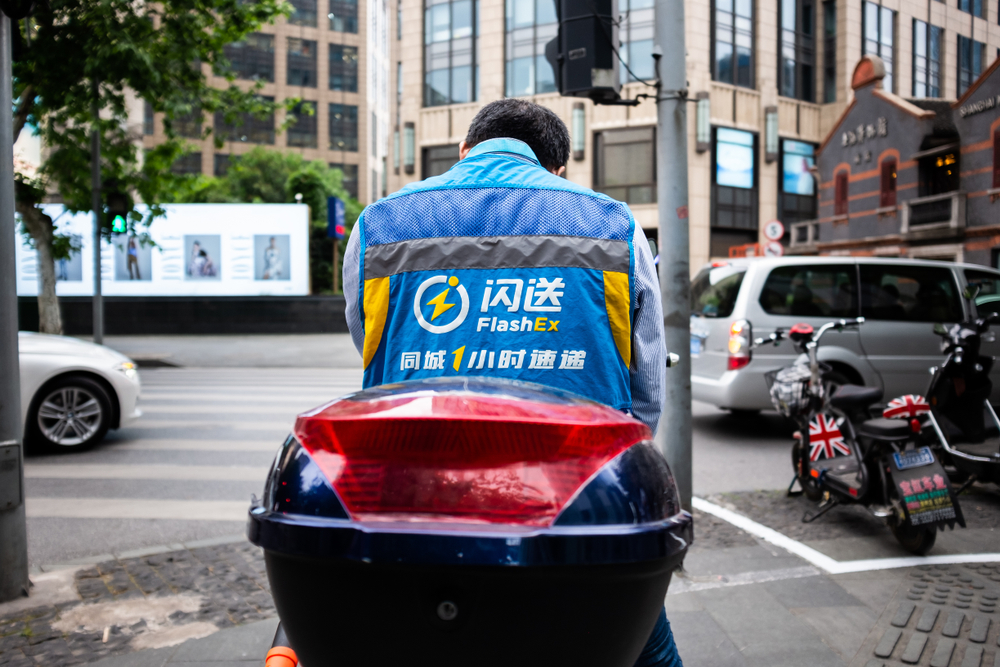
Across China, the path from university to stable employment has narrowed dramatically. As white-collar hiring shrinks and fresh graduates struggle to secure entry-level jobs, many find themselves taking on physically demanding gig work simply to survive. Food delivery — once considered temporary work for migrant laborers — has quietly become a field filled with degree-holders.
Under Communist China’s centrally controlled system, economic shifts and policy decisions leave young people with few real options, especially as private companies scale back and hiring freezes spread nationwide.
Mr. Wang, a graduate of the Los Angeles Film School, returned to China hoping to build a career in the film and television industry. For a time, he believed he could work his way toward becoming a director. But after multiple rounds of layoffs, those ambitions evaporated.
“I worked several jobs and kept getting laid off,” he said. “I was laid off from film and television, then I went to a gaming company as a planner. After a few years, I was laid off again. After that, I couldn’t find work at all.”
With savings dwindling and no opportunities ahead, he turned to delivering food and packages — a job he never imagined doing as a university graduate.
Food delivery is dangerous work with low pay
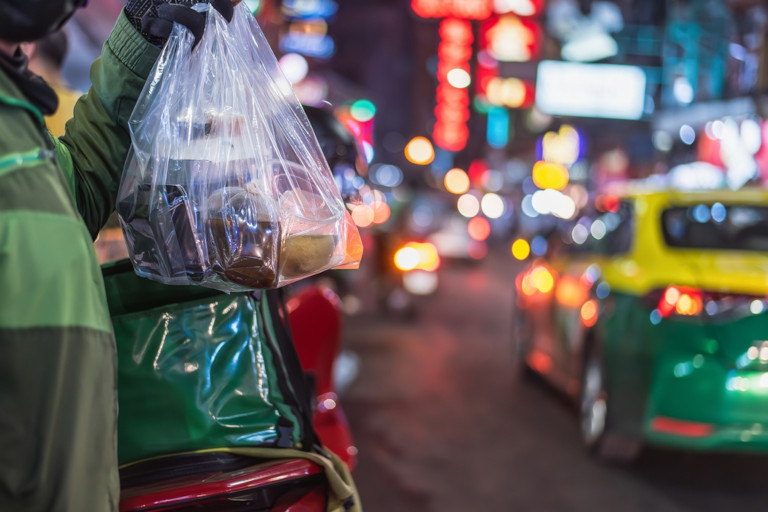
Wang described delivery work as both exhausting and unsafe. Riders are fined for late deliveries, which pushes many to run red lights or weave through traffic at high speeds.
“There were one or two times when cars brushed right past me,” he recalled. “I almost got hit and killed. I really felt that.”
Even on good days, the earnings are limited. If he pushed himself to the brink, he could make a little over 200 yuan (about US$30) per day. On slower days, it’s just over 100 yuan. Electric bikes break down often, and repairs come out of the rider’s pocket. Fines chip away at what little income remains. And illness is financially catastrophic — a single week off can erase months of earnings.
“You can’t afford to get sick,” Wang said. “If you do, everything you earned before is gone.”
A generation facing unemployment from the start
Wang’s story is far from unique. Ms. Zhang from Wuhan said her own family has experienced the same struggles.
“My younger brother hasn’t had a job for two or three years since graduating from college,” she said. He majored in automotive engineering — a field that should have aligned perfectly with Wuhan’s status as an automobile hub — yet he still could not find work.
Without a first job, the odds only get worse. In China, graduates who do not secure employment immediately face increasing difficulty with each passing year, as companies often prefer new graduates over those with gaps in their résumés.
Her brother tried delivering food for a month, but the constant exposure to wind, rain, and the hazards of riding an electric bike took a toll on his health. “His body couldn’t handle it,” Zhang said. After resting for a while, he attempted to return to delivery work but still could not keep it up.
He now spends his days sending out résumés, hoping to find a job connected to his major. “Otherwise,” Zhang said, “his years of studying would feel wasted.”
Even a graduate degree has offered little protection. Her brother was accepted into a respected program at Huazhong University of Science and Technology, completed it, and still found no employment. For him, Zhang said, the future feels invisible and hopeless.
Growing despair among young professionals
Wang said the psychological impact of this economic downturn runs deep.
“I once earned high salaries in film and gaming,” he said. “Why have I fallen to this point?”
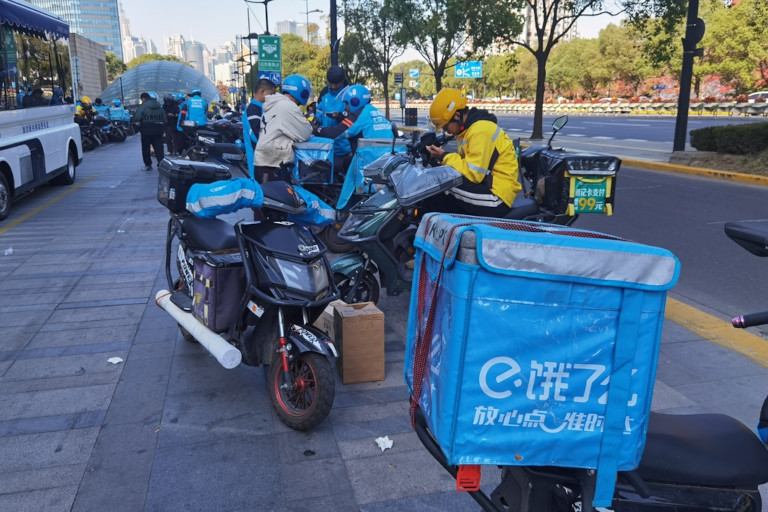
He later realized that many former white-collar workers — people he once saw as securely employed — had also turned to food delivery. The problem, he said, was far larger than individual failure.
“I don’t think this is my personal mistake. It’s the mistake of the country, the mistake of the system, the mistake of this era.”
Wang was blunt about the anger he feels living under Communist China.
“I graduated from a proper university. Why am I delivering food?” he asked. “In my heart, the first feeling is despair. The second is resentment. I resent this system and this country — communist China — and this government.”
He added: “It’s very hard to find a proper white-collar job anymore. I feel this country is beyond saving.”
A generation crushed by loans, pressure, and censorship
Wang also described a childhood friend born around 1994 or 1995. Without money for basic living expenses while job-hunting in a major city, his friend turned to high-interest online loans. The borrowed cash allowed him to rent a room and buy a phone, both of which are necessary just to search for work.
But once he found a job, the salary was far lower than he expected. Endless overtime left him exhausted, and the loan payments quickly overwhelmed him. The lending company eventually contacted his parents, who were already of retirement age. They went to southern China to work in factories to help repay the debt.
“Not long ago, I saw his WeChat post,” Wang said. “He basically said this world makes him live in great pain.”
Another interviewee, Peng Xiaoliang, said the employment crisis in Communist China has become a “dead cycle”: few job openings, shrinking industries, and no path forward for young people.
He emphasized that the Communist Party now suppresses free speech extremely heavily. People cannot discuss real economic conditions, political corruption, or the worsening job market. Speaking openly online can result in account bans — or even police summonses.
“Now the whole of Communist China is like a giant pressure cooker,” Peng said. “Many people are numb. I feel there is no way out anymore.”
Translated by Cecilia
Follow us on X, Facebook, or Pinterest
