

It is said that: “Good begets good, evil begets evil.” Many people understand that kind deeds bear kind fruit. They are glad to help others — offering financial assistance to those in need or emotional support to the discouraged. All of this reflects a spirit of generosity and kindness.
Some even practice “one good deed a day,” quietly doing something helpful without expecting anything in return or bragging about it — picking up trash by the roadside, greeting a stranger with a warm smile, or holding the door for someone whose hands are full. Whether big or small, what matters most is the heart behind it. Yet a deeper question arises: If all of these count as doing good, what is the highest form of goodness? And how, exactly, should we practice it?
The lesson of an ant
Children naturally love nature and small creatures — it is simply part of being human. Some adults may dismiss it as childish play, yet from a child’s small and tender heart often comes a perspective the grown world has forgotten.
One day, a well-to-do man named Daniel was out for a walk when he noticed a little boy crouching by the roadside, holding a blade of grass and gently moving it along the ground. Curious, Daniel bent down, patted the boy’s head, and asked: “What are you doing, little guy?” Without looking up, the boy replied: “I’m guiding an ant home.” Daniel chuckled softly: “An ant needs you to guide it?”
The boy answered with quiet seriousness: “It got separated from its friends. It’s scared and running around. I’m leading it back to its family so they can be together.” Only then did Daniel look more closely. The boy was carefully using the blade of grass to guide the lost ant back to its colony. With patience and care, he finally reunited it with the others. The moment the ant reached its companions, it touched antennae with them, as if greeting old friends.
Daniel was deeply moved by the child’s kindness. As he walked away, he found himself murmuring: “Guiding an ant home… how creative… how thoughtful.” Yet the small scene stirred something deeper within him. To show a lost creature the way, to calm its panic and help it find its place again — isn’t this what kindness truly means? In that moment, he realized: Hearts of goodness resonate most easily with one another. To recognize goodness in others and be moved by it — that, too, is goodness.

From a desperate single mother to a finance director
Daniel owned a large supermarket chain in Texas. Known for his generosity, he often donated to those in need and was widely referred to as “the great philanthropist.” But after meeting the young boy, he began to rethink what charity truly meant.
One day, a middle-aged woman stopped him at the entrance to his company. With a young daughter standing beside her and tears streaming down her face, she pleaded: “Mr. Daniel, please help us. My husband passed away from illness. I lost my job. My daughter and I can’t survive anymore.”
She showed him documented proof of her situation, begging for financial assistance. In the past, Daniel would have simply handed her money. This time, however, he paused and gently asked: “What kind of work did you do before?” “Finance,” she replied. His eyes lit up. “Then I’ll have HR evaluate you. If all goes well, you can join our finance department. I’ll also provide an advance of three months’ salary.” The woman’s face filled with relief and gratitude.
A year later, Susan — now the company’s finance director — was widely respected for her skill and innovation. At the supermarket’s Christmas party, she said to Daniel: “Thank you. You didn’t just give me money — you showed me a path to stand on my own. You gave me back my dignity.” Daniel smiled. “Don’t thank me. It was your talent and hard work that earned this.” She smiled in return — bright and radiant.
From struggling student to company founder
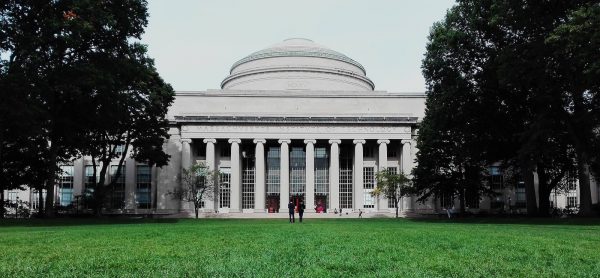
Not long after, Daniel received a letter from a young man named Jacob, who had recently been admitted to MIT. Orphaned and struggling, Jacob could not afford the tuition and wrote to ask for help. Daniel replied: “After you enroll, you can work at the supermarket branch near your campus. I’ll coordinate with the branch manager on the paperwork. I’ll also advance one year’s wages to you.”
Years later, Jacob — now the founder of a software company — said at his company’s opening ceremony: “Years ago, I was a poor student scrambling to pay tuition and turned to Mr. Daniel for help. If Mr. Daniel had simply given me money, it would have solved only a temporary problem — perhaps even made me dependent and less determined. Instead, he showed me a way to earn my own path. Without his foresight, I wouldn’t be standing here today. His kindness carried wisdom. It gave me dignity and strength.”
The highest form of kindness
Years later, at a major charity event in Texas, Daniel shared a thought with the audience: “The true purpose of love is to empower those we care about to find a bright road forward. This is not only a moral foundation, but an elevation of the human spirit.” His words rippled through the crowd like water, leaving warmth in every heart. The largest newspaper in Texas later wrote: “To guide someone onto their path — this is love in its highest form.”
Daniel’s approach illustrated this truth. An impoverished single mother and a struggling college student both sought his help. Remarkably, neither lost their ambition; they were not simply given money, but the chance to shape their own future. Daniel’s kindness lay in offering support while letting them take control of their lives.
Love begins by showing the way. The highest form of doing good is not simply giving favors, but having the wisdom to help others stand on their own and move forward. Kindness begets kindness, reflecting the enduring truth that good deeds carry their own reward. As the old proverb reminds us: “Give a man a fish, and you feed him for a day. Teach a man to fish, and you feed him for a lifetime.”
Translated by Katy Liu and edited by Tatiana Denning
Follow us on X, Facebook, or Pinterest
