

There’s an old saying that goes: “Keep three parts clumsiness, a thread of innocence, be slightly deaf and a little mute — these are the secrets to a long life.” Just as porridge needs three parts rice and seven parts water, so too in life, balance is everything. Too much becomes a burden; too little falls short. It is the law of nature that a full moon wanes, and water overflows when it is too full. Life is the same: only what is just right endures. Three and seven — that is the perfect measure.
Three parts giving, seven parts receiving
According to another old saying: “Great giving brings great return; small giving brings small return; without giving, there is no gain.” To receive, one must first let go. Letting go is the cause; gaining is the fruit. If we cling to everything, how can we receive anything new?
Consider the old tale of the man who lost his horse. His neighbors lamented the misfortune, but the man calmly replied: “Who knows if this is a blessing or a curse?” Some time later, the horse returned — bringing a fine stallion with it. The neighbors rejoiced, but the man said again: “Who knows if this is a blessing or a curse?” Later still, the man’s son broke his leg while riding the new horse. Again, the neighbors expressed sympathy, and again the man replied: “Who knows if this is a blessing or a curse?” Soon after, a war broke out in the region, and all the young men were conscripted except the son, who was spared because of his injury. What first seemed like misfortune had ultimately protected him.
A similar lesson appears in the Song Dynasty, when Fan Zhongyan was demoted for advocating reform. Politically struck down, he could have grown bitter or compromised his values. Instead, he held fast to principle, turning personal loss into lasting wisdom for others. His famous words — “Be the first to worry about the world’s troubles and the last to enjoy its pleasures” — remind us that true gain often comes from serving others and staying true to what is right, even in the face of hardship.
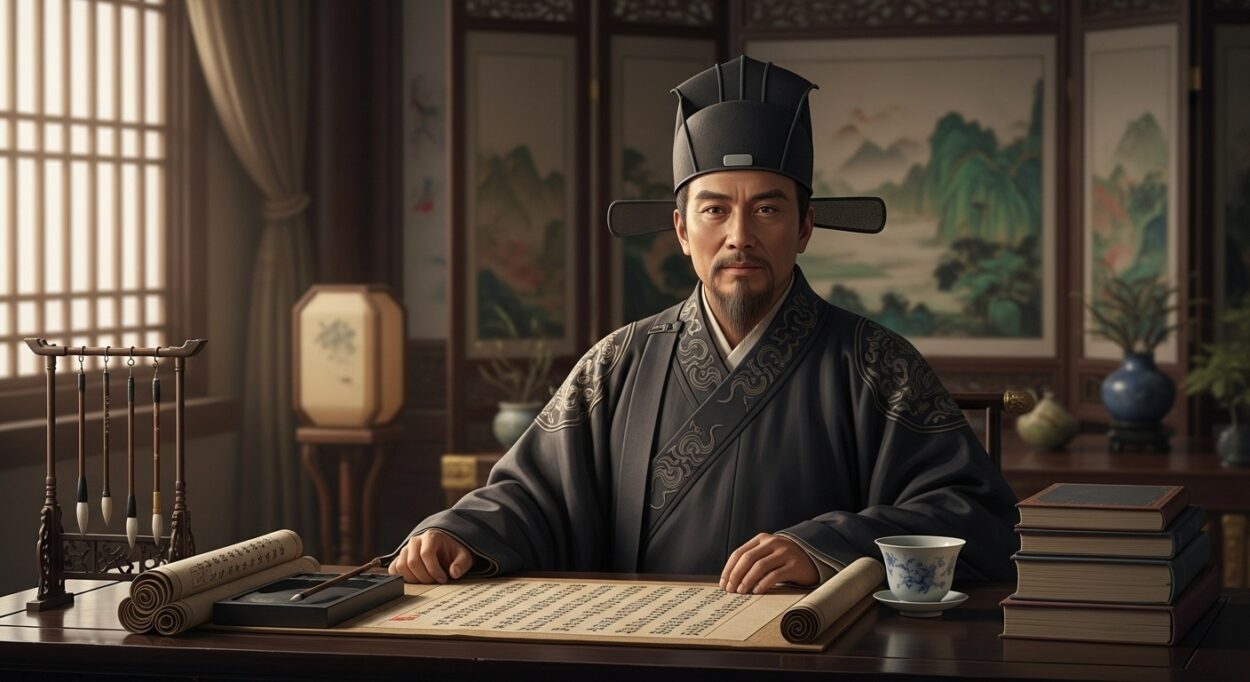
Sometimes, learning to give something up opens the door to life’s quiet surprises. Life is always a dance between loss and gain. We cannot always gain, nor will we always lose. But when we learn to let go a little, we often receive far more than we could have imagined.
Three parts muddleheaded, seven parts clearheaded. The Book of Han says: “When the water is too clear, no fish survive. When a person is too perceptive, no friends remain.” In life, we need both clarity and a touch of “foolishness” — seven parts clearheadedness to understand the world, three parts muddleheadedness to protect ourselves.
A story illustrates this well. A traveler crossed a river by boat, drinking from a cup that looked like gold. The boatman, thinking it valuable, grew greedy — but it was only brass. The traveler saw through the boatman’s intentions but said nothing. As the boat rocked, the cup “accidentally” fell into the river. The boatman sighed, thinking he had lost treasure. The traveler calmly said: “It was only brass. Nothing valuable.” In that moment, the boatman let go of his greed and safely ferried the traveler across. The traveler saw everything clearly, yet chose restraint.
This story captures the essence of wisdom: it is not enough to see clearly or understand fully. True skill lies in knowing when to speak and when to remain silent, when to act and when to let others find their own way. Sometimes, silently guiding, subtly letting go, or choosing not to call out others’ faults is the most effective and compassionate action.
A little muddleheadedness — restraint, humility, or deliberate inaction — shields us from unnecessary conflict, while clarity lets us recognize what truly matters and how to respond wisely. Life is best lived in this balance — three parts humility, seven parts insight.

Three parts expectation, seven parts acceptance
The writer Ma De once said: “I slowly realized why I’m unhappy — because I always expect results.”
We read a book and expect to become wise. We exercise and expect to grow thin. We send a message and expect a reply. We are kind and expect kindness in return. When expectations are met, we sigh with relief. When they aren’t, we fall into disappointment. Isn’t that how we all live? We place heavy hopes on people and outcomes, and when life refuses us, our hearts grow heavy.
Socrates said: “Expect little, and you will be closest to happiness.”
If we expect too much, our joy becomes fragile. If we learn to let go and accept life as it comes, even imperfection can bring quiet contentment. The balance of three and seven. Three parts letting go, seven parts gaining — then the eyes hold joy, and the heart holds love. Three parts foolishness, seven parts clarity — then we see through the world yet remain at peace. Three parts expectation, seven parts acceptance — then the heart is no longer trapped; it rests in ease.
If life were measured with a ruler, three and seven would be just right — neither too much nor too little. And when everything returns to balance, it returns to zero. Zero is not emptiness; it is wholeness, 3 + 7 = 0. This is the equation of a complete life. May we all learn to move gently in the harmony of three and seven.
Translated by Katy Liu and edited by Tatiana Denning
Follow us on X, Facebook, or Pinterest
