

The I Ching (Book of Changes) states: “A family that accumulates good deeds will surely receive blessings.” In this case, “blessings” refers to personal divine rewards and benefits that will extend to future generations. People often speak of accumulating yin de (virtue) through good deeds, out of generosity and compassion, without seeking recognition.
True acts of kindness come from a sincere heart; they do not seek rewards. When they’re done quietly and anonymously, Heaven will surely grant blessings in return. Even Western cultures emphasize the value of performing acts of charity in private rather than publicly. References to this are found in various books, especially the Gospel of Matthew.
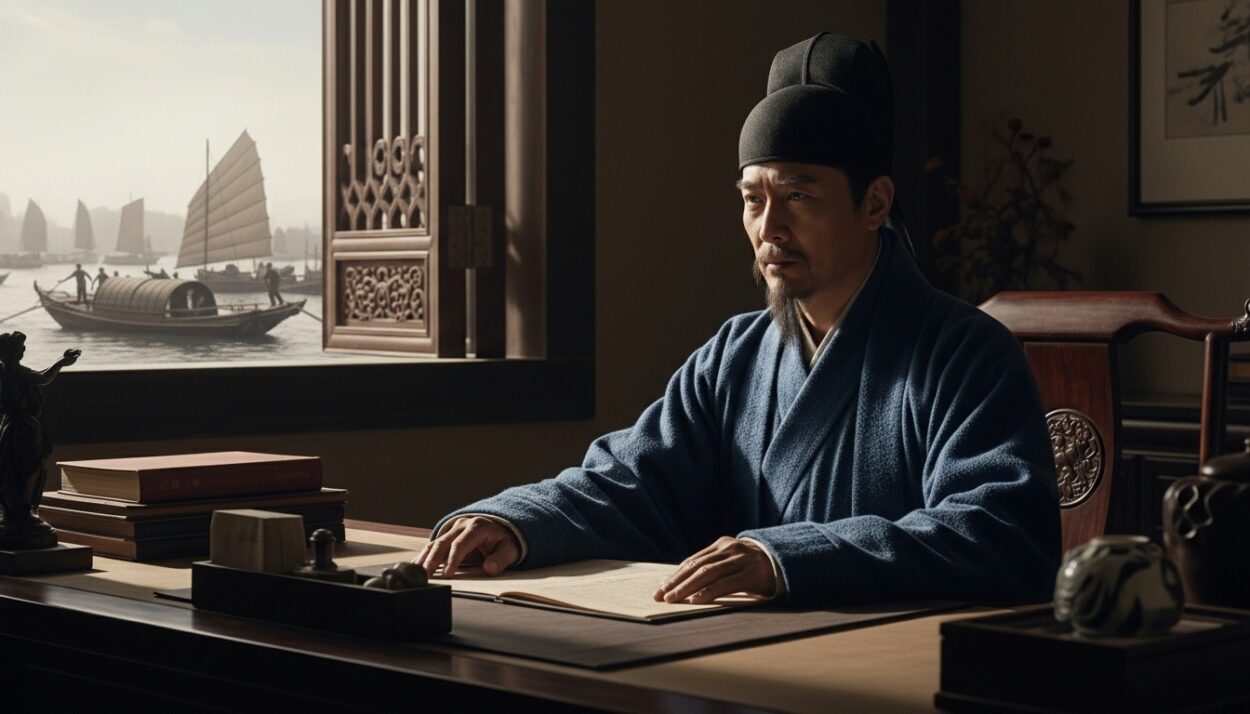
Rescuing disaster victims and benefiting future generations
Yang Rong was a notable official from Jian’an (present-day Jianing County, Fujian Province) during the Ming Dynasty. His family had a history of making a living as boatmen. During his great-grandfather’s time, a flood destroyed many houses, and numerous disaster victims and their belongings were swept away. Many boatmen took the opportunity to fish for floating goods.
Only Yang’s great-grandfather and grandfather rowed their boats, disregarding their own safety, to wholeheartedly rescue the drowning victims, without taking any of the drifting goods for themselves. While others profited from this misfortune, the Yang family continued to make a living by ferrying people across the water. At that time, the villagers secretly ridiculed them as foolish, but they felt deeply gratified to have saved lives.
It was not until Yang’s father’s generation that the family’s situation gradually improved. One day, a Taoist sage passed by the family’s home and told the man: “Your descendants will surely become prominent in the future, because your grandfather and father have accumulated Yin De. You are allowed to bury them in a place known as the White Rabbit Cemetery.” The Yang family followed the sage’s instructions.
Later, Yang was born. He was intelligent and talented, fond of reading, and passed the imperial examination at a young age. Initially, he served as an editor and eventually rose to the position of Grand Secretary, attaining the rank of Minister of Works. Yang was quick and smart in his work, adept in political affairs, and decisive.
He served under four emperors — the founding emperor, Emperor Ren, Emperor Xuan, and Emperor Ying — and was highly valued. He became part of the cabinet, alongside Yang Shiqi and Yang Bo, collectively known as the “Three Yangs.” Eventually, he reached the rank of San Gong (Three Dukes), and the emperor posthumously granted the same rank to his grandfather and great-grandfather.
After Yang’s death, the ruler especially conferred upon him the title of Grand Tutor and bestowed him with the name Wenmin. His descendants thrived, with his great-grandson, Yang Dan, serving as the Governor of Guangdong and Guangxi and as Minister of Personnel.
Among Yang’s ancestors, a humble boatman demonstrated compassion by saving others from drowning in times of crisis. Such deeds could be accomplished only by a person of great virtue, ultimately yielding noble and distinguished descendants, who would bring glory to their family and honor their ancestors.

Saving a life, Heaven grants a noble child
The father of Feng Qi, a historian during the Ming Dynasty, was a scholar known for his benevolence. One cold winter morning, as snow fell, he was on his way to school when he saw a man lying in the snow. He bent down to check and found the person half-frozen. He took off his own cotton coat, wrapped it around the man, and brought him home to revive him.
Not long after, Feng Qi’s father had a dream of a divine being who told him: “You saved a life entirely out of sincere goodwill, so Heaven has specially arranged Han Qi to be reborn as your son.” Han Qi was a prime minister during the reigns of emperors Ying and Shen of the Northern Song Dynasty. He was talented and served as a grand marshal, demonstrating his dual prowess in both literature and military affairs.
Han Qi’s rebirth as the son of a scholar indicates that his father had accumulated significant blessings. After the Feng family’s son was born, he was named Qi and styled Zhuo’an. He was exceptionally intelligent from a young age and passed the imperial examination early. He subsequently held various positions, including editor, lecturer, deputy minister, and minister of rites, leaving numerous articles advising the emperor.
Today’s society, being complicated and increasingly atheistic, often lacks faith. Nowadays, many people do not believe that good deeds are rewarded with virtue, while bad deeds create karma that must be paid off. Despite the current situation, these two stories demonstrate that when a family accumulates virtue through good deeds, its members will surely have good fortune.
Translated by Joseph Wu and edited by Laura Cozzolino
Follow us on X, Facebook, or Pinterest
