
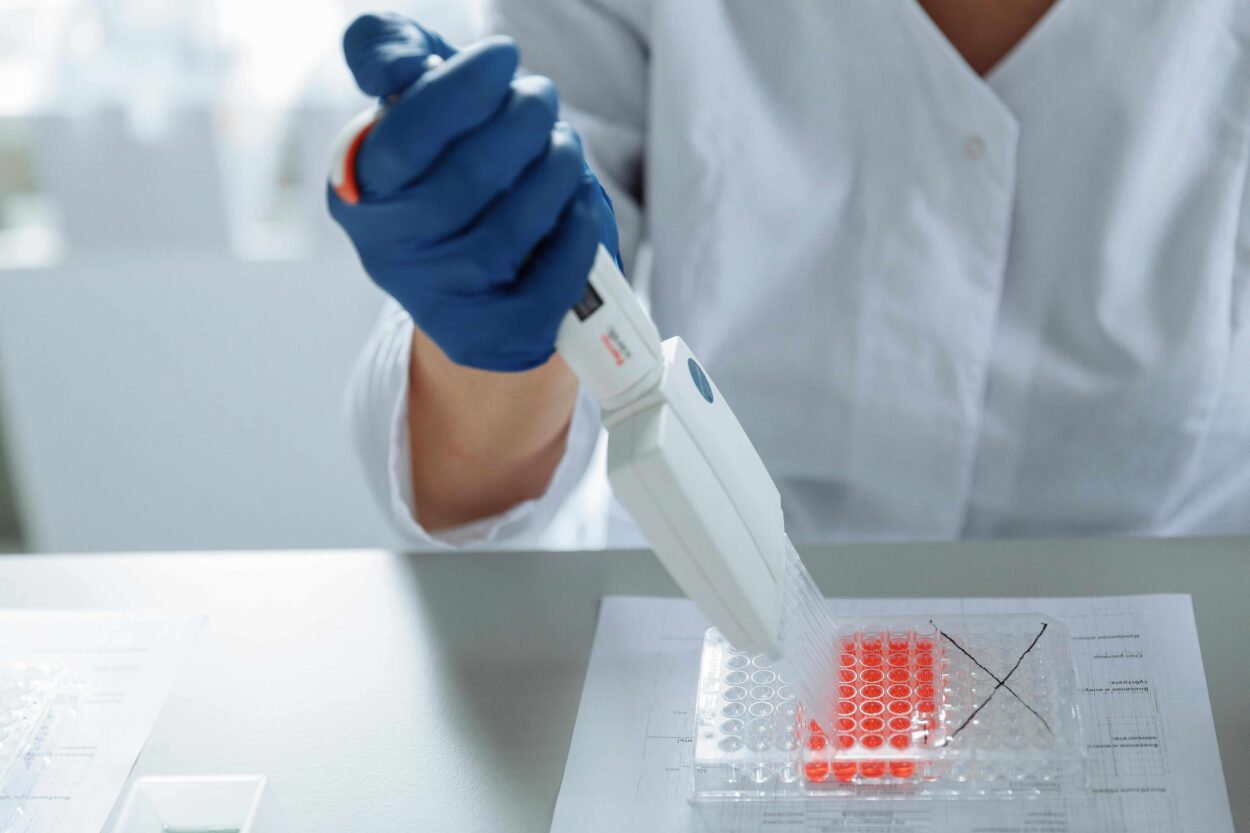
China’s stem cell diabetes breakthrough is not a headline from the future. It happened in June 2023, inside a hospital room in Tianjin, when a 25-year-old woman received an injection into her abdomen — an injection of cells that had, weeks earlier, been ordinary fat tissue taken from her own body. Seventy-five days later, she no longer needed insulin. She has not needed it since.
That sentence deserves to sit alone for a moment. Type 1 diabetes is an autoimmune condition in which the body destroys the pancreatic cells that produce insulin. It is not manageable like a software bug you patch and move on. It is a permanent structural failure — the immune system attacking itself — and for more than a century, the only way to live with it has been to become, in some functional sense, a machine: calculating carbohydrates, calibrating doses, monitoring blood glucose around the clock, every day, for life. For over 500 million people worldwide living with some form of diabetes, that is not a metaphor. It is Tuesday.
What Dr. Deng Hongkui and his team at Peking University did was not patch the bug. They rebuilt the organ.
How the body became the solution
The technical name for what they developed is chemically induced pluripotent stem cell therapy — CiPSC for short. The concept begins with a question that sounds almost philosophical: what if you could take a fully differentiated adult cell, one that has already committed to being a fat cell, and persuade it to forget what it is?
This is not a metaphor. Cellular identity is not fixed in the way intuition suggests. A fat cell is not a fat cell because it has a fat cell soul. It is a fat cell because certain genes are expressed and others are suppressed. Change the chemical environment, apply the right molecular signals in the right sequence, and the cell can be convinced to return to a state of openness — pluripotency — from which it can become almost anything.
The catch is that the methods for doing this have historically required genetic modification: inserting foreign DNA using viral vectors, a process that carries real risks of genomic instability. Dr. Deng’s innovation was to achieve the same cellular amnesia using only small molecules — chemical compounds, with no viral involvement and no foreign genetic material introduced into the genome.
“The beauty of this approach is that they are the patient’s own cells — so organ and tissue rejection is not a concern, and no or far less anti-rejection medications are needed.” — James Shapiro, University of Alberta
Once the cells are reprogrammed back to a pluripotent state, they are guided through a differentiation protocol — coaxed, with further chemical signals, into becoming islet cells: the specific pancreatic clusters that contain beta cells, the insulin-producing units that type 1 diabetes destroys. These lab-grown islet clusters are then transplanted back into the patient, beneath the abdominal muscle wall, where they integrate into the body’s tissue and — crucially — begin to function.
They sense glucose. They produce insulin in response. They communicate with the metabolic system as if they had always been there.
What the numbers actually show
The first patient’s results, published in the journal Cell in September 2024, were precise enough to be unambiguous. Before the transplant, her time-in-target glycemic range — the percentage of time her blood glucose stayed within healthy bounds — sat at 43%. That is a number that describes a person managing a serious chronic condition with constant effort. Four months after the transplant, that figure had climbed to 96%. By one year, it exceeded 98%, with glycated hemoglobin — a long-term marker of blood sugar control — holding at around 5%, well within the non-diabetic range.
She achieved sustained insulin independence starting 75 days post-transplantation. The two other patients enrolled in the Phase I trial have also reached insulin independence, each maintaining it for over a year. Dr. Deng, named to TIME’s 100 Health list in 2025 for this work, described the outcome plainly: “It’s maintained very nicely. We call that functional cure.”
The clinical trial registration number is ChiCTR2300072200. The collaboration involved Tianjin First Central Hospital, Peking University, and the China Changping Laboratory. The research has since been featured at the International Society for Stem Cell Research (ISSCR) 2025 conference, where Dr. Deng reflected on the scope of what is beginning: “The first wave of stem cell therapies has come; the second wave is coming.”
The immune problem — and why this approach is different
Previous attempts to treat diabetes with stem cell-derived islets ran into a wall that no amount of technical elegance could dissolve: the immune system. A transplant from a donor, however well-matched, is foreign tissue. The body recognizes it as such and attacks. Patients required lifelong immunosuppression — trading one serious condition for another set of serious risks.
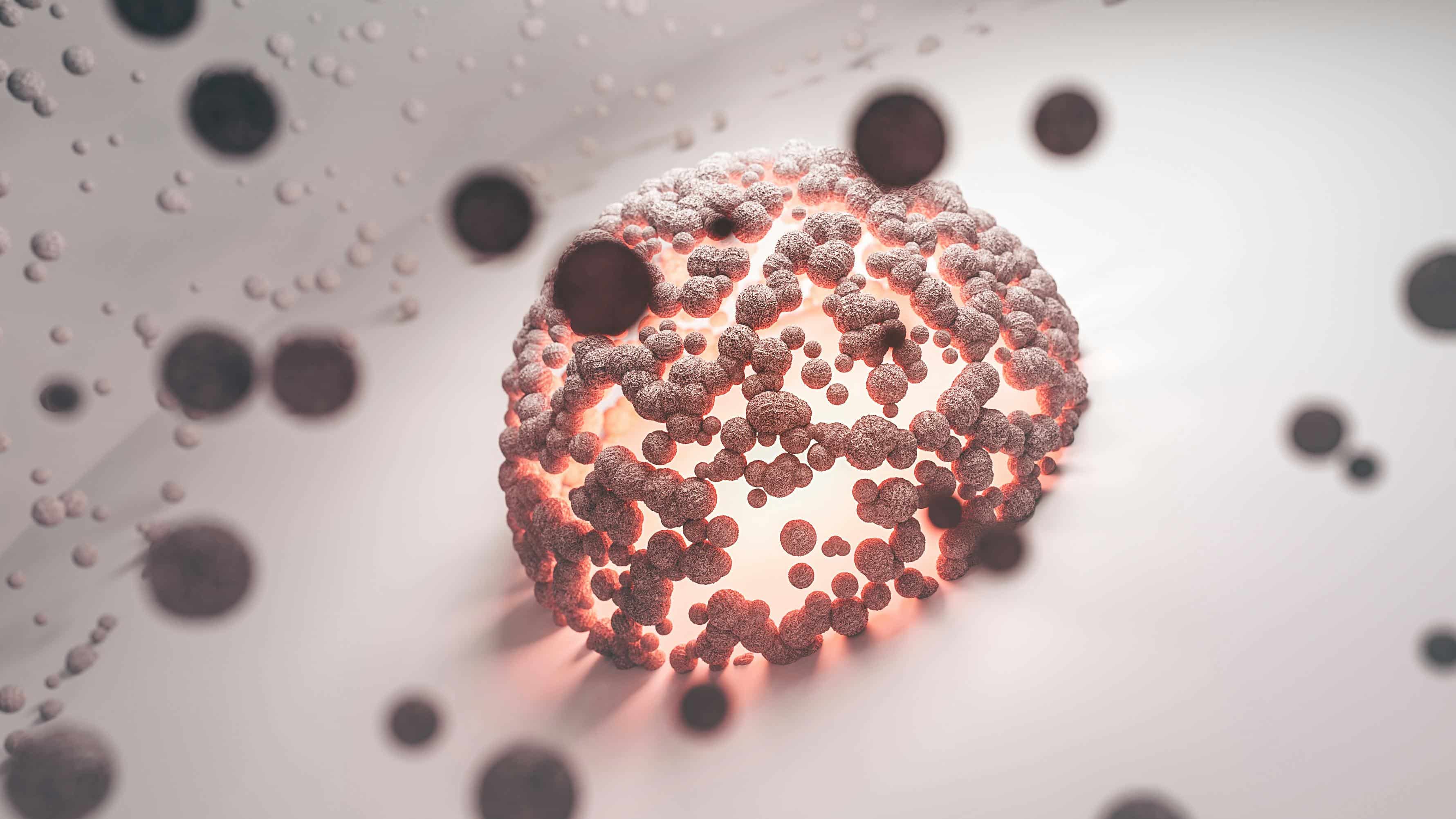
The autologous approach — using the patient’s own cells — sidesteps this entirely in principle. There is no foreign tissue. The immune system has no reason to mount a rejection response. In the case of the first patient, she was already taking anti-rejection drugs because of a prior liver transplant, which made it difficult to fully isolate the effect. But the results across all three patients, and the trajectory of the trial, point consistently to the same conclusion: the cells integrate, they function, and they persist.
There is a deeper structural elegance to this that goes beyond immunology. The conventional approach to chronic disease is suppression: lower the blood sugar, slow the progression, manage the symptoms. The CiPSC approach is reconstruction. It does not ask the body to work around a missing component. It replaces the component. From an engineering standpoint, the difference between those two strategies is not incremental. It is categorical.
China’s stem cell diabetes research currently represents 33% of all global clinical trials for stem cell-based diabetes therapies — 47 of 143 registered trials across 31 countries.
The system that made this possible
Dr. Deng’s path to this moment began not with diabetes but with a fundamental question in cell biology: how does a cell commit to being what it is, and can that commitment be reversed without breaking the genome? His work on chemical reprogramming — using small-molecule cocktails to achieve what Shinya Yamanaka achieved through genetic factors — earned him the 2024 Future Science Prize in life sciences, China’s most prestigious scientific award.
The progression from concept to clinic followed a deliberate sequence. First, the demonstration that chemical reprogramming could produce stable, competent stem cells in mice. Then, the generation of human CiPSCs. Then, a 2022 study in Nature Medicine demonstrated that CiPSC-derived islets could restore insulin production in diabetic non-human primates through a single infusion. Each step was a proof-of-concept at a higher level of biological complexity, building toward the moment when the same approach could be tested in a human being.
That institutional infrastructure — Peking University’s Basic Medical Sciences faculty, the Changping Laboratory, Tianjin First Central Hospital’s transplant center — allowed a research breakthrough to become a clinical trial within a timeframe that Western regulatory environments often struggle to match. The company commercializing the therapy, Reprogenix Bioscience, has announced plans to raise between 200 and 300 million CNY to advance the clinical pipeline and optimize manufacturing processes.
What the pharmaceutical industry does not want you to think about
The global insulin market is worth over US$20 billion annually in the United States alone. That number exists because insulin-dependent diabetes is a permanent condition requiring a permanent supply chain. A therapy that produces a functional cure — not remission, not improvement, but the sustained independent production of insulin by a patient’s own reconstructed tissue — does not slot neatly into that business model. It eliminates the business model.
This is not a conspiracy. It is a structural tension that has shaped medical research for decades. The incentive architecture of pharmaceutical development rewards chronic disease management far more generously than it rewards a cure. Drugs that are taken once, or once per decade, generate fundamentally different revenue profiles than drugs taken daily for life. The CiPSC approach, if it scales, is a one-time intervention. That distinction matters far beyond the science.
The roadblocks ahead are real and should be named honestly. Manufacturing autologous cell therapies at scale is complex and expensive: each patient’s cells must be individually extracted, reprogrammed, differentiated, quality-controlled, and transplanted. The process currently takes weeks and requires specialized infrastructure. Whether the cost curves down sufficiently to make this accessible to patients in low- and middle-income countries — where the diabetes burden is heaviest — remains an open question. Healthcare inequality does not disappear because a breakthrough occurs. It finds new expression in access.
Regulatory approval in Western jurisdictions will require larger trials, longer follow-up periods, and navigating frameworks that were not designed with this class of therapy in mind. The path from a successful Phase I trial to a broadly available treatment spans years, not months.
The principle that holds at every scale
There is something worth pausing on in the architecture of what Deng’s team achieved — something that transcends diabetes and transcends regenerative medicine as a field.
The body already knows how to make insulin-producing cells. It made them once, before the immune system turned against them. The knowledge is not lost. It is encoded in the genome of every cell in the body, including the fat cells that were extracted from that woman in Tianjin. The CiPSC process does not introduce new information. It removes the suppression — the differentiation state — that was preventing the existing information from being expressed. It does not teach the cell what to become. It permits the cell to remember.
That is a different kind of medicine than anything we have built large industries around. Most pharmacology is about blocking, suppressing, augmenting, and substituting. This is about restoration — returning a system to a state of inherent competence that it possessed before damage was done. The intervention is not the solution. The solution was always in the system. The intervention clears the path.
The cells were not taught what to become. They were permitted to remember. The solution was always in the system.
Whether that principle extends to other autoimmune conditions, other degenerative diseases, other forms of cellular identity loss — that is what the second wave Dr. Deng spoke of is about. The principles established here — chemical reprogramming, precise differentiation, autologous delivery — are a template. Parkinson’s disease, heart failure, and liver cirrhosis all involve the loss of specific cell populations that the body once knew how to make.
The question is no longer whether this class of therapy works. In at least one carefully documented case, it did.
The question is how far the principle reaches, how quickly manufacturing can scale, and whether the systems built around chronic disease management will adapt gracefully or resist.
A 25-year-old woman in Tianjin has not needed insulin in nearly three years. Her blood glucose holds steady, inside the healthy range, more than 98% of the time — maintained not by a drug she must remember to take, not by a pump she must monitor, but by her own cells, rebuilt from her own tissue, doing exactly what the body designed them to do.
That is not a promising result from a Phase I trial. That is a different kind of medicine beginning.
Follow us on X, Facebook, or Pinterest
