
Russia’s cancer vaccine has arrived in the public imagination the way most geopolitical breakthroughs do: loudly, unevenly, and considerably ahead of the underlying science. Since late 2024, a cascade of claims has moved through social media and news aggregators insisting that Russia has already approved a cancer vaccine, that China is weeks away from endorsing it, and that the combined force of this Sino-Russian pharmaceutical partnership will destroy the Western oncology industry, a market variously described as worth $2.6 trillion, $3 trillion, and, depending on how motivated the poster seems, even more.
The number, it turns out, is approximately twelve times the actual size of the global cancer drug market. But the exaggeration is not the most important thing to understand about what is happening. The more important question is what is actually true, how far along the science really is, what the China-Russia medical cooperation genuinely involves, and under what circumstances, if any, a patient sitting in a hospital in Brussels, Birmingham, or Baltimore might one day access it.
The answer, in its shortest form, is: not yet, not soon, and not without navigating a set of structural walls that exist independently of political goodwill. But the longer answer is worth the journey. Because something is in motion here, even if it is moving more slowly and more cautiously than the headlines suggest. And the economic logic of what it could ultimately disrupt, once the clinical evidence actually exists, is real enough to take seriously.
What Russia’s cancer vaccine actually is, and what it isn’t
There are, in fact, several distinct Russian cancer vaccine programs that have been merged into a single viral narrative. Separating them is the first act of honest analysis.
The one receiving the most attention is Enteromix, developed at the National Medical Research Radiological Center in collaboration with the Engelhardt Institute of Molecular Biology, and regulated through Russia’s Federal Medical and Biological Agency (FMBA). Enteromix is described as an oncolytic vaccine — meaning it uses a combination of non-pathogenic viruses designed to both directly destroy malignant cells and stimulate the patient’s anti-tumor immunity. In September 2025, the FMBA head, Veronika Skvortsova, announced that regulatory documents had been submitted to the Russian Ministry of Health and that the vaccine was ready for clinical use. Preclinical studies in animal models reportedly showed tumor volume reductions of 60-80%. Those are striking numbers, and if they hold in human trials, they would indeed represent a meaningful development.
But the critical phrase is: if they hold in human trials. As of early 2026, Phase I safety trials in humans have reportedly begun, with the first cohort focused on melanoma patients. Phase II and Phase III trials — the studies that test actual therapeutic efficacy, compare outcomes against existing standards of care, and generate the dataset that any serious regulatory body would require — have not yet started. The Snopes fact-checking team, reviewing the September 2025 claims, found that while a vaccine for colorectal cancer had been announced as ready for clinical programs, the broader mRNA-based vaccine the headlines were really talking about remains in trial.
Preclinical results in mice showing 60-80% tumor reduction are genuinely promising. They are also, in oncology, one of the most frequently broken promises in the history of medicine.
Separately, the Gamaleya Center — the same institution behind Sputnik V — has been developing a personalized mRNA-based cancer vaccine that uses AI algorithms to generate individualized treatment blueprints from a patient’s own tumor genetic data. This is a categorically different approach from Enteromix, and considerably closer in spirit to what BioNTech and Moderna are racing to accomplish in the West. For the Gamaleya mRNA vaccine, human trials focused on melanoma patients were planned for September to October 2025, with lung cancer patients as the next cohort. A potential regulatory clearance for a melanoma-specific version has been suggested for as early as 2026, though no full market approval has been confirmed.
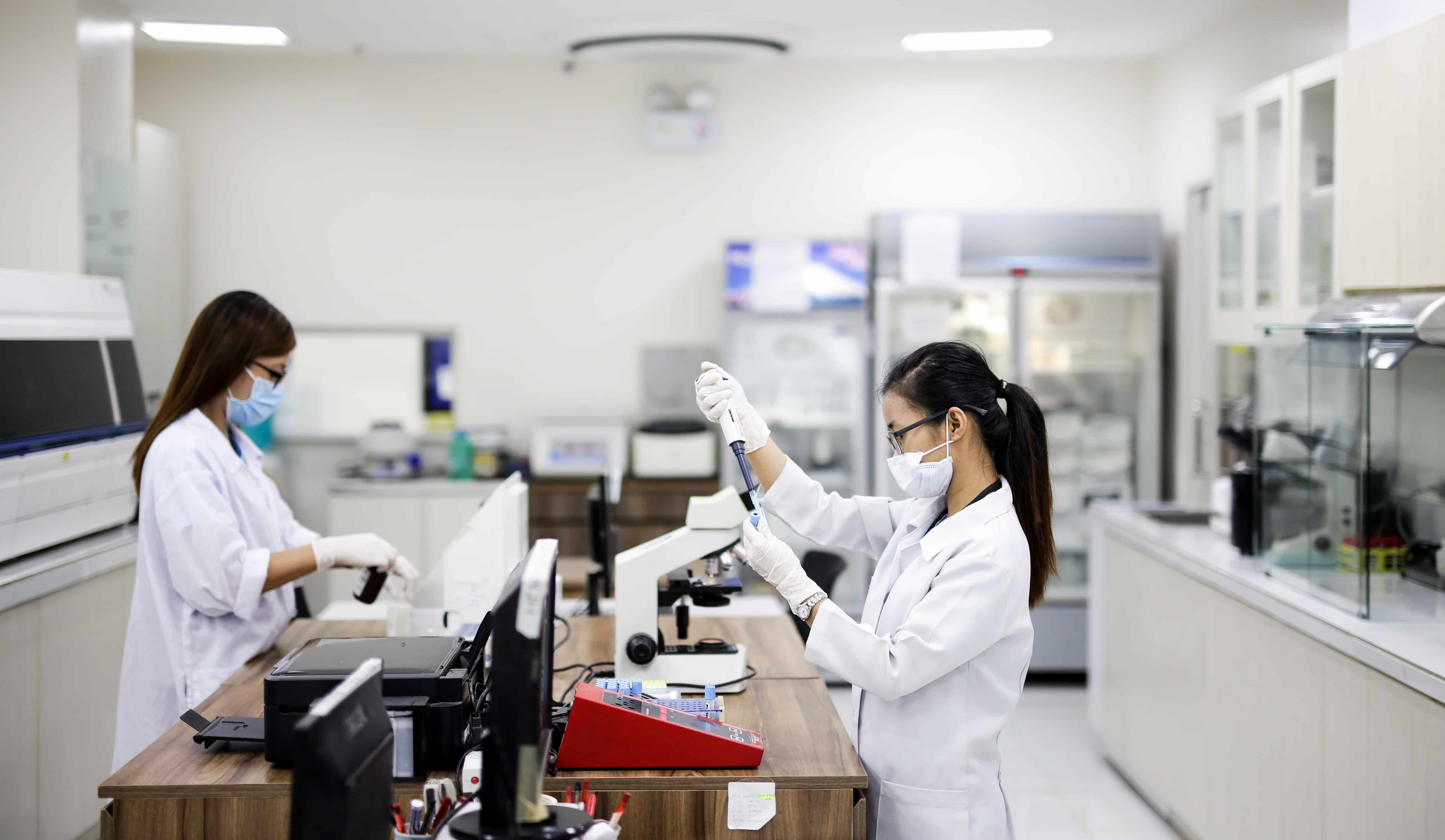
What Russia has, in other words, is a serious, multi-track oncology research program operating within a state-directed healthcare model explicitly committed to providing these treatments free of charge to Russian citizens once approved.
That last point is significant. The government estimates a per-dose production cost of approximately 300,000 rubles — roughly $3,800 at current rates — but has indicated that cost will be absorbed by the state. The free distribution model is not an accident. It is the point. And it is the element of the story that most directly challenges the Western market’s structural assumptions.
What China is doing, and what it isn’t
The claim that China is preparing to approve and distribute Russia’s cancer vaccine — the version that circulated most virally, amplified through large social media accounts in January 2026 — was assessed by multiple fact-checking organizations and found to be unsupported by any official statement.
China’s National Medical Products Administration (NMPA), which would need to authorize any such drug for use in China, has not issued any announcement regarding Enteromix or any Russian cancer vaccine. No joint production agreement has been signed. No regulatory filing has been confirmed through official Chinese channels.
What has happened is something less dramatic but more durable. On January 9, 2026, TV BRICS reported that scientists from Moscow and China had agreed to strengthen cooperation on personalized cancer treatments using cell technologies and genome editing. The focus, according to that report, was developing personalized anti-cancer vaccines and applying innovative cell-based therapies in clinical practice. This is a research cooperation agreement — a memorandum of scientific intent — not a manufacturing and distribution partnership. The distinction matters enormously for understanding the timeline of what might actually reach patients.
The historical context does give the cooperation story some substance. In September 2019, Shanghai Pharmaceuticals Holding and the Russian biopharmaceutical firm BIOCAD — which specializes in oncology — signed an agreement establishing a joint venture for developing, manufacturing, and commercializing cancer and autoimmune drugs in the Chinese market.
A manufacturing facility agreement had been signed the year before. During the COVID-19 pandemic, clinical trials of both Sputnik V and China’s CanSino vaccine crossed national borders in both directions. There is a genuine institutional infrastructure for Sino-Russian medical collaboration. It exists. It is active. But it is not moving at the pace the headlines implied, and it is not specifically targeted at Enteromix.
China and Russia have real pharmaceutical infrastructure between them. What they don’t yet have is a vaccine that has cleared human efficacy trials — which is the minimum bar before any serious regulatory conversation can begin.
The more grounded reading of the situation is this: both countries are genuinely investing in cancer immunotherapy research, both are motivated by the desire to reduce dependence on Western-dominated drug supply chains, both have committed to making resulting treatments available at low or no cost to their populations, and both see the geopolitical symbolism of being the first to deliver an accessible cancer vaccine as strategically valuable. Those motivations are real. The vaccine is not yet ready to fulfill them.
The market that could actually be disrupted
To understand why this story has such narrative power, you have to understand what the Western oncology industry actually looks like from the outside.
Global spending on cancer medicines reached $252 billion in 2024, according to IQVIA’s Global Oncology Trends report. That figure has grown at an average of nearly 12% annually for five years running. The total oncology market — including diagnostics, surgery, radiation, and supportive care — was valued at approximately $243 billion in 2025. North America accounts for nearly half of global oncology drug spending. The United States alone generates somewhere between $80 and $116 billion in oncology drug revenue annually, depending on methodology. The $2.6 trillion figure circulating on social media almost certainly represents total global healthcare expenditure, not anything resembling the cancer market specifically. This matters because inflating the number does not just misrepresent the scale — it misrepresents the nature of the threat.
The real disruption story is more specific and, in some ways, more interesting. The unit economics of Western cancer treatment are built on a particular logic: drugs are expensive to develop, expensive to trial, expensive to manufacture, and expensive to distribute through insurance and hospital reimbursement systems. A checkpoint inhibitor like Keytruda — pembrolizumab, made by Merck — generates over $25 billion in annual revenue. A single course of CAR-T cell therapy can cost between $400,000 and $500,000. The commercial model depends on the willingness and ability of wealthy healthcare systems to absorb these prices, which are then used to justify R&D pipelines for the next generation of treatments.
A genuinely effective cancer vaccine — one that trains the immune system to recognize and attack a patient’s specific tumor neoantigens, administered in a small number of doses, at a cost that any health system could afford — would not just compete with that model. It would challenge the foundational premise that expensive, complex treatment protocols are the only viable path to meaningful cancer outcomes. The business model of chronic cancer management, in which patients cycle through successive lines of increasingly expensive therapy, does not survive the existence of a durable immunological response induced early and maintained cheaply.
The threat to Western pharma is not Russian nationalism or Chinese supply chains. The threat is the possibility — still unproven — that the immune system can be taught to do what $400,000 worth of engineered proteins currently does.
It is worth noting that Western pharmaceutical companies understand this perfectly well. BioNTech’s mRNA cancer vaccine program, developed in partnership with Moderna, is already in Phase III trials. The UK’s National Health Service has launched a national personalized cancer vaccine program targeting thousands of patients by 2030. Merck has been partnering with Moderna on mRNA-4157, a personalized tumor neoantigen vaccine that has already shown survival benefits in Phase II trials for melanoma. The race Russia and China are entering is one that the West is already running. The difference is in the pricing model, geopolitical availability, and whether the eventual winners will be companies whose business depends on treatments remaining expensive.
What Western patients can realistically expect, and when
For a patient in a Western country asking today whether they can access Russia’s cancer vaccine, the honest answer involves several distinct barriers, each of which operates independently of the others.

The first barrier is scientific. Enteromix and the Gamaleya mRNA vaccine are both in early-stage human trials as of 2026. Phase I trials establish safety and basic immunogenicity. They do not establish whether the treatment works well enough, consistently enough, and with an acceptable enough side-effect profile to be considered superior or equivalent to existing standard-of-care treatments. Regulatory bodies in the United States (FDA) and Europe (EMA) require Phase II and Phase III data from randomized controlled trials before considering approval. Those trials typically take three to seven years to complete.
The data from Russian trials, conducted in Russian patients without independent international monitoring, would need to be either validated through additional studies or accepted under mutual recognition frameworks — neither of which currently exists between Russia and Western regulators.
The second barrier is geopolitical
Western sanctions against Russia following 2022 have created significant friction for scientific and commercial exchanges. Russian pharmaceutical companies have not submitted any application to the FDA or EMA. Russian clinical trial data is not currently part of any bilateral regulatory harmonization agreement. Unless the political climate changes substantially, the path from Russian approval to Western regulatory consideration is not just long — it lacks a clearly defined starting point.
The third barrier is commercial
Even if the science proved robust and the geopolitics resolved, the distribution of a low-cost or free vaccine developed under a state-directed model through Western insurance and reimbursement systems would require either government-to-government procurement — a form of policy that Western healthcare systems have rarely attempted outside of pandemic conditions — or a commercialization partner willing to introduce it at Western price levels, which would undermine the very affordability that gives the story its moral force.
What Western patients can more realistically expect is this:
… if Enteromix or the Gamaleya mRNA vaccine demonstrates compelling efficacy through legitimate Phase II and III trials — results that are published, peer-reviewed, and replicated — Western institutions and governments will face pressure to either fast-track their own versions of equivalent therapies or create exceptional access pathways for the Russian treatments themselves. Medical tourism to Russia is already being discussed in certain patient communities, though the risks of accessing experimental treatments outside approved clinical channels are significant. Expanded access programs within Russia may eventually be opened to international patients through humanitarian or academic partnerships. But none of these pathways are available at scale in 2026.
The fastest route for a Western patient to access this technology is not to wait for Russia. It is to watch whether the Western mRNA cancer vaccine programs, which are further along in properly validated trials, can deliver equivalent outcomes at a fraction of current treatment costs.
The thing the viral narrative gets right despite itself
There is something worth salvaging from the noise. Even accounting for all the inflation, misattribution, and geopolitical storytelling, the underlying dynamic the Enteromix story points to is structurally real.
The global oncology market has built its unit economics on the assumption that effective cancer treatment is inherently expensive to discover, test, manufacture, and distribute. That assumption is correct for the kinds of treatments that currently dominate the market — highly engineered biologics, targeted small molecules, complex cell therapies. It may no longer be accurate if mRNA-based personalized vaccines mature into a technology platform that is faster to produce, cheaper to manufacture at scale, and effective enough to meaningfully displace the current treatment cascade for a significant share of cancer types.
Russia and China are not positioned to deliver that disruption in 2026. But they are positioned to deliver it eventually if their science holds, and the competitive pressure they are creating is genuinely accelerating the timelines of Western programs that might otherwise have moved more slowly through a less contested landscape. The BioNTech and Moderna programs are moving faster partly because the narrative of national and geopolitical competition in cancer treatment has become a story people are paying attention to. That is an indirect benefit, and it is real.
The oncology industry’s greatest structural vulnerability is not a Russian vaccine. It is the moment when a personalized mRNA treatment, assembled in hours from a patient’s tumor genome, administered in a small number of doses, and priced at a cost comparable to a month of chemotherapy, becomes the standard first-line option for the cancers that currently generate the most revenue. Whether that product is manufactured in Moscow, Mainz, or Massachusetts matters less than whether the economics of the industry can survive it.
The science to get there is not yet complete. But the direction is no longer in doubt. And in medicine, when the direction is clear and the competition is global, the pace of arrival tends to surprise everyone — most of all the industries that assumed they had more time.
Follow us on X, Facebook, or Pinterest
